COLOMBO: Soldiers and police guarded mosques across Sri Lanka during Friday prayers amid fears of new anti-Muslim attacks after four days of riots that have left at least three dead.
Most Muslim-owned businesses in the island nation remained shut in protest at attacks by mainly Buddhist Sinhalese groups concentrated around the central city of Kandy.
Armed troops and constables patrolled outside mosques while in Kandy, prayers were said in open grounds in many places because mosques had been burnt or vandalized.
“There were no incidents during the Friday prayers,” a police official in Colombo said, adding that investigators had stepped up the search for those who took part in the violence.
At least 140 people, including the main instigator, have been arrested over the unrest, police said. They named the main suspect as Amith Weerasinghe, a Sinhalese known for anti-Muslim activism and outspoken social media posts. He was held Thursday.
The riots, which began Monday after a man from the Sinhalese majority died from injuries sustained in an attack by Muslims last week, have left nearly 200 Muslim businesses and homes destroyed. Eleven mosques were attacked.
Nine of the damaged mosques were in the picturesque tea-growing Kandy district, a draw for international tourists now suffering widespread cancelations.
Kandy residents said shops and offices were open on Friday and life was slowly returning to normal. Muslims were seen inspecting the damage to their burnt out businesses.
Troops guarded every junction while security personnel carried out patrols on motorcycles and in armored personnel carriers.
Internet services, which were blocked across Kandy, were restored on Friday, but access to social media sites such as Facebook remained blocked across Sri Lanka.
Police said Sinhalese extremists were using social media sites and messaging applications to spread hate speech and instigate attacks on the Muslim minority.
The government declared a state of emergency on Tuesday as the unrest escalated when a Muslim man was found dead in a burnt out building.
Army chief Mahesh Senanayake visited Kandy on Thursday and promised an increased military presence near mosques.
Despite a security alert across the country, three boats belonging to a Muslim businessman just outside the Kandy district were torched early Friday, police said. There were no casualties.
The official Tourist Board said it was safe for foreign tourists to visit Kandy, but hotel operators say they have suffered large-scale cancelations.
“We had 80 percent occupancy, but it has now dropped to about 30 percent,” a deluxe hotel operator in the town of Kandy said Friday, asking not to be named.
Prime Minister Ranil Wickremesinghe said Thursday night that the riots had been a huge blow to Sri Lanka’s efforts to bolster tourism after ending a 37-year-old ethnic civil war.
Sri Lanka received about half a million tourists in 2009, but the numbers shot up to 2.1 million in 2017, with nearly half a million visiting the island in the first two months of this year.
There have been several communal clashes in recent years in Sri Lanka. Sinhalese Buddhists make up 75 percent of the country’s 21 million people, and 10 percent are Muslims.
Sinhalese and Muslim groups staged a demonstration outside the Colombo railway station on Thursday, demanding tougher action against the attackers.


![]()
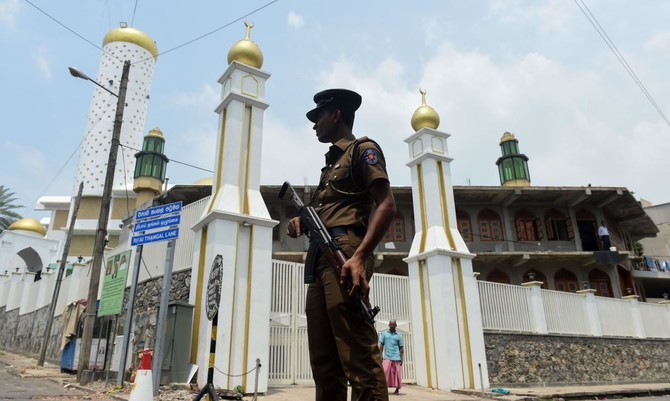
Muslims pray under military protection in Sri Lanka after riots
Muslims pray under military protection in Sri Lanka after riots


Latest updates


Recommended



© 2026 SAUDI RESEARCH & PUBLISHING COMPANY, All Rights Reserved And subject to Terms of Use Agreement.