LONDON: It started with Harvey Weinstein. Then came allegations against Oscar-winning actors Kevin Spacey and Dustin Hoffman of improper sexual behavior. And the names just keep coming: Musical maestro James Levine, Fox News presenter Bill O’Reilly, and now Ryan Seacrest, host of the hugely popular TV talent show, American Idol.
Then there are those who are not household names — US congressmen, captains of industry, heads of international aid organizations, and the thousands, even tens of thousands, who are significant only to their accusers.
“MeToo” has become a powerful phrase, the hashtag slogan for one of the most wide-reaching popular movements of modern times. Astonishingly it first appeared only four months ago on social media but rapidly went viral, with thousands, then millions, of women — and some men — sharing their own experiences of sexual harassment.
It spread far beyond the English-speaking world. MeToo movements have sprung up from Afghanistan to Vietnam, and spawned splinter movements such as #ChurchToo and #MeTooMilitary.
In the West, MeToo has the power to damage or even end careers: Witness Harvey Weinstein, a colossus of the film industry whose name is now mud not only in Hollywood but within his own family, after his wife left him and his brother all but disowned him.
Or Kevin Spacey, until recently regarded as one of the greatest actors of his generation, but now branded a sexual predator. He was removed from the film “All the Money in the World,” which he had already finished shooting, and his scenes were re-shot with another actor. In addition, he will not appear in the sixth and final season of the hit Netflix political drama “House of Cards,” with the focus of the show instead switching to his on-screen wife, played by Robin Wright.
British Defense Minister Michael Fallon denied allegations of inappropriate behavior but resigned anyway rather than wait to be pushed, saying he had fallen short of the “high standards” expected of the armed forces.
The French version of MeToo positively urges naming and shaming, with the additional hashtag balancetonporc (“denounce your pig”).
But not everyone was completely swept up by the tide. In France, actress Catherine Deneuve led a countercharge, supported by more than 100 women, denouncing the fallout from MeToo as excessive and placing “undeserving people in the same category as sex offenders without giving them a chance to defend themselves.”
Others who questioned the MeToo campaign include writers Margaret Atwood and Lionel Shriver. Atwood called it a symptom of a “broken legal system” in North America, and warned it was in danger of succumbing to the rule of the mob.
“If the legal system is bypassed because it is seen as ineffectual, what will take its place?” she asked.
“Understandable and temporary vigilante justice can morph into a culturally solidified lynch-mob habit, in which the available mode of justice is thrown out the window, and extralegal power structures are put into place and maintained.”
MeToo encouraged women to share their experiences, firstly to show solidarity with each other and also to demonstrate how vast and entrenched is the problem of male entitlement.
Deneuve and others argue that an unwanted hand on the knee is not a violation on a par with rape. It may be unpleasant, annoying and infuriating but surely not traumatic.
However MeToo was an irresistible bandwagon and a prime vehicle for virtue-signaling. At the recent Golden Globes and Bafta ceremonies, black outfits were the order of the day. In an Op-Ed in The New York Times, literary critic and novelist Daphne Merkin dared to suggest that while women were on board with MeToo in public, in private they were fed up with it. Some people — including random women she had spoken to while shopping in the supermarket — were even calling it a “witch-hunt.”
“Privately I suspect many of us, including many long-standing feminists, will be rolling our eyes, having had it with the reflexive and unnuanced sense of outrage that has accompanied this cause from its inception, turning a bona fide moment of moral accountability into a series of ad hoc and sometimes unproven accusations,” she wrote.
While the actions of some are indefensible, Merkin is troubled by the “trickle-down” effect on others tainted by vague, unspecific accusations, possibly relating to incidents from years ago and often made anonymously.
“I don’t believe that scattershot, life-destroying denunciations are the way to upend it,” she said. “In our current climate, to be accused is to be convicted. Due process is nowhere to be found.”
She is equally alarmed by what she perceives as the flight to victimhood — the portrayal of women as too frail and helpless to reject unwanted attention.
Like Atwood, Merkin has been castigated as a “bad feminist” but her words struck a chord. Lucy Hall, 28, from London, who described herself as “a recent survivor of rape” said Merkin’s essay came as “a relief” to her.
“I have felt infuriated and confused by the laziness in the language of the topic, all too often conflating the life-changing event of being raped with an unpleasant but largely forgettable event like being patted on the knee.”
Stella Schindler, a retired judge from New York, said: “I am one of those women on the ‘supermarket lines’ sick of the Salem witch-hunt. Having worked in the so-called man’s world for my entire career, I too experienced various degrees of inappropriate behavior. I just made sure that the best man for the job was a woman: This woman.”
Others question whether social media — little-regulated and rarely moderate in tone — is a suitable platform for debating such an important issue riven with legal implications and even danger.
In Afghanistan, where an estimated 90 percent of women experience sexual harassment in public, at school or at work, the MeToo hashtag was silenced by threats of violence to women who shared their stories. Journalist Maryam Mehtar received death threats and was publicly called a whore by another (male) writer for talking about her daily experiences of sexual harassment in public.
“Social media, and indeed all media, are contested terrain and women can experience empowerment as well as oppression through social media,” said Dr. Meenakshi Gigi Durham, professor of gender, women’s and media studies at the University of Iowa.
“From my perspective, #MeToo has been vital as a consciousness-raising space, a way to provide a forum and voice for the millions of women who have survived sexual assault and harassment, to change the game in terms of the silences and shame around these issues.”
In revealing how widespread sexual harassment is, MeToo has also exposed “the paucity of male power,” said Professor Bev Skeggs, director of the Atlantic Fellows program at the London School of Economics and Political Science.
“From the pathetic attempts to touch without consent to the brutal forms of violence used to damage women … What does it say about types of masculinity when some of the most powerful men in the world resort to such desperate measures?” she said. “The institutional structures that protect these men is where forensic attention should now be drawn.”
However, Durham acknowledged that as the movement grows it is becoming at once more inclusive and more divisive.
“No movement is perfect: There are people whose stories have not been told as much as others,” she said. “At the moment, I think the momentum is very positive in terms of drawing attention to the issues of rape culture that affect all of us, all over the world.
“At least we are having conversations about these things and women’s perspectives are in the foreground, and those are steps in the right direction.”


![]()
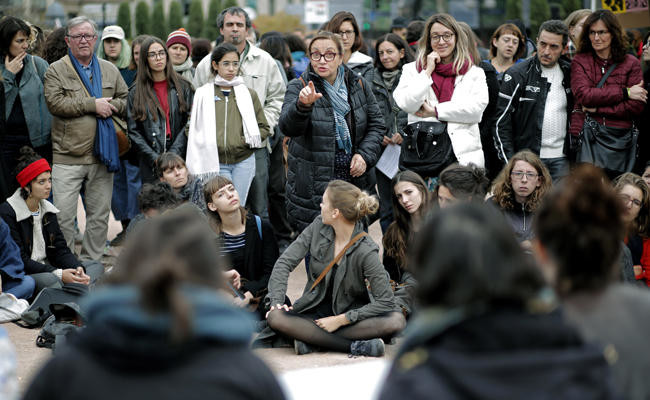
Is #MeToo starting to do more harm than good?
Is #MeToo starting to do more harm than good?
Latest updates






© 2026 SAUDI RESEARCH & PUBLISHING COMPANY, All Rights Reserved And subject to Terms of Use Agreement.