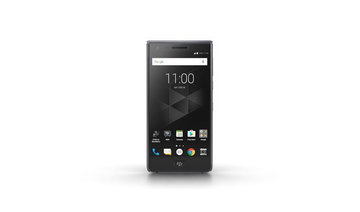
BlackBerry sues Facebook, WhatsApp, Instagram over patent infringement

Facebook logo. (Loic Venance/AFP)
Updated 07 March 2018
Follow

BlackBerry sues Facebook, WhatsApp, Instagram over patent infringement

TORONTO: BlackBerry Ltd. on Tuesday filed a patent infringement lawsuit against Facebook Inc. and its WhatsApp and Instagram apps, arguing that they copied technology and features from BlackBerry Messenger.
“Defendants created mobile messaging applications that co-opt BlackBerry’s innovations, using a number of the innovative security, user interface, and functionality enhancing features,” Canada-based BlackBerry said in a filing with a Los Angeles federal court.
“We have a strong claim that Facebook has infringed on our intellectual property, and after several years of dialogue, we also have an obligation to our shareholders to pursue appropriate legal remedies,” BlackBerry spokeswoman Sarah McKinney said.
Litigation over patent infringement is part of BlackBerry Chief Executive John Chen’s strategy for making money for the company, which has lost market share in the smartphone market it once dominated.
BlackBerry has since shifted its focus to cybersecurity software and has also invested in operating systems for self driving cars.
Last year, BlackBerry filed lawsuits against Nokia , Avaya and most notably Qualcomm, for which it was awarded nearly $1 billion.
“Blackberry’s suit sadly reflects the current state of its messaging business. Having abandoned its efforts to innovate, Blackberry is now looking to tax the innovation of others. We intend to fight,” said Facebook Deputy General Counsel Paul Grewal.


Profit scents lure new investors into Saudi perfume market 

Updated 4 sec ago
Follow

Profit scents lure new investors into Saudi perfume market 

RIYADH: In Saudi Arabia’s perfume market, which at first glance appears saturated with local and global brands, new investors are still entering the sector with fresh labels, indicating that domestic demand can accommodate new competitors. 

Speaking to Al-Eqtisadiah at the Blue Oud and International Perfumes Exhibition in Riyadh, Badr Al-Sayyed, owner of the “Amour” perfume brand, said launching his brand cost SR250,000 ($66,660), with retail prices set at around SR249 per bottle, citing the quality and purity of the essential oils used. 

Al-Sayyed added that the brand was launched in September 2025, initially through an online store, with plans to expand physically in the Eastern Province within the next two years. 

High profit margins  

He noted that the online store receives more than 7,000 visits a month from customers across the Gulf region, with sales growth of between 5 percent and 8 percent from September to December 2025. 

He emphasized that Saudi Arabia leads the region in sales, followed by the UAE, Oman and Bahrain, describing profit margins in the perfume sector as excellent. 

Naif Al-Juwair, a procurement representative at Oud Al-Edan, said the company’s most popular oud types are Moroccan Live and Moroccan Dead oud, with the latter in higher demand. 

He explained that the difference lies in the extraction location on the tree and its condition, with Dead oud known for its classic, cool and long-lasting incense aroma. 

Al-Juwair added that the company operates five offices outside Saudi Arabia and works with oud manufacturers in Indonesia and Vietnam. 

Gulf markets support domestic demand 

Al-Juwair said online sales account for 10 to 15 percent of total sales, while overall company sales grew by up to 70 percent last year. 

He stressed that maintaining quality is essential to balancing profit margins and customer trust, describing the Saudi oud market as strong, with Kuwait ranking second in purchasing power. 

Abdulrahman Baraka, a marketer for the Vanilla perfume brand, said Saudi Arabia accounts for 80 to 90 percent of the brand’s total sales, followed by the UAE at 7 percent and Qatar. 

He said the average bottle sells for around SR300, with the brand focusing on exhibition participation, where sales often outperform traditional stores, generating profits of between SR50,000 and SR100,000 over the 10-day exhibition period. 

He added that the most active consumer group is aged 20 to 30, of both genders, with essential oils imported from Turkiye and perfumes manufactured in Saudi Arabia. He emphasized that all fragrances are proprietary creations, including a recent cola-scented perfume. 

Seasonal trends shape fragrance preferences 

Al-Sayyed explained that fragrance notes vary by taste, individual preference and season, noting that citrus notes such as lemon and bergamot remain popular year-round. 

Summer fragrances, he added, emphasize light, refreshing fruit and herbal notes, while winter scents favor warm, deep notes such as wood, leather, oud and amber. He said men’s perfumes generally lean toward citrus notes, while women’s fragrances focus more on floral accords. 

The perfumer emphasized that he does not seek to compete with others, noting that quality is the core principle and source of strength at every stage of his work. 

He added that essential oils are imported from Grasse, France — renowned worldwide for perfume production — in addition to relying on high-quality perfume factories in Italy, the UK and Switzerland.