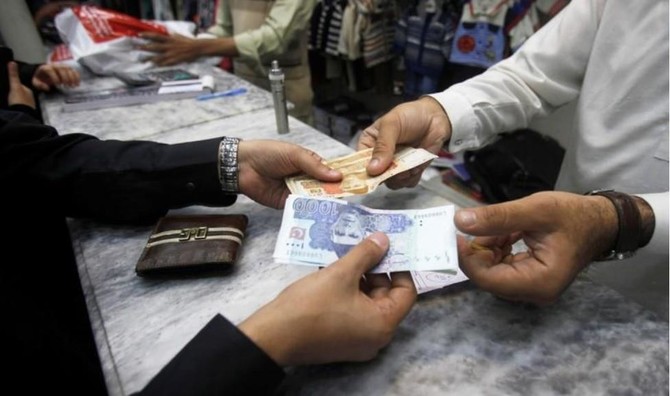
Pakistan’s capital market regulator has drafted governance rules that cover sharia-compliant companies and securities, the latest government initiative aimed at developing the country’s Islamic finance industry.
The move by the Securities and Exchange Commission of Pakistan (SECP) marks the first time a regulator has defined comprehensive requirements for companies that deem themselves to be compliant with Islamic principles.
Regulators across Asia and the Middle East, such as Malaysia and Bahrain, have typically focused their attention on Islamic banks, insurance firms and their financial products, but rarely ventured into corporations.
The rules represent a “quantum leap forward in cementing Islamic financial services, sharia-compliant businesses and instruments,” the regulator said.
Areas covered include certification of companies and securities, screening criteria and disclosure requirements.
The proposed rules, which are now open to public consultation, would help bring standardization and transparency in the practices of sharia-compliant businesses, the SECP said adding stakeholders have the opportunity to share their comments and suggestions within two weeks.
The absence of a regulator-imposed governance framework has resulted in concerns raised around the adherence level of companies that claim to be Islamic, said Syed Abubakr, sharia board member of Emaan Islamic Banking, a unit of Silk Bank.
“The draft regulations bring clarity on many of the issues which used to be considered grey areas and were subject of hot debate.”
Such concerns have been raised in markets, including the United Arab Emirates, where a firm has claimed its debt no longer complies with Islamic principles.
Public confidence on sharia-compliant companies could increase because of the SECP rules, while also supporting industry training and academic programs, Abubakr added.
Pakistan’s Islamic banking sector has seen moderate growth, it accounts for 13.7 percent of the country’s total banking deposits as of September, up from 13.3 percent a year earlier.
Last month, the SECP adopted three sharia standards from the Bahrain-based Accounting and Auditing Organization for Islamic Financial Institutions (AAOIFI), a global standard-setting body.
In November, it approved a proposal for a sharia-compliant trading counter at the Pakistan Stock Exchange, as well as regulations covering sharia advisers.

Pakistan drafts governance rules for Islamic firms, securities
First EU–Saudi roundtable on critical raw materials reflects shared policy commitment
RIYADH: The EU–Saudi Arabia Business and Investment Dialogue on Advancing Critical Raw Materials Value Chains, held in Riyadh as part of the Future Minerals Forum, brought together senior policymakers, industry leaders, and investors to advance strategic cooperation across critical raw materials value chains.
Organized under a Team Europe approach by the EU–GCC Cooperation on Green Transition Project, in coordination with the EU Delegation to Saudi Arabia, the European Chamber of Commerce in the Kingdom and in close cooperation with FMF, the dialogue provided a high-level platform to explore European actions under the EU Critical Raw Materials Act and ResourceEU alongside the Kingdom’s aspirations for minerals, industrial, and investment priorities.
This is in line with Saudi Vision 2030 and broader regional ambitions across the GCC, MENA, and Africa.
ResourceEU is the EU’s new strategic action plan, launched in late 2025, to secure a reliable supply of critical raw materials like lithium, rare earths, and cobalt, reducing dependency on single suppliers, such as China, by boosting domestic extraction, processing, recycling, stockpiling, and strategic partnerships with resource-rich nations.
The first ever EU–Saudi roundtable on critical raw materials was opened by the bloc’s Ambassador to the Kingdom, Christophe Farnaud, together with Saudi Deputy Minister for Mining Development Turki Al-Babtain, turning policy alignment into concrete cooperation.
Farnaud underlined the central role of international cooperation in the implementation of the EU’s critical raw materials policy framework.
“As the European Union advances the implementation of its Critical Raw Materials policy, international cooperation is indispensable to building secure, diversified, and sustainable value chains. Saudi Arabia is a key partner in this effort. This dialogue reflects our shared commitment to translate policy alignment into concrete business and investment cooperation that supports the green and digital transitions,” said the ambassador.
Discussions focused on strengthening resilient, diversified, and responsible CRM supply chains that are essential to the green and digital transitions.
Participants explored concrete opportunities for EU–Saudi cooperation across the full value chain, including exploration, mining, and processing and refining, as well as recycling, downstream manufacturing, and the mobilization of private investment and sustainable finance, underpinned by high environmental, social, and governance standards.
From the Saudi side, the dialogue was framed as a key contribution to the Kingdom’s industrial transformation and long-term economic diversification agenda under Vision 2030, with a strong focus on responsible resource development and global market integration.
“Developing globally competitive mineral hubs and sustainable value chains is a central pillar of Saudi Vision 2030 and the Kingdom’s industrial transformation. Our engagement with the European Union through this dialogue to strengthen upstream and downstream integration, attract high-quality investment, and advance responsible mining and processing. Enhanced cooperation with the EU, capitalizing on the demand dynamics of the EU Critical Raw Materials Act, will be key to delivering long-term value for both sides,” said Al-Babtain.
Valere Moutarlier, deputy director-general for European industry decarbonization, and directorate-general for the internal market, industry, entrepreneurship and SMEs at European Commission, said the EU Critical Raw Materials Act and ResourceEU provided a clear framework to strengthen Europe’s resilience while deepening its cooperation with international partners.
“Cooperation with Saudi Arabia is essential to advancing secure, sustainable, and diversified critical raw materials value chains. Dialogues such as this play a key role in translating policy ambitions into concrete industrial and investment cooperation,” she added.