US Treasury slaps sanctions on more Daesh targets

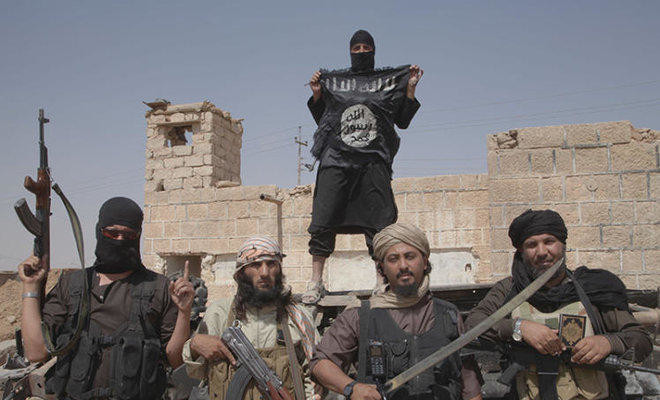
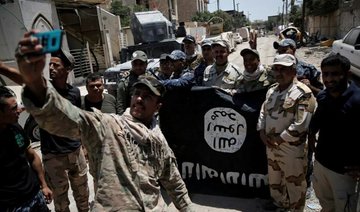
Daesh fighters were driven last year from all the population centers they occupied in both Syria and Iraq, but Washington still considers them a threat and has added two individuals and seven organizations in Africa and Asia to its sanctions list for global terrorism. (Corbis)
Updated 27 February 2018
Follow

US Treasury slaps sanctions on more Daesh targets

WASHINGTON: The US Treasury Department has added two individuals and seven organizations in Africa and Asia connected to Daesh to its sanctions list for global terrorism, it said on Tuesday.
The Treasury’s Office of Foreign Assets Control (OFAC) said on its website it had added Abu Musab Al-Barnawi of Nigeria and Mahad Moalim of Somalia, and seven groups from Bangladesh, Egypt, the Philippines, Somalia, Nigeria and Tunisia to its sanctions list.
The additions include Daesh-Bangladesh, Daesh-Egypt, Daesh-Philippines, Daesh-Somalia, Daesh-West Africa, Jund Al-Khilafah-Tunisia, also known as Daesh-Tunisia, and the Philippines-based Maute Group, also known as Daesh of Lanao, OFAC said. The US State Department said in a separate statement that including the latest additions, it had designated 40 Daesh leaders and operatives dating back to 2011 under an order aimed at denying them access to the US financial system.
“These designations are part of a larger comprehensive plan to defeat Daesh that, in coordination with the 75-member Global Coalition to Defeat Daesh, has made significant progress toward that goal,” the statement said.
This effort “is destroying Daesh in its safe havens, denying its ability to recruit foreign terrorist fighters, stifling its financial resources, negating the false propaganda it disseminates over the Internet and social media, and helping to stabilize liberated areas in Iraq and Syria so the displaced can return to their homes and begin to rebuild their lives,” the statement added.
Daesh fighters were driven last year from all the population centers they occupied in both Syria and Iraq, but Washington still considers them a threat, capable of carrying out an insurgency and plotting attacks elsewhere.


NATO wants ‘automated’ defenses along borders with Russia: German general

Updated 24 January 2026
Follow

NATO wants ‘automated’ defenses along borders with Russia: German general

  • That zone would act as a defensive buffer before any enemy forces advanced into “a sort of hot zone,” said Lowin
  • The AI-guided system would reinforce existing NATO weapons and deployed forces, the general said

FRANKFURT: NATO is moving to boost its defenses along European borders with Russia by creating an AI-assisted “automated zone” not reliant on human ground forces, a German general said in comments published Saturday.
That zone would act as a defensive buffer before any enemy forces advanced into “a sort of hot zone” where traditional combat could happen, said General Thomas Lowin, NATO’s deputy chief of staff for operations.
He was speaking to the German Sunday newspaper Welt am Sonntag.
The automated area would have sensors to detect enemy forces and activate defenses such as drones, semi-autonomous combat vehicles, land-based robots, as well as automatic air defenses and anti-missile systems, Lowin said.
He added, however, that any decision to use lethal weapons would “always be under human responsibility.”
The sensors — located “on the ground, in space, in cyberspace and in the air” — would cover an area of several thousand kilometers (miles) and detect enemy movements or deployment of weapons, and inform “all NATO countries in real time,” he said.
The AI-guided system would reinforce existing NATO weapons and deployed forces, the general said.
The German newspaper reported that there were test programs in Poland and Romania trying out the proposed capabilities, and all of NATO should be working to make the system operational by the end of 2027.
NATO’s European members are stepping up preparedness out of concern that Russia — whose economy is on a war footing because of its conflict in Ukraine — could seek to further expand, into EU territory.
Poland is about to sign a contract for “the biggest anti-drone system in Europe,” its defense minister, Wladyslaw Kosiniak-Kamysz, told the Gazeta Wyborcza daily.
Kosiniak-Kamysz did not say how much the deal, involving “different types of weaponry,” would cost, nor which consortium would ink the contract at the end of January.
He said it was being made to respond to “an urgent operational demand.”