MANILA: The Philippines will allow an investigation into alleged human rights abuses in its bloody war on drugs, but not if it is conducted by the United Nations’ current special rapporteur on extrajudicial killings, a senior official said on Tuesday.
More than 30 mostly Western countries have called on the Philippines to allow the UN expert, Agnes Callamard, to look into the thousands of killings in President Rodrigo Duterte brutal 19 month-old crackdown.
Callamard’s specialist areas under the United Nations are extrajudicial killings, summary and arbitrary executions.
Duterte’s spokesman, Harry Roque, a lawyer, said the Philippines welcomed any investigation provided that the United Nations sends a “credible, objective and unbiased” rapporteur, who is also “an authority in the field that they seek to investigate.”
Callamard does not fit that description, he said.
“Definitely, not Agnes Callamard,” Roque told a regular news briefing. “It’s her fault the home state does not want her in.”
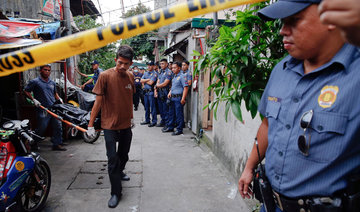
More than 4,000 Filipinos have been killed by police during the drugs war and hundreds, possibly several thousand, more by unidentified armed men.
Human rights groups and Duterte’s political opponents say executions of drug users and small-time peddlers are widespread and systematic. The authorities deny that and say those killed were all dealers who put up violent resistance.
Last week, Amnesty International in the Philippines said “meaningful investigations” into such killings had failed to take place.
A prosecutor at the International Criminal Court in the Hague earlier this month started a preliminary examination into a complaint accusing Duterte and at least 11 officials of crimes against humanity. Duterte has welcomed that.
Roque said he had a lawyer in mind who could do the job instead of Callamard, but would not say who.
Duterte has previously said he would welcome a probe by Callamard on the condition she agreed to have a public debate with him.
She irked the government in May last year when she gave a speech at a policy forum during a visit in an unofficial capacity.


Philippines open to UN drugs war probe, if by ‘credible, objective’ investigator

Philippines open to UN drugs war probe, if by ‘credible, objective’ investigator


UNICEF warns of rise in sexual deepfakes of children
- The findings underscored the use of “nudification” tools, which digitally alter or remove clothing to create sexualized images
UNITED NATIONS, United States: The UN children’s agency on Wednesday highlighted a rapid rise in the use of artificial intelligence to create sexually explicit images of children, warning of real harm to young victims caused by the deepfakes.
According to a UNICEF-led investigation in 11 countries, at least 1.2 million children said their images were manipulated into sexually explicit deepfakes — in some countries at a rate equivalent to “one child in a typical classroom” of 25 students.
The findings underscored the use of “nudification” tools, which digitally alter or remove clothing to create sexualized images.
“We must be clear. Sexualized images of children generated or manipulated using AI tools are child sexual abuse material,” UNICEF said in a statement.
“Deepfake abuse is abuse, and there is nothing fake about the harm it causes.”
The agency criticized AI developers for creating tools without proper safeguards.
“The risks can be compounded when generative AI tools are embedded directly into social media platforms where manipulated images spread rapidly,” UNICEF said.
Elon Musk’s AI chatbot Grok has been hit with bans and investigations in several countries for allowing users to create and share sexualized pictures of women and children using simple text prompts.
UNICEF’s study found that children are increasingly aware of deepfakes.
“In some of the study countries, up to two-thirds of children said they worry that AI could be used to create fake sexual images or videos. Levels of concern vary widely between countries, underscoring the urgent need for stronger awareness, prevention, and protection measures,” the agency said.
UNICEF urged “robust guardrails” for AI chatbots, as well as moves by digital companies to prevent the circulation of deepfakes, not just the removal of offending images after they have already been shared.
Legislation is also needed across all countries to expand definitions of child sexual abuse material to include AI-generated imagery, it said.
The countries included in the study were Armenia, Brazil, Colombia, Dominican Republic, Mexico, Montenegro, Morocco, North Macedonia, Pakistan, Serbia, and Tunisia.


