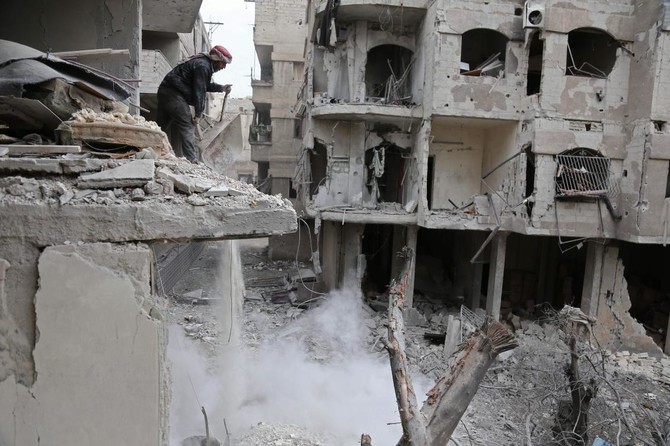
ISTANBUL: Turkey on Friday called on Russia and Iran to "stop" the Syrian bombardment of the rebel-held enclave of Eastern Ghouta after more than 400 civilians were killed there since Sunday.
"Russia and Iran must stop the regime," Turkish Foreign Minister Mevlut Cavusoglu said.
As part of a peace process aimed at stopping the seven-year war in Syria, Turkey, Iran and Russia sought to create de-escalation zones across the country, including one for Eastern Ghouta and the rebel-held Idlib province.
Cavusoglu said the regime's offensive in the enclave as well as in Idlib was "contrary" to the agreements negotiated by the three countries.
At least 426 people including 98 children have been killed since the Syrian regime and its Russian ally intensified their bombardment of the besieged area on Feb. 18, according to the Syrian Observatory for Human Rights monitor.
More than 2,000 people have also been wounded in the enclave east of Damascus.
"Since the beginning of the conflict, tens of thousands of people have died in Eastern Ghouta alone, and that is enough, these people must not die," Cavusoglu said.
Turkey has been working closely with strong regime supporters Moscow and Tehran despite repeatedly calling for the ouster of Syrian President Bashar Al-Assad.
"The killing of women and children... this is a typical method of the regime," Cavusoglu said, as he called for a ceasefire.
Ignoring international calls to stop the bloodshed, the regime again bombed the besieged region on Friday, killing at least nine people, the Observatory said.
After unsuccessful attempts, the UN Security Council is scheduled to vote at 1600 GMT on a draft resolution calling for a 30-day ceasefire in Syria to allow for humanitarian aid and medical evacuations.
Diplomats said it was not known whether Russia would use its veto to block the draft resolution.


![]()
Turkey urges Russia, Iran to 'stop' Syria govt in Eastern Ghouta
Turkey urges Russia, Iran to 'stop' Syria govt in Eastern Ghouta

Latest updates


© 2026 SAUDI RESEARCH & PUBLISHING COMPANY, All Rights Reserved And subject to Terms of Use Agreement.