


JEDDAH: When Tharik Hussain lived in Saudi Arabia in 2005, he was not yet an award-winning writer reimagining how Europe tells its own history. He was a young travel enthusiast whose curiosity would make him one of the most distinct Muslim historians working today.
Before the Kingdom opened its doors to tourism, he wrote the “Lonely Planet Guide to Saudi Arabia,” a component of a larger guidebook about the region.
“I feel very privileged,” he said about his short-lived yet memorable stay in Saudi Arabia. “I have my notebooks from that period and my photography. I know one day it’s going to be a great story to tell — comparing the new Saudi Arabia maybe in 20 years’ time to the one on the brink of change.”
Today, Hussain’s focus has shifted to Europe.
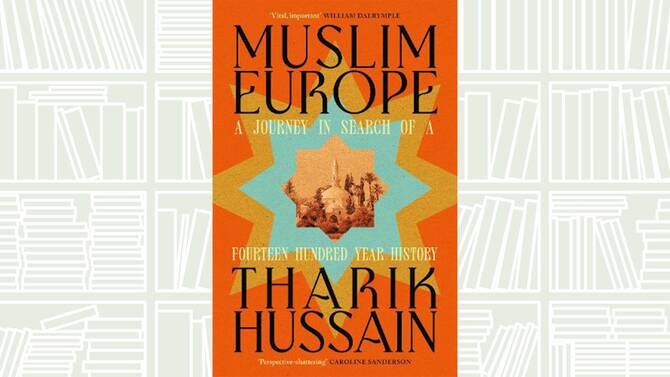
His new book, “Muslim Europe: A Journey in Search of a Fourteen Hundred Year History,” published by Penguin UK in December, is a sweeping travel-history work that challenges how the continent understands itself.
It asks a radical but simple question: What happens when Europe’s past is told through a Muslim perspective?
For many Muslims around the world, the idea that Islam has always been a part of Europe has long been obscured, if not outright denied.
His work steps directly into that void his previous book on Muslim heritage in the Balkans — that won the British Guild of Travel Writers’ Adele Evans Award for best travel narrative book of 2022 — sparked discussions, and, unsurprisingly, drew hostility.
“If (‘Muslim Europe’) does well,” he told Arab News, “I know it’s going to bring a lot of negative attention … a lot of hatred and vitriol. These are very sensitive spaces — history, heritage, identity.
“You’re engaging with people’s sense of themselves … when you write a book that is meant to disrupt, it comes with the territory. If it doesn’t upset anybody, then you haven’t achieved your goal.”
Hussain’s journey toward this work was gradual; he began with shorter pieces that revealed forgotten communities like the Muslims of the Baltic. But each step deepened his sense of responsibility.
“As I began to learn this history, I realized I had certain skills in communicating it,” he said. “And I realized that maybe this is a responsibility I have to take, even if I don’t always feel qualified for it.”
For decades, Western publishing’s interest in Muslims was filtered through too familiar tropes such as extremism, women in veils, and geopolitical conflict. But his work is part of a recent shift.
“Publishers are hungry for wider perspectives on traditional histories,” he explained. “I’m adding to the narrative, asking for some of it to be tweaked or reconsidered. And I’m adding from a Muslim perspective, just as others add from a Black, working-class, or female perspective.”
For young Muslim and Arab historians, he offers practical and pointed advice: “Move away from Eurocentricism.” Many writers, he said, unconsciously accept “white men’s perceptions” as authoritative.
Challenging that framework is not only necessary, it can be creatively liberating: “You may find an angle that makes your work fresh. If you keep chasing existing stereotypes … what are you really doing?”
What Hussain contributes is not simply “representation,” but a reframing of how Europe remembers itself. One of the central ideas in “Muslim Europe” is what he calls the “anti-Muslim DNA” woven into the modern European identity.
“The modern idea of Europe is really a secular repackaging of Christendom,” he suggested. “So those who identify with that inevitably carry prejudices that have built up over 1,400 years.”
Because of this, even respected historians often write Muslims out of Europe’s past entirely. The absence is so normalized that many Europeans — and many Muslims — unconsciously accept it.
This omission has consequences. On one side, Hussain explained, erasure empowers the far right to tell Muslims they do not belong. “And you get Bosnian, blue-eyed guys being told to leave. And they say, ‘Go where?’”
On the other side, he has met members of Muslim communities across Europe who feel alienated and detached from their cultural identities.
“One of the key ways identity is anchored is through heritage,” he added.
“When it’s erased, young Muslims become susceptible to horrible, extremist messages. And they’re being denied wonderful heritage — poetry, intellectual and philosophical achievements, and this great history of protecting Jewish communities for centuries.”
This is why a book like “Muslim Europe” matters, not only for historians, but for any Muslim trying to understand where they fit in the world.
His own sense of belonging has transformed. “I feel much more empowered,” he said. “If you’re Muslim, this is your heritage too. It’s powerful because it anchors us.”
He draws inspiration from historical travel writers like Evliya Celebi, the Ottoman explorer, the Andalusian Ibn Jubayr, and others who mapped the world through a distinctly Islamic lens.
“When you have non-Muslims look at the same heritage, they see it as something that is an invasive, alien presence even though it’s been there for centuries … I challenge the consensus by dominating the text with Muslim sources where possible,” he explained.
“And I add my own lens. I’m a Muslim, I’m a European, and I’m not seeing this heritage as a foreigner.”
Though “Muslim Europe” is rich with historical depth, its travel element is intentional. It is grounded in months of travel he undertook in 2023, tracing routes across Cyprus, Spain, and Portugal, and beyond.
His documentation uncovers the rich, often overlooked traces of Muslim presence across Europe, from the ruins of a 12th-century mosque in Sicily to the eighth-century walls of Portugal’s Moorish Castle in Sintra.
“Pure history can be dense. A travel book lets you break it up with lighter moments where you’re talking to people or describing something beautiful,” he said.
With the first translation of the book set to be in Arabic, Hussain hopes readers from the Gulf — who are among the world’s most frequent travelers to Europe — will engage more critically and curiously with the places they visit.
“I hope they’ll ask: What did this (place) mean to Muslims? Is there literature to help us appreciate that? And I hope the book opens their eyes to a more wholesome, honest way to engage with their Muslim identity when they travel.”
While readers pick up copies of “Muslim Europe,” its writer is already deep into new projects, including a guidebook to Muslim Britain and Ireland and a travelogue about Muslim Venice.
Hussain’s work is a reminder that history lives in the footsteps we take and in the stories we choose to seek.


