Alwaleed-backed AccorHotels closes in on property deal

AccorHotels sale of a stake in its property business is in its final stages, Europe’s largest hotel company said on Wednesday. (Reuters)
Updated 21 February 2018
Follow

Alwaleed-backed AccorHotels closes in on property deal

PARIS: AccorHotels’ long-delayed sale of a stake in its property business is in its final stages, Europe’s largest hotel company said on Wednesday, after reporting record 2017 earnings.
The French group, with more than 4,000 hotels ranging from luxury Sofitels to the budget Ibis brand, also expressed confidence over prospects for this year and over potential returns to investors once the property deal is sealed.
There was initial disappointment over the absence of any concrete developments on the plans for outside investment in property unit AccorInvest — known as “Booster” by the company — as well as the lack of increase in the annual dividend.
But the shares recovered early losses to trade up 2.6 percent at 1055 GMT, as analysts welcomed the prospect of better returns for investors. The stock is up about 8 percent in 2018.
AccorHotels has said the stake sale, now delayed by more than six months, will give it greater financial leeway to accelerate growth and fight the rising challenges from companies such as Airbnb and online travel agents.
CEO Sebastien Bazin said it was “a matter of weeks” before a deal was sealed, while finance chief Jean-Jacques Morin said the group would adjust its dividend policy after the sale and hinted at a possible special dividend.
“Overall, an upbeat message with confidence around deal execution, RevPar (revenues per available room) and encouraging comments regarding the future cash return potential,” wrote Barclays analysts, who have an “overweight” rating on the stock.
AccorHotels, which competes with InterContinental, Marriott and Starwood, beat forecasts with a 10 percent rise in like-for-like operating profit to 492 million euros ($606 million) for 2017.
InterContinental, which focuses on business customers, also reported higher profits this week and unveiled plans to expand further in the upmarket part of the hotel industry.
AccorHotels has struck deals in areas such as concierge services and luxury rentals to try to combat competition from the likes of Airbnb and Expedia.
Bazin reiterated on a call to analysts and reporters that strong growth was expected from these new lines of business over the medium term.
The only region where AccorHotels did not have strong growth last year was South America and in particular Brazil, which is slowly emerging from a recession, although the company said trends in Brazil improved in the fourth quarter.
Bazin, who took over in August 2013, has been cutting costs and expanding in China and the luxury hotels market, with AccorHotels having bought FRHI Holdings, the owner of London’s Savoy and New York’s Plaza hotels.
In October, AccorHotels also clinched a deal to buy Mantra Group Ltd. for A$1.18 billion ($926 million) to create the biggest hotel group in Australia. Bazin said he expected to finalize the deal during the second quarter of 2018.
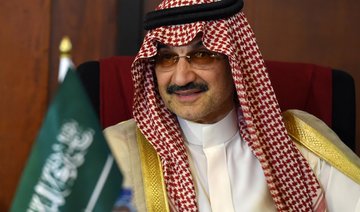
Kingdom Holding, Saudi billionaire Prince Alwaleed bin Talal’s investment company, has a 5.71 percent stake in AccorHotels. The prince was released last month from detention following an anti-corruption crackdown.
Asked if there had been any signs of a possible change in the prince’s shareholding, Bazin said: “We have been comforted on the fact that there was no change in governance, shareholding. Prince Alwaleeed is and remains the third-largest shareholder of this group.”


AI will never replace human creativity, says SRMG CEO 

Updated 30 January 2026
Follow

AI will never replace human creativity, says SRMG CEO 

  • Speaking to Maya Hojeij, senior business anchor at Asharq with Bloomberg, Jomana R. Alrashid expressed pride in SRMG platforms that had absorbed and adopted AI

RIYADH: Jomana R. Alrashid, CEO of Saudi Research and Media Group, highlighted how AI cannot replace human creativity during a session at The Family Office’s “Investing Is a Sea” summit at Shura Island on Friday. 

“You can never replace human creativity. Journalism at the end of the day, and content creation, is all about storytelling, and that’s a creative role that AI does not have the power to do just yet,” Alrashid told the investment summit. 

“We will never eliminate that human role which comes in to actually tell that story, do the actual investigative reporting around it, make sure to be able to also tell you what’s news or what’s factual from what’s wrong ... what’s a misinformation from bias, and that’s the bigger role that the editorial player does in the newsroom.”

Speaking on the topic of AI, moderated by Maya Hojeij, senior business anchor at Asharq with Bloomberg, the CEO expressed her pride in SRMG platforms that had absorbed and adopted AI in a way that was “transformative.”

“We are now translating all of our content leveraging AI. We are also now being able to create documentaries leveraging AI. We now have AI-facilitated fact-checking, AI facilities clipping, transcribing. This is what we believe is the future.”

Alrashid was asked what the journalist of the future would look like. “He’s a journalist and an engineer. He’s someone who needs to understand data. And I think this is another topic that is extremely important, understanding the data that you’re working with,” she said.

“This is something that AI has facilitated as well. I must say that over the past 20 years in the region, especially when it comes to media companies, we did not understand the importance of data.”


The CEO highlighted that previously, media would rely on polling, surveys or viewership numbers, but now more detailed information about what viewers wanted was available. 

During the fireside session, Alrashid was asked how the international community viewed the Middle Eastern media. Alrashid said that over the past decades it had played a critical role in informing wider audiences about issues that were extremely complex — politically, culturally and economically — and continued to play that role. 

“Right now it has a bigger role to play, given the role again of social media, citizen journalists, content creators. But I also do believe that it has been facilitated by the power that AI has. Now immediately, you can ensure that that kind of content that is being created by credible, tier-A journalists, world-class journalists, can travel beyond its borders, can travel instantly to target different geographies, different people, different countries, in different languages, in different formats.”

She said that there was a big opportunity for Arab media not to be limited to simply Arab consumption, but to finally transcend borders and be available in different languages and to cater to their audiences. 


The CEO expressed optimism about the future, emphasizing the importance of having a clear vision, a strong strategy, and full team alignment. 

Traditional advertising models, once centered on television and print, were rapidly changing, with social media platforms now dominating advertising revenue.

“It’s drastically changing. Ultimately in the past, we used to compete with one another over viewership. But now we’re also competing with the likes of social media platforms; 80 percent of the advertising revenue in the Middle East goes to the social media platforms, but that means that there’s 80 percent interest opportunities.” 

She said that the challenge was to create the right content on these platforms that engaged the target audiences and enabled commercial partnerships. “I don’t think this is a secret, but brands do not like to advertise with news channels. Ultimately, it’s always related with either conflict or war, which is a deterrent to advertisers. 

“And that’s why we’ve entered new verticals such as sports. And that’s why we also double down on our lifestyle vertical. Ultimately, we have the largest market share when it comes to lifestyle ... And we’ve launched new platforms such as Billboard Arabia that gives us an entry into music.” 

Alrashid said this was why the group was in a strong position to counter the decline in advertising revenues across different platforms, and by introducing new products.

“Another very important IP that we’ve created is events attached to the brands that have been operating in the region for 30-plus years. Any IP or any title right now that doesn’t have an event attached to it is missing out on a very big commercial opportunity that allows us to sit in a room, exchange ideas, talk to one another, get to know one another behind the screen.” 

The CEO said that disruption was now constant and often self-driving, adding that the future of the industry was often in storytelling and the ability to innovate by creating persuasive content that connected directly with the audience. 

“But the next disruption is going to continue to come from AI. And how quickly this tool and this very powerful technology evolves. And whether we are in a position to cope with it, adapt to it, and absorb it fully or not.”