BANGKOK: A Thai court on Tuesday said it ruled in favor of a wealthy Japanese man who had fathered 13 surrogate children in Thailand, naming him their legal parent and sole guardian.
The case harks back to late 2014, when Thai police said they had found 13 babies fathered by a Japanese national with nine Thai surrogate mothers. The children were taken to foster homes and the father has petitioned for custody since early 2015.
The man had his sperm fertilize donor eggs, which were then planted in the wombs of the surrogate mothers in 2013, according to a press statement given by the court. No details were given where the donor eggs were from.
The scandal at the time shone an international spotlight on Thailand’s largely unregulated surrogacy business, prompting authorities to crack down on clinics with nationwide inspections and later to ban commercial surrogacy.
The Japanese man was given custody of the 13 children on Tuesday largely due to his financial and professional stability, and he was found to have no links to human trafficking, the court statement said.
Growing up with a biological parent will also be in the children’s best interests, the court added.
“The petitioner is an heir and president of a well-known company listed in a stock exchange in Japan, owner and shareholder in many companies, and receives dividend of more than 100 million baht ($3.18 million) from a single company in a year, which shows the petitioner has professional stability and an ample income to raise all the children,” the court said in a statement.
“Therefore, it is ruled that all the 13 children are legal children of the petitioner...and the petitioner is their sole guardian.”
The court gave no further details about the man, but said he plans to raise the 13 children in Japan where he lives, adding that he had previously raised his other surrogate children in Cambodia and Japan.
When the case was first lodged in 2014, Thai police had said the man was 24 years old.
The man’s Thai lawyer Kong Suriyamonthon said his client plans to raise the 13 children, who are aged around 4, in Japan.
When asked why the man would want so many children at the same time, Kong said: “He has personal and business reasons. He was born in a big family, so he wants his children to grow up together.”
Thailand was rocked by several surrogacy scandals in 2014, including allegations that an Australian couple had abandoned their Down Syndrome baby with his Thai birth mother taking only his healthy twin sister back to Australia with them.
Thailand passed a law banning commercial surrogacy in 2015 as a result, forcing clinics to move to Cambodia, where it was also later banned, and then Laos.


![]()
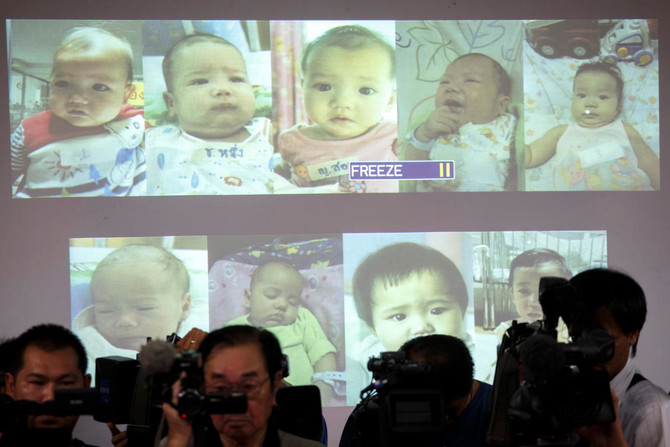
Thai court grants custody to Japanese father of 13 surrogate children
Thai court grants custody to Japanese father of 13 surrogate children



Latest updates


© 2026 SAUDI RESEARCH & PUBLISHING COMPANY, All Rights Reserved And subject to Terms of Use Agreement.