BEIRUT: Syrian Kurdish forces and the Damascus government have reached an agreement for the Syrian army to enter the Afrin region to help repel a Turkish offensive, a senior Kurdish official told Reuters on Sunday.
Badran Jia Kurd, an adviser to the Kurdish-led administration in north Syria, said army troops will deploy along some border positions and could enter the region within the next two days.
The agreement underscores the increasingly complex situation in northern Syria where Kurdish groups, the Syrian government, rebel groups, Turkey, the United States and Russia are tangled in a complex web of enmities and alliances.
The complex relationship between the Damascus government and the Syrian Kurds, which each holds more territory than any other side in the war, will be an important element in determining the future course of the conflict.
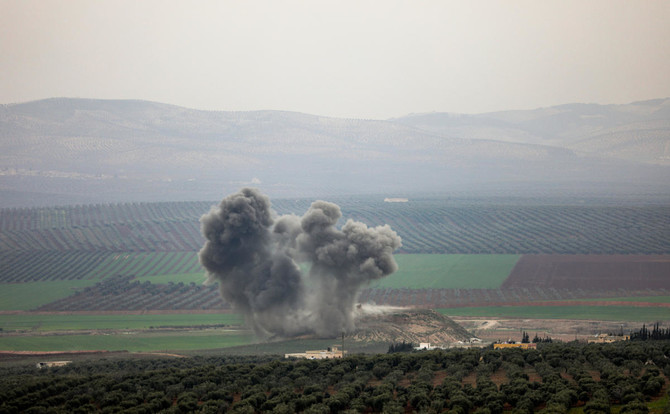
Turkey launched an air and ground offensive last month on Syria’s Afrin region, opening a new front in the multi-sided Syrian war to target Kurdish fighters in the autonomous canton in the north.
The Kurdish YPG militia, which has received arms from the United States, has seized swathes of northern Syria from Daesh during the conflict, and has a rival vision for the country’s future to that of the Damascus government.
But while the United States has a military presence in the much larger area of Syria the YPG and its allies control further east, it has not given any support to the YPG in Afrin.
Syrian President Bashar Assad’s government has had a complex relationship with the YPG during the conflict. They have mostly avoided direct conflict and both sides have at times suggested a long-term agreement between them might be possible, but they have also sometimes clashed and espouse utterly different visions for Syria’s future. Assad has said he wants to take back control of the whole country.
Jia Kurd said the agreement that had been reached with Damascus was purely military and that no wider political arrangements had been made yet.
“When it comes to the political and administrative matters in the region, it will be agreed upon with Damascus in the later stages through direct negotiations and discussions,” he said.
He added that there was opposition to the deal that could prevent it being implemented: “We don’t know to what extent these understandings will last because there are sides that are not satisfied and want to make (the understandings) fail.”


![]()
Syrian Kurdish official: deal for Syrian army to enter Afrin
Syrian Kurdish official: deal for Syrian army to enter Afrin



Latest updates


© 2026 SAUDI RESEARCH & PUBLISHING COMPANY, All Rights Reserved And subject to Terms of Use Agreement.