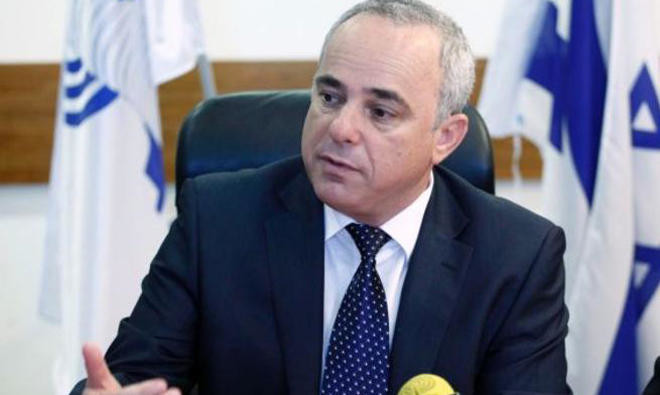
JERUSALEM: Israeli Energy Minister Yuval Steinitz met on Sunday with a senior US official seeking to defuse an escalating oil and gas dispute with Lebanon, his office said.
A statement from his spokesman said Steinitz held talks with Acting Assistant Secretary of State David Satterfield about conflicting claims to energy reserves off the coasts of Lebanon and Israel.
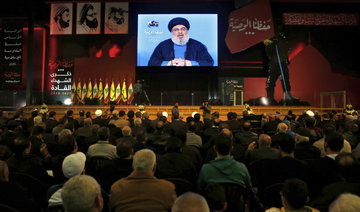
The leader of Lebanese movement Hezbollah said on Friday that Lebanon was strong enough to withstand US and Israeli pressure and to put Israeli gas rigs out of action.
Last week Lebanon signed its first contract to drill for oil and gas in a pair of offshore zones, including one that its southern neighbor Israel says belongs to it.
Lebanese officials have said the whole zone belongs to Beirut while Israeli Defense Minister Avigdor Lieberman has insisted it is solidly in Israeli territory.
Sunday’s Israeli statement quoted Steinitz as telling Satterfield that “a diplomatic solution is preferable for both sides.”
It added that the two agreed to meet again during the coming week.
Satterfield also held talks on the issue with top officials in Lebanon.
In 2006, Israel fought a 34-day war against Iranian-backed Hezbollah in which more than 1,200 Lebanese, mostly civilians, and 120 Israelis, the majority soldiers, died.
Israeli authorities said that in the course of the fighting Hezbollah fired 3,970 rockets into Israel
Meanwhile, work began on Feb. 7 in Germany on four advanced corvettes for the Israeli navy “that will protect gas rigs and economic enterprises in Israeli waters,” the Israeli military said.
It said that the “Saar 6” warships, to enter service between 2020 and 2022, would be equipped with helipads and advanced missiles.
In November, Israel installed a battery of its Iron Dome anti-missile system on a warship for the first time, calling it a valuable asset in protecting its offshore natural gas fields.
Israel has major gas fields off its northern coast and is building valuable infrastructure to get the fuel out of the ground and onto land, all within range of Hezbollah rockets.
Tamar, which began production in 2013, has estimated reserves of up to 238 billion cubic meters (8.4 trillion cubic feet). Leviathan, discovered in 2010 and set to begin production in 2019, is estimated to hold 18.9 trillion cubic feet (535 billion cubic meters) of natural gas, along with 34.1 million barrels of condensate.

Israeli, US officials meet over gas row with Lebanon
Egypt’s parliament approves cabinet reshuffle: state media
CAIRO: Egypt’s parliament approved a limited cabinet reshuffle on Tuesday, endorsing changes proposed by President Abdel Fattah El-Sisi, state media reported.
The reshuffle brings in 14 new ministers and creates a new post for a deputy prime minister in charge of economic affairs, according to the state-owned Al-Ahram newspaper.
The former head of parliament’s budget and planning committee, Hussein Issa, was appointed to that post.
Ahmed Rostom, a former specialist at the World Bank, was appointed minister of planning.
Mohamed Farid Saleh, who was executive chairman of Egypt’s Financial Regulatory Authority, was named minister of investment and foreign trade.
The changes also include the revival of the Ministry of Information, which will be headed by Diaa Rashwan, the current head of the State Information Service (SIS).
The ministry, tasked with overseeing media policy, had been dissolved several times following the 2011 uprising that toppled former president Hosni Mubarak, with its functions transferred later to media regulatory bodies.
As part of the reshuffle, the transport and industry ministries were separated.
Kamel Al-Wazir will continue as minister of transport only, having previously overseen both portfolios.
Planning was also separated from international cooperation, with Rania Al-Mashat remaining as minister of international cooperation.
Several key ministers retained their posts, including the ministers of finance, foreign affairs, defense, interior, petroleum and health.
The new government is expected to be sworn in on Wednesday, Egyptian media reported.
The reshuffle brings in 14 new ministers and creates a new post for a deputy prime minister in charge of economic affairs, according to the state-owned Al-Ahram newspaper.
The former head of parliament’s budget and planning committee, Hussein Issa, was appointed to that post.
Ahmed Rostom, a former specialist at the World Bank, was appointed minister of planning.
Mohamed Farid Saleh, who was executive chairman of Egypt’s Financial Regulatory Authority, was named minister of investment and foreign trade.
The changes also include the revival of the Ministry of Information, which will be headed by Diaa Rashwan, the current head of the State Information Service (SIS).
The ministry, tasked with overseeing media policy, had been dissolved several times following the 2011 uprising that toppled former president Hosni Mubarak, with its functions transferred later to media regulatory bodies.
As part of the reshuffle, the transport and industry ministries were separated.
Kamel Al-Wazir will continue as minister of transport only, having previously overseen both portfolios.
Planning was also separated from international cooperation, with Rania Al-Mashat remaining as minister of international cooperation.
Several key ministers retained their posts, including the ministers of finance, foreign affairs, defense, interior, petroleum and health.
The new government is expected to be sworn in on Wednesday, Egyptian media reported.
© 2026 SAUDI RESEARCH & PUBLISHING COMPANY, All Rights Reserved And subject to Terms of Use Agreement.