AMMAN: Jordan’s army said on Saturday it has foiled a plot to smuggle arms, drugs and “terrorists” through a disused oil pipeline along its border with Syria.
“The Jordanian armed forces were able... to thwart a plan to smuggle weapons, drugs and terrorists” through the pipeline, an official in the general command said in a statement.
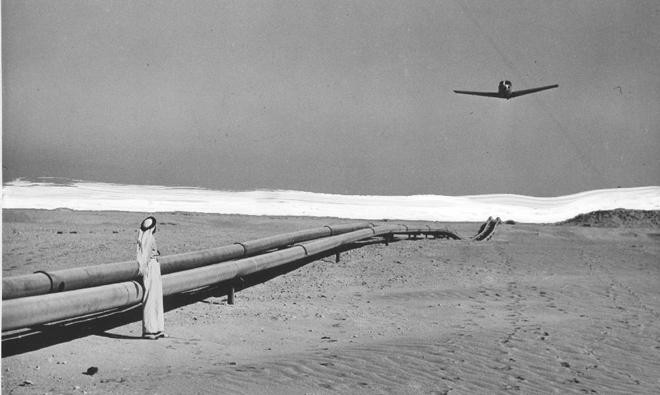
“A group of terrorists and drug traffickers” had used a house near the Jordan-Syria border and the disused Trans-Arabian Pipeline (Tapline) to “dig and prepare a series of tunnels for use in smuggling operations and to carry out terrorist attacks,” the official said.
Authorities have ordered the destruction of the tunnels and instructed army engineering units to unearth the pipeline to prevent other “smugglers and terrorists” from using it.
Tapline used to transport Saudi oil through Jordan, Syria’s Golan Heights — parts of which have been occupied by Israel since 1967 — onto Lebanon and the Mediterranean.
The 1,200-km pipeline was built in 1950 and links the Saudi oilfield of Abqaiq to the Mediterranean terminal of Zahrani, 40 km south of Beirut.
Oil transport through Tapline to Lebanon stopped in 1981 because of the Lebanese civil war.

Jordan foils militant pipeline smuggling plot, says army
Syria army’s clashes with Kurds ‘setback’ to Turkiye peace process: PKK spokesman
- “The developments in Syria and the larger Middle East have a direct effect on the peace process in Turkiye,” said Hiwa
- The attacks “against the Kurds are a plot and conspiracy against the peace process”
BAGHDAD: Recent clashes between Syria’s military and Kurdish forces are a “setback” and a “plot” to derail the PKK peace process with Turkiye, a spokesman for the Kurdish militant group told AFP on Tuesday.
“The developments in Syria and the larger Middle East have a direct effect on the peace process in Turkiye,” said Zagros Hiwa, spokesman for the political wing of the Kurdistan Workers’ Party.
The attacks “against the Kurds are a plot and conspiracy against the peace process and they indicate a setback in the process,” he said.
Syria’s government and Kurdish forces on Saturday extended a truce by 15 days after the Kurds lost large areas to government forces during weeks of clashes.
The Kurdish-led Syrian Democratic Forces (SDF) find themselves now restricted to Kurdish-majority areas in the country’s north.
Turkiye is a close ally of Syria’s new leadership that overthrew Bashar Assad in December 2024, and which is now seeking to extend state control across Syria.
Ankara is simultaneously leading a drive to reach a settlement with the PKK — listed as a terror group by Turkiye and its Western allies.
Last year, the PKK said it was ending its four-decade insurgency in favor of democratic means but the process has largely stalled amid the stand-off in Syria.
Turkiye accuses the Syrian Kurdish forces of being an offshoot of the PKK.
Hiwa said the PKK’s “commitment to the peace process is a strategic issue.”
But he added that “the new strategy does not exclude the urgency of self-defense against genocidal attacks.”