SOFIA: The European Union on Friday told six Western Balkan nations seeking membership that they would have to implement difficult reforms before they can be allowed to join the wealthy bloc.
Worried about growing Russian and Chinese influence in the Balkans, the EU has launched a new integration campaign, giving Serbia and Montenegro a tentative accession date of 2025.
But many EU members remain wary of letting in a region still scarred by wars fought along ethnic lines in the 1990s and dogged by a reputation for lawlessness.
They say the candidates — which also include Macedonia, Albania, Kosovo and Bosnia — must improve their democratic credentials and root out graft and organized crime.
“Everybody realizes that the conditions have to be met, that quality comes before speed, that the strategy is not an invitation to do away with conditionality,” the EU’s top enlargement official, Johannes Hahn, told a meeting of EU and Western Balkan foreign ministers in Bulgaria.
Germany leads the skeptics’ camp, highlighting continued problems with corruption and the rule of law in countries that have joined the EU since 2004, including Poland, Hungary, Romania and Bulgaria.
“It is important to move forward, but on both sides. We need to be open and we need to ask for a lot of reforms,” said Belgium’s Didier Reynders.
Regional disputes also hamper the accession process, with Serbia’s president warning on Friday that Belgrade was unlikely to support full recognition of Kosovo as an independent state in exchange for winning EU membership.
Spain, where a standoff between Madrid and Catalan separatists intensified in recent months, is among five EU states that do not recognize Kosovo either.
The foreign minister of Macedonia, locked in a name dispute with EU member Greece, said he hoped recent diplomatic efforts would soon lead to a compromise with Athens over his country’s name. Greece says the name ‘Macedonia’ implies a territorial claim on a northern Greek province of the same name and has been blocking Skopje’s EU bid.
“We are doing everything we can so that there be a political decision in June,” said the minister, Nikola Dimitrov, hoping the EU would agree to start membership negotiations then.
His Albanian colleague, Ditmir Bushati, said the region needed EU development money, not only advice on strengthening democracy: “Rule of law comes first but there is no rule of law without economic development.”


![]()
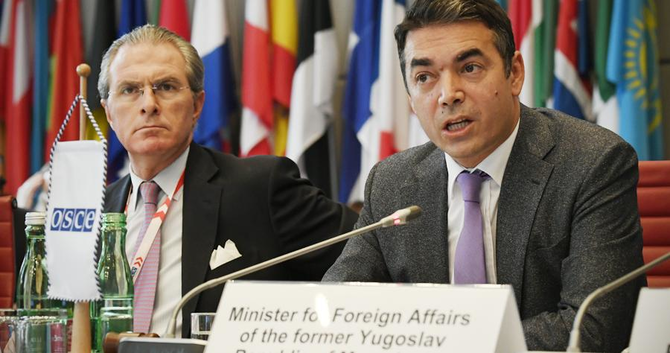

EU tells Western Balkan nations to work harder to join
EU tells Western Balkan nations to work harder to join

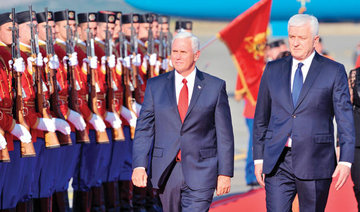
Greenland should hold talks with the US without Denmark, opposition leader says
COPENHAGEN: Greenland should hold direct talks with the US government without Denmark, a Greenlandic opposition leader told Reuters, as the Arctic island weighs how to respond to President Donald Trump’s renewed push to bring it under US control.
Trump has recently stepped up threats to take over Greenland, reviving an idea he first floated in 2019 during his first term in office.
Greenland is strategically located between Europe and North America, making it a critical site for the US ballistic missile defense system. Its rich mineral resources also fit Washington’s goal of reducing dependence on China.
The island is an autonomous territory of the Kingdom of Denmark. It has its own parliament and government, but Copenhagen retains authority over foreign affairs and defense.
“We encourage our current (Greenlandic) government actually to have a dialogue with the US government without Denmark,” said Pele Broberg, the leader of Naleraq, the largest opposition party and the most prominent political voice for Greenland’s independence.
“Because Denmark is antagonizing both Greenland and the US with their mediation.”
Naleraq, which strongly advocates a rapid move to full independence, doubled its seats to eight in last year’s election, winning 25 percent of the vote in the nation of just 57,000.
Although excluded from the governing coalition, the party has said it wants a defense agreement with Washington and could pursue a “free association” arrangement — under which Greenland would receive US support and protection in exchange for military rights, without becoming a US territory.
All Greenlandic parties want independence but differ on how, and when, to achieve it.
GOVERNMENT SAYS DIRECT TALKS NOT POSSIBLE
Greenlandic Foreign Minister Vivian Motzfeldt said Greenland could not conduct direct talks with the US without Denmark because it is not legally allowed to do so.
“We must respect the law, and we have rules for how to resolve issues in the Kingdom,” she told Sermitsiaq daily late on Wednesday.
The Danish and Greenlandic governments did not immediately reply to requests for comment on Broberg’s remarks.
The comments come ahead of a planned meeting between the Danish and Greenlandic foreign ministers and US Secretary of State Marco Rubio next week to address tensions between NATO allies.
Motzfeldt said it was important to set Greenland’s relationship with Washington on a steady course.
“My greatest hope is that the meeting will lead to a normalization of our relationship,” she told Sermitsiaq.
Rubio appears not to favor a military operation, according to France’s foreign minister. But others in the Trump administration say the option is on the table.
“We are going to make sure we defend America’s interests,” US Vice President JD Vance told Fox News in an interview aired late on Wednesday. “And I think the president is willing to go as far as he has to make sure he does that.”
(Reporting by Tom Little and Stine Jacobsen in Copenhagen; additional reporting by Soren Jeppesen; writing by Gwladys Fouche; Editing by Ros Russell)
Trump has recently stepped up threats to take over Greenland, reviving an idea he first floated in 2019 during his first term in office.
Greenland is strategically located between Europe and North America, making it a critical site for the US ballistic missile defense system. Its rich mineral resources also fit Washington’s goal of reducing dependence on China.
The island is an autonomous territory of the Kingdom of Denmark. It has its own parliament and government, but Copenhagen retains authority over foreign affairs and defense.
“We encourage our current (Greenlandic) government actually to have a dialogue with the US government without Denmark,” said Pele Broberg, the leader of Naleraq, the largest opposition party and the most prominent political voice for Greenland’s independence.
“Because Denmark is antagonizing both Greenland and the US with their mediation.”
Naleraq, which strongly advocates a rapid move to full independence, doubled its seats to eight in last year’s election, winning 25 percent of the vote in the nation of just 57,000.
Although excluded from the governing coalition, the party has said it wants a defense agreement with Washington and could pursue a “free association” arrangement — under which Greenland would receive US support and protection in exchange for military rights, without becoming a US territory.
All Greenlandic parties want independence but differ on how, and when, to achieve it.
GOVERNMENT SAYS DIRECT TALKS NOT POSSIBLE
Greenlandic Foreign Minister Vivian Motzfeldt said Greenland could not conduct direct talks with the US without Denmark because it is not legally allowed to do so.
“We must respect the law, and we have rules for how to resolve issues in the Kingdom,” she told Sermitsiaq daily late on Wednesday.
The Danish and Greenlandic governments did not immediately reply to requests for comment on Broberg’s remarks.
The comments come ahead of a planned meeting between the Danish and Greenlandic foreign ministers and US Secretary of State Marco Rubio next week to address tensions between NATO allies.
Motzfeldt said it was important to set Greenland’s relationship with Washington on a steady course.
“My greatest hope is that the meeting will lead to a normalization of our relationship,” she told Sermitsiaq.
Rubio appears not to favor a military operation, according to France’s foreign minister. But others in the Trump administration say the option is on the table.
“We are going to make sure we defend America’s interests,” US Vice President JD Vance told Fox News in an interview aired late on Wednesday. “And I think the president is willing to go as far as he has to make sure he does that.”
(Reporting by Tom Little and Stine Jacobsen in Copenhagen; additional reporting by Soren Jeppesen; writing by Gwladys Fouche; Editing by Ros Russell)
Latest updates




© 2026 SAUDI RESEARCH & PUBLISHING COMPANY, All Rights Reserved And subject to Terms of Use Agreement.