Dubai exchange explores options as Indians stop licensing securities abroad

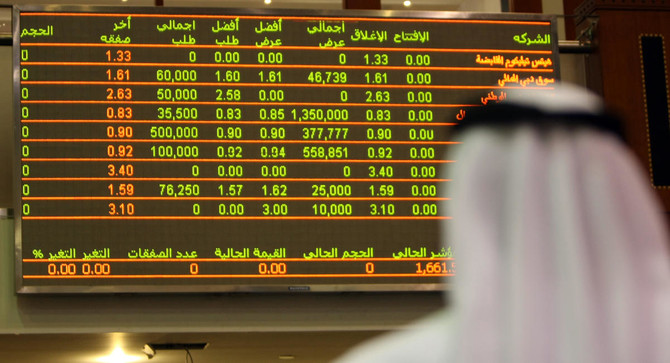
DGCX said it was working with Indian counterparts to explore alternatives after India’s three main stock markets announced they would stop licensing their indexes and securities abroad. (File Photo: AFP)
Updated 12 February 2018
Follow

Dubai exchange explores options as Indians stop licensing securities abroad

DUBAI: The Dubai Gold and Commodities Exchange (DGCX) said on Monday it was working with Indian counterparts to explore alternatives after India’s three main stock markets announced they would stop licensing their indexes and securities abroad.
India’s decision appears to threaten several products offered by the DGCX, which trades futures based on the Bombay Stock Exchange’s Sensex index; futures based on single Indian stocks; and Indian rupee and US dollar-based futures for an Indian index compiled using methodology from MSCI.
“DGCX is working very closely with the Bombay Stock Exchange (BSE) as well as India International Exchange (INX) to explore alternative offerings, which will be communicated in due course,” it said.
The BSE, the National Stock Exchange and the Metropolitan Stock Exchange said on Friday that they would terminate their foreign licensing agreements with immediate effect, subject to notice periods, because they wanted to prevent trading in Indian assets from migrating outside the country.
The DGCX said trade in its equity-related contracts was continuing for now, but did not elaborate on what arrangements might be made if notice periods expired.
The United Arab Emirates and the Gulf have large populations of Indian expatriates, and India-related contracts have been a major reason for growth in the DGCX’s business over recent months.
The exchange reported earlier that last month was its best January ever for trading volumes and value, with volume across its business surging 40 percent from a year earlier to 1.91 million lots valued at $47 billion. The main drivers of the growth were the Indian rupee, other currency pairs, Indian single stock futures and Sensex futures, it said.
Last November, the DGCX said it was adding 44 blue-chip Indian companies to its range of single stock futures. Between July and October, it traded 851,108 of the contracts, up ten-fold from 2016, with a value of $5.4 billion, it said.


Saudization rates in marketing, sales professions announced

Updated 5 sec ago
Follow

Saudization rates in marketing, sales professions announced

RIYADH: Saudi Arabia’s Ministry of Human Resources and Social Development has announced the issuance of two decisions to increase Saudization rates in marketing and sales professions.

This comes as part of the ministry’s efforts to enhance the participation of national talent in the labor market, raise the level of Saudization in specialized professions, and provide stimulating and productive job opportunities for Saudi citizens across the Kingdom.

The first decision stipulates raising the Saudization rate to 60 percent in marketing professions in the private sector, effective Jan. 19, 2026. It applies to establishments with three or more employees in marketing professions, with a minimum wage of SR5,500 ($1,466). 

The targeted professions include: marketing manager, advertising agent, and advertising manager, as well as graphic designer, advertising designer, and public relations specialist. They also include advertising specialist and marketing specialist, as well as public relations manager and photographer.

The decision will be implemented three months after the announcement date to allow establishments sufficient time to prepare and implement it.

The second decision stipulates raising the Saudization rate to 60 percent in sales positions within the private sector, effective Jan. 19, 2026. This applies to establishments with three or more employees in sales roles, including: sales manager, retail sales representative, and wholesale sales representative as well as sales representative, IT and communications equipment sales specialist, and sales specialist. They also include a commercial specialist and a goods broker.

The decision will take effect three months after the announcement date to allow targeted establishments time to fulfill the requirements and achieve the Saudization target.

The entity clarified that private sector establishments will benefit from a package of incentives offered by the Ministry of Human Resources and Social Development, including support for recruitment, training and development, and employment, as well as job stability and priority access to Saudization support programs and programs of the Human Resources Development Fund.

The ministry also confirmed that its decision to raise Saudization rates in marketing and sales professions was based on analytical studies of labor market needs, in line with the number of job seekers in related specializations and the current and future requirements of the sales and marketing sectors.

It noted that implementing these decisions would enhance the attractiveness of the labor market, contribute to increasing quality job opportunities, and promote job stability for Saudi nationals.

The ministry further published the procedural guide for the two decisions on its website, which includes details of the targeted professions, the mechanisms for calculating Saudization rates, and the required compliance steps.

It urged all covered establishments to comply with the implementation to avoid penalties and to take advantage of the grace period provided for preparation and fulfillment of the requirements.