PARIS: Oil prices, long battered by a global glut in supply, have been rising recently as the market returns to balance on the back of a landmark deal between producers to throttle output, but surging shale production in the US could throw a spanner in the works, OPEC said on Monday.
Crude prices fell as low as $35 per barrel at the start of 2016, but they have been rising since, reaching a three-year high of more than $70 per barrel last month, “on signs that production adjustments by OPEC and non-OPEC participating countries are balancing the market,” OPEC wrote in its latest monthly market report.
Strong economic data — notably from the US and Germany — as well as geopolitical tensions in the Middle East have also helped support prices, the cartel said.
But it cautioned that “surging US production remained a concern.”
OPEC countries and other oil-producing countries, such as Russia, agreed at the end of 2016 to cut back production to combat the global glut in oil.
At a meeting in Vienna at the end of November, they agreed to extend that deal until the end of 2018.
But with crude prices on the rise, shale producers, particularly in the US — who are not party to the deal and whose overheads are lower than the oil majors — are ramping up output to cash in on the boom.
And that, in turn, could jeopardize the delicate balance that the market has now reached, OPEC said.
Shale production is controversial, because in order to extract oil and gas, a high-pressure mixture of water, sand and chemicals is blasted deep underground to release hydrocarbons trapped between layers of rock.
And environmentalists argue that the process — known as fracking, or hydraulic fracturing technology — may contaminate ground water and even cause small earthquakes.
Turning to the outlook for global oil demand, OPEC predicted that it would continue to grow this year as economic recovery gathers pace.
The cartel projected that global demand for oil would rise to 98.6 million barrels per day in 2018, from 97.01 million bpd last year.
That represented an upward revision from earlier forecasts and “mainly reflected the positive economic outlook,” OPEC said.
Transportation fuels — namely gasoline, jet fuel and diesel oil — were anticipated to provide the bulk of oil demand growth in 2018, propelled by steady vehicle sales in the US, China and India, the cartel said.
And another factor would be “capacity additions, as well as expansions in petrochemical sector projects... mainly in the US, and to a lesser extent in China.”
At the same time, a number of factors were also expected to weigh on oil demand, such as substitution with other fuels, a steady increase in efficiency gains, and a reduction in subsidies.
“Finally, the degree of digitalization and technological development in various sectors is also expected to relatively cap oil demand growth in 2018,” OPEC said.


![]()
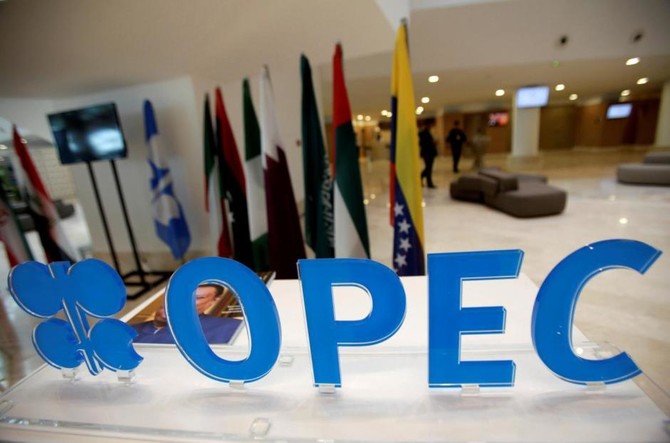
Surging US output ‘a concern’ for OPEC
Surging US output ‘a concern’ for OPEC
Latest updates


© 2026 SAUDI RESEARCH & PUBLISHING COMPANY, All Rights Reserved And subject to Terms of Use Agreement.