MANILA: The Philippine government on Monday will order a total ban on the deployment of Filipino workers to Kuwait.
This comes in the wake of the death of another Filipina, Joanna Daniela Dimapilis, whose body was found this week inside a freezer in an apartment in Kuwait which had been abandoned by her employers in 2016.
“A formal order on a total deployment ban will be issued by Secretary (Silvestre) Bello on Monday,” Raul Francia, spokesperson of the Department of Labor and Employment (DOLE) said this weekend.
Francia, however, did not give further details on who would be covered by the total ban. This, he said, has yet to be determined.
Bello last month issued Administrative Order No. 25, directing the Philippine Overseas Employment Administration (POEA) to suspend processing of overseas employment certificates (OECs) of Kuwait-bound workers pending investigation on the causes of death of seven OFWs in that country.
Francia also said that the secretary was set to talk to two local airline companies, the flag carrier Philippine Airlines and Cebu Pacific, for the repatriation of workers in Kuwait. Both airlines have signified willingness to help OFWs in Kuwait.
As this developed, Cebu Pacific said in a statement on Saturday it "will be mounting a special flight to Kuwait to assist our kababayans (fellow men) who wish to be repatriated to the Philippines." It is now coordinating with the Department of Foreign Affairs and the Philippine Embassy in Kuwait. Further information on the special flight will be released once finalized.
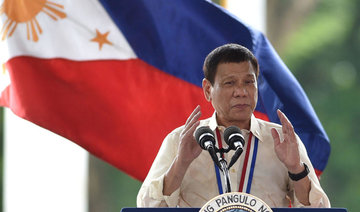
This follows a directive of President Rodrigo Duterte to the labor secretary to repatriate distressed Filipino workers in Kuwait who want to return.
Duterte issued the order to Bello during a press conference on Friday, wherein the president became emotional as he showed graphic photos of of Dimapilis who, based on examination, bore fatal stab wounds to the neck and torture marks across her body.
A furious Duterte said he is "ready to take drastic steps that will help preserve Filipino life and limb."
"We do not intend to offend any government or anyone. But if a ban is what is needed, let it be," he added.
The president then said that the suspension on the deployment of workers to Kuwait would remain indefinitely.


![]()

Philippines set to impose total ban on deployment of Filipino workers to Kuwait
Philippines set to impose total ban on deployment of Filipino workers to Kuwait

Latest updates





© 2026 SAUDI RESEARCH & PUBLISHING COMPANY, All Rights Reserved And subject to Terms of Use Agreement.