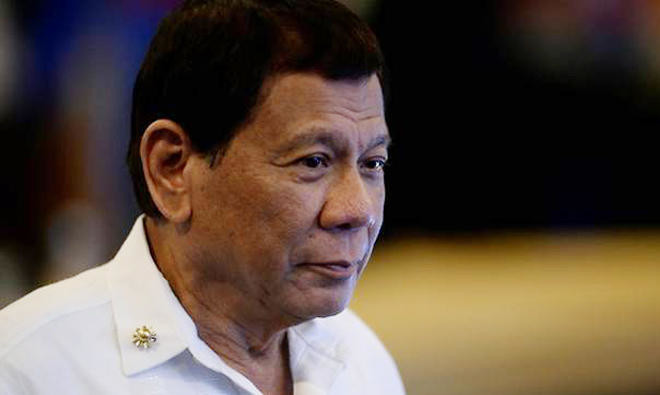
MANILA: Philippine President Rodrigo Duterte warned on Wednesday he may impose a permanent ban on sending workers to Kuwait and withdraw his countrymen working there if another Filipino domestic helper is raped and dies.
The comments were the second time in less than a week that Duterte expressed anger about alleged abuse in Kuwait, where he said low-paid Filipinos were made to endure rape and starvation.
He asked the governments of Kuwait and other Middle East countries, where more than a million Filipinos work, to take steps to end the abuse and “to treat my countrymen as human beings with dignity.”
“I hope I am not committing a diplomatic faux pas. But one more incident ... I’m going to ban,” he said in a speech before leaving for a regional summit in India.
“And I’m sorry, the Filipinos there, you can all go home,” he said. “If you leave, they will also be having a hell of a time adjusting to that.”
On Friday, the Department of Labor and Employment (DOLE) suspended deployment of workers to Kuwait, a day after Duterte said abuse had driven several domestic helpers to suicide.
Kuwait initially expressed surprise and said it was in touch with Manila to try to resolve the issue.
More than 250,000 Filipinos work in Kuwait, the Philippine foreign ministry estimates, most of them as domestic helpers. There are also large numbers in the UAE, Saudi Arabia and Qatar.
Remittances by overseas Filipinos amount to more than $2 billion a month, keeping domestic demand robust in one of the world’s fastest-growing economies.
Duterte said Kuwait was an ally, but abuse should not be tolerated.
“I hope that you’d listen to me,” he said. “We may need your help, but we will not do it at the expense of the dignity of the Filipino.”

Duterte demands dignity for Filipinos in threat to withdraw workers from Kuwait
Trump to meet Venezuelan opposition leader Machado after praising its government
- Machado finds herself competing for Trump’s ear with members of Venezuela’s government
- The lunch marks the first time the two have met in person
WASHINGTON: Venezuelan opposition leader Maria Corina Machado arrived at the White House for lunch with Donald Trump on Thursday, a meeting that could affect how the US president seeks to shape the South American country’s political future.
Machado, who fled Venezuela in a daring seaborne escape in December, finds herself competing for Trump’s ear with members of Venezuela’s government and seeking to ensure she has a role in governing the nation going forward.
The lunch marks the first time the two have met in person.
HOPES OF MOVE TO DEMOCRACY
After the US captured Venezuela’s longtime leader, Nicolas Maduro, in a snatch-and-grab operation this month, various opposition figures, members of Venezuela’s diaspora and politicians throughout the US and Latin America have expressed hope that Venezuela will begin the process of democratization.
But for now, Trump has said he is focused on economically rebuilding Venezuela and securing US access to the country’s oil. The day after the January 3 operation, he expressed doubts that Machado had the backing needed to return to the country and govern, telling reporters, “She doesn’t have the support within or the respect within the country.” Trump has on several occasions praised Delcy Rodriguez, Venezuela’s interim president, telling Reuters in an interview on Wednesday, “She’s been very good to deal with.”
Machado was banned from running in Venezuela’s 2024 presidential election by a top court stacked with government allies. Maduro claimed victory, but outside observers widely believe Edmundo Gonzalez, an opposition figure backed by Machado, in fact won more votes by a substantial margin. While the current government has freed dozens of political prisoners in recent days, outside groups and advocates have said the scale of the releases has been exaggerated by Caracas.
One potential topic of conversation for Thursday’s White House meeting will be the Nobel Peace Prize, which was awarded to Machado last month, a snub to Trump, who has long sought the award. Machado has suggested she would give the prize to the US president for having deposed Maduro, though the Norwegian Nobel Institute has said the prize cannot be transferred, shared or revoked.
Asked if he wanted Machado to give him the prize, Trump told Reuters on Wednesday: “No, I didn’t say that. She won the Nobel Peace Prize.”
Pressed on what he would do if she brought the prize nonetheless, he responded: “Well, that’s what I’m hearing. I don’t know, but I shouldn’t be the one to say.”
“I think we’re just going to talk,” Trump told Reuters. “And I haven’t met her. She’s a very nice woman. I think we’re just going to talk basics.”
After her visit with Trump, Machado will meet with a bipartisan group of senior senators on Capitol Hill in the afternoon. The opposition leader has generally found more enthusiastic allies in Congress than in the White House, with some lawmakers having expressed concerns about Trump’s dismissals of her ability to govern.