Ex-president seeks Indian intervention after top Maldives’ judge arrested

Updated 06 February 2018
Follow

Ex-president seeks Indian intervention after top Maldives’ judge arrested

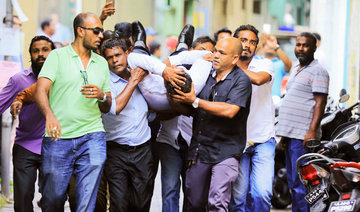
MALE: The Maldives’ top judge was arrested Tuesday as security forces stormed the Supreme Court at dawn, after President Abdulla Yameen declared a state of emergency in the honeymoon islands.
The detention of Chief Justice Abdulla Saeed and another Supreme Court judge dramatically raised the stakes after Yameen refused to comply with the court’s order to release political dissidents.
Several countries have warned against travel to the upmarket holiday paradise.
Yameen, facing threats from a galvanized political opposition to impeach him for alleged corruption, had earlier ordered a shutdown of Parliament.
In a televised address to the nation, the president accused the judges of being part of a plot to overthrow him.
“I had to declare a national emergency because there was no other way to investigate these judges,” he said. “We had to find out how thick the plot or coup was.”
Yameen has presided over an escalating crackdown on dissent that has battered the image of the nation, and left almost all the political opposition jailed since he came to power in 2013.
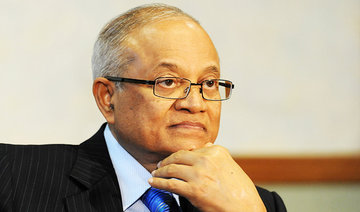
On Monday, he ordered the arrest of his estranged half-brother and former President Maumoon Abdul Gayoom, who had sided with the main opposition.
He was taken from his home in the capital Male around midnight on Monday, hours after the government announced a 15-day state of emergency.
“I have not done anything to be arrested,” Gayoom said in a video message to supporters posted on Twitter. “I urge you to remain steadfast in your resolve too. We will not give up on the reform work we are doing.”
The exiled leader of the Maldives opposition, Mohamed Nasheed, accused Yameen of acting illegally and called on the US and India to step in and help remove him from office.
“President Yameen has illegally declared martial law and overrun the state. We must remove him from power,” said Nasheed, the first democratically elected leader of the Maldives, in a statement issued Tuesday.
“We would like the Indian government to send an envoy, backed by its military, to free the judges and the political detainees.”
Nasheed was jailed in 2015 after he was convicted on a terrorism charge widely seen as politically motivated. He has been in exile since 2016 when he traveled to the UK for medical treatment and was granted asylum there.
He has repeatedly accused Yameen of corruption and pledged to return from exile and run for president in elections due to be held later this year, after the Supreme Court last week quashed his terrorism conviction.
On Tuesday he said he was calling on India to send troops to the strategically located archipelago, which has grown increasingly close to regional rival China under Yameen’s leadership.
Tuesday’s arrests follow the court’s shock decision last Thursday to order the release of political dissidents and quash the convictions of Nasheed and other exiled opposition figures.
The judges also ordered the government to restore the seats of 12 legislators sacked for defecting from Yameen’s party, a move that effectively gave the opposition a majority in Parliament and the power to impeach the president.
Yameen, who has faced several unsuccessful opposition attempts to impeach him for alleged corruption, responded by shuttering Parliament before moving late Monday to impose a state of emergency.
That gives sweeping powers to security forces to arrest and detain individuals, curtails the powers of the judiciary and bars Parliament from impeaching Yameen.
The US said it was “troubled and disappointed” by the move and called on Yameen to comply with the rule of law.
The UN, Australia, Britain, Canada, India and the US had welcomed the court’s decision last week, while UN Secretary General Antonio Guterres at the weekend called for “restraint.”
The escalating crisis has also led several countries including the US and China to advise their citizens against traveling to the Maldives.
Last year nearly 1.4 million foreign holidaymakers visited the tiny nation of 1,190 coral islets famed for its pristine and secluded beaches.


Moscow made an offer to France regarding a French citizen imprisoned in Russia, says Kremlin

Updated 5 sec ago
Follow

Moscow made an offer to France regarding a French citizen imprisoned in Russia, says Kremlin

  • Laurent Vinatier, an adviser for Swiss-based adviser Center for Humanitarian Dialogue, Vinatier was arrested in Moscow in June 2024
  • He is accused of failing to register as a “foreign agent” while collecting information about Russia’s “military and military-technical activities” 

The Kremlin on Thursday said it was in contact with the French authorities over the fate of a French political scholar serving a three-year sentence in Russia and reportedly facing new charges of espionage.
Kremlin spokesman Dmitry Peskov told reporters that Russia has made “an offer to the French” regarding Laurent Vinatier, arrested in Moscow last year and convicted of collecting military information, and that “the ball is now in France’s court.” He refused to provide details, citing the sensitivity of the matter.
French President Emmanuel Macron is following Vinatier’s situation closely, his office said in a statement. French Foreign Ministry spokesperson Pascal Confavreux said Thursday that all government services are fully mobilized to pay provide consular support to Vinatier and push for his liberation as soon as possible.
Peskov’s remarks come after journalist Jérôme Garro of the French TF1 TV channel asked President Vladimir Putin during his annual news conference on Dec. 19 whether Vinatier’s family could hope for a presidential pardon or his release in a prisoner exchange. Putin said he knew “nothing” about the case, but promised to look into it.
Vinatier was arrested in Moscow in June 2024. Russian authorities accused him of failing to register as a “foreign agent” while collecting information about Russia’s “military and military-technical activities” that could be used to the detriment of national security. The charges carry a maximum penalty of five years in prison.
The arrest came as tensions flared between Moscow and Paris following French President Emmanuel Macron’s comments about the possibility of deploying French troops in Ukraine.
Vinatier’s lawyers asked the court to sentence him to a fine, but the judge in October 2024 handed him a three-year prison term — a sentence described as “extremely severe” by France’s Foreign Ministry, which called for the scholar’s immediate release.
Detentions on charges of spying and collecting sensitive data have become increasingly frequent in Russia and its heavily politicized legal system since Moscow invaded Ukraine in February 2022.
In addition to criticizing his sentence, the French Foreign Ministry urged the abolition of Russia’s laws on foreign agents, which subject those carrying the label to additional government scrutiny and numerous restrictions. Violations can result in criminal prosecution. The ministry said the legislation “contributes to a systematic violation of fundamental freedoms in Russia, like the freedom of association, the freedom of opinion and the freedom of expression.”
Vinatier is an adviser for the Center for Humanitarian Dialogue, a Switzerland-based nongovernmental organization, which said in June 2024 that it was doing “everything possible to assist” him.
While asking the judge for clemency ahead of the verdict, Vinatier pointed to his two children and his elderly parents he has to take care of.
The charges against Vinatier relate to a law that requires anyone collecting information on military issues to register with authorities as a foreign agent.
Human rights activists have criticized the law and other recent legislation as part of a Kremlin crackdown on independent media and political activists intended to stifle criticism of the war in Ukraine.
In August 2025, Russian state news agency Tass reported that Vinatier was also charged with espionage, citing court records but giving no details. Those convicted of espionage in Russia face between 10 and 20 years in prison.
Russia in recent years has arrested a number of foreigners — mainly US citizens — on various criminal charges and then released them in prisoner swaps with the United States and other Western nations. The largest exchange since the Cold War took place in August 2024, when Moscow freed journalists Evan Gershkovich and Alsu Kurmasheva, fellow American Paul Whelan, and Russian dissidents in a multinational deal that set two dozen people free.