MALDIVES: The Maldives’ top judge was arrested Tuesday as security forces stormed the Supreme Court at dawn, in a deepening confrontation with President Abdulla Yameen who has declared a state of emergency in the troubled honeymoon islands.
The detention of Chief Justice Abdulla Saeed and another Supreme Court judge raised the stakes in a dramatic clash after Yameen refused to comply with an order to release nine political dissidents.
Police said both men were under investigation for corruption and that the court’s top administrator had also been detained.
Yameen has presided over an escalating crackdown on dissent that has battered the image of the upmarket holiday paradise, and left almost all the political opposition jailed since he came to power in 2013.
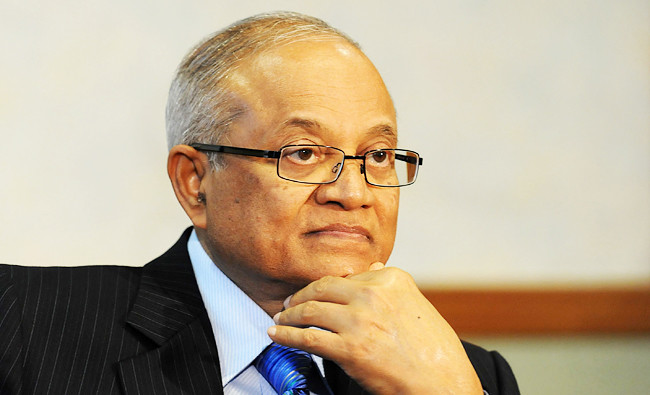
On Monday he even ordered the arrest of arrest of his estranged half-brother and former president Maumoon Abdul Gayoom, who had sided with the main opposition.
The 80-year-old — president for 30 years until the country’s first democratic elections in 2008 — was taken from his home in the capital Male around midnight on Monday, according to a tweet from his daughter Yumna Maumoon.
“I have not done anything to be arrested,” Gayoom said in a video message to supporters posted on Twitter.
“I urge you to remain steadfast in your resolve too. We will not give up on the reform work we are doing.”
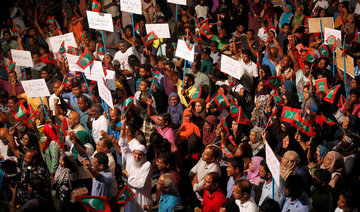
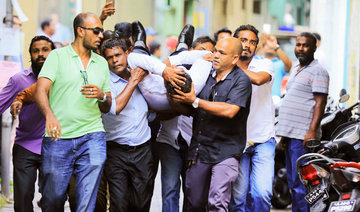
Heavily armed troops and police special operations units stormed the Supreme Court in the early hours, the court said on Twitter, as police used pepper spray to disperse hundreds of people gathered outside.
The court’s shock move in support of the political dissidents on Thursday also included an order for the government to restore the seats of 12 legislators sacked for defecting from Yameen’s party.
The opposition now has the majority in the assembly — meaning they could potentially impeach the president.
But the government, which has ordered police and troops to resist any attempt to arrest or impeach Yameen, said the court was not above the law.
“The Supreme Court ruling stands in defiance of the highest authority in the country: the constitution,” spokesman Ibrahim Hussain Shihab said in a statement.
“The Supreme Court must remember that it too is bound by law.”
He said the government would “facilitate calm” and ensure the safety of all citizens and tourists “throughout this unusual period.”
The court’s decision also paved the way for exiled former president Mohamed Nasheed — the nation’s first democratically elected leader who was controversially convicted of terrorism in 2015 — to run for president this year.
Yameen, who has faced several unsuccessful opposition attempts to impeach him for alleged corruption, responded by shuttering parliament and on Monday his administration announced a 15-day state of emergency.
“The reason for the declaration is that the Supreme Court’s ruling was obstructing the functioning of the government,” presidential aide Azima Shukoor said on national television.
The declaration gives sweeping powers to security forces to arrest and detain individuals, curtails the powers of the judiciary and bars parliament from impeaching Yameen.
But it must be officially conveyed to parliament within two days, according to officials.
Nasheed, who has expressed fears of unrest, said the declaration amounted to martial law, while an opposition legislator called it a “desperate move.”
“(This) is tantamount to a declaration of martial law in the Maldives,” Nasheed said, urging regional super power India to intervene.
Opposition legislators have also called on the international community to pressure Yameen.
The United States said it was “troubled and disappointed” at the declaration of a state of emergency and called on Yameen to comply with the rule of law.
“President Yameen has systematically alienated his coalition, jailed or exiled every major opposition political figure, deprived elected Members of Parliament of their right to represent their voters in the legislature, revised laws to erode human rights... and weakened the institutions of government,” the State Department said in a statement.
The United Nations, Australia, Britain, Canada, India and the US had welcomed the court’s decision, while UN Secretary General Antonio Guterres at the weekend called for “restraint” as the crisis escalated.