COLOMBO, Sri Lanka: Maldivian security forces locked down parliament on orders from the president Monday, leading to clashes after opposition lawmakers stormed the compound in an attempt to vote on whether to impeach the parliamentary speaker.
President Yameen Abdul Gayoom has been accused of rolling back democratic gains the Maldives has made since becoming a multiparty democracy in 2008.
A no-confidence motion against Speaker Abdulla Maseeh Mohamed was scheduled to have been taken up Monday, according to the opposition. It said the motion had support from 45 lawmakers in the 85-member house, which if it had succeeded would have challenged the president’s power.
The government, however, said no voting had been scheduled for Monday.
Members of the armed forces padlocked the gates of parliament on orders from Yameen, and lawmakers “were forcibly prevented from entering the parliamentary compound,” the main opposition Maldivian Democratic Party said.
Some opposition lawmakers broke through the barrier, but they were forcibly thrown out by military and police who even pepper-sprayed them, said party spokesman Hamid Abdul Ghafoor.
In a statement, the opposition party called Yameen’s action “desperate, illegal and unconstitutional.”
The president’s office said all the members have been informed that the next parliament sittings will be on July 31.
The parliament secretariat asked Maldives forces to strengthen security in the parliament building premises due to security concerns as certain parties were calling for protests near parliament, the office said in a statement.
Maldives police said the government restricted access to the parliament building as the session was canceled and that police were asked to intervene by Maldives National Defense Force in “clearing out individuals who forcefully entered the parliament building.”
In a statement, police also said they are investigating the obstruction of police duty by the lawmakers who broke into the restricted area.
The support for the no-confidence motion was uncertain after the election commission announced last week that four members who supported the motion had lost their seats because they left the ruling party.
Yameen’s control over parliament is threatened by a new understanding between the Maldives’ former strongman and its first democratically elected president, Mohamed Nasheed. The Maldivian Democratic Party routed Yameen’s party in local council elections earlier this year.
A similar opposition bid to oust the speaker was defeated in March with no dissenting votes after opposition lawmakers were either evicted or walked out from the vote following a dispute over problems with the electronic voting system.
The opposition coalition’s plan to wrest the parliamentary majority was aimed at reforming the judiciary, elections commission and other bodies perceived as being partial toward Yameen.
In March, Nasheed and former strongman Maumoon Abdul Gayoom and two other parties signed an agreement to form an opposition alliance.
Maumoon runs a rival faction within the Progressive Party of Maldives, which is led by the current president, his half brother.
Nasheed was jailed in 2015 for 13 years for ordering the arrest of a senior judge when he was president in 2012.
He received asylum in Britain last year after traveling there on medical leave. Three other leading politicians have also been jailed after trials criticized internationally for a lack of due process.
Maldives is a South Asian archipelago known for its luxury tourist resorts.


![]()
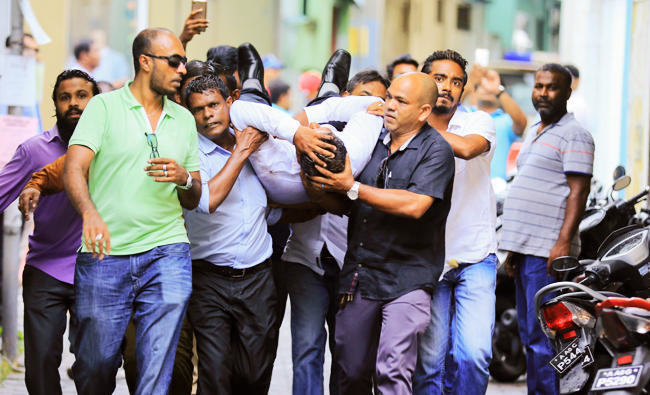
Security forces shut Maldives Parliament, leading to clashes
Security forces shut Maldives Parliament, leading to clashes
Latest updates


Recommended


© 2026 SAUDI RESEARCH & PUBLISHING COMPANY, All Rights Reserved And subject to Terms of Use Agreement.