LONDON: “There’s a desperate need for positive media content aimed at Muslims about Muslims,” said Abdalhamid Evans, the new chief operationg officer of startup video channel Alchemiya.
In a time of rising hate crime and anti-Muslim sentiment that appears to be endorsed increasingly at a government level, Evans told Arab News that Alchemiya provides a ‘voice for Muslim culture.’
“No preaching, no teachings and no politics,” he said. “Just artisans at work: writers, poets, musicians and more.”
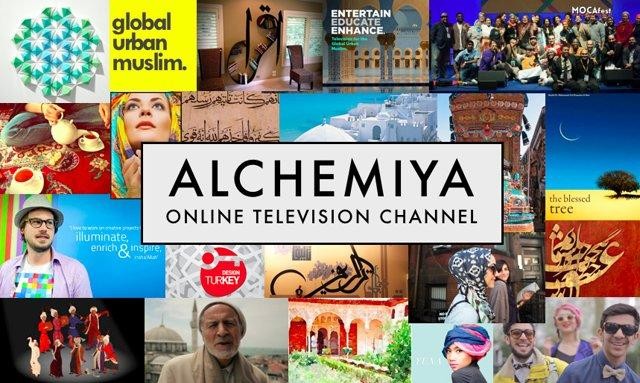
Alchemiya, frequently dubbed as ‘Netflix for Muslims’, currently features a small but high-brow menu of Muslim-related lifestyle content, from travel and history to cooking and the arts, as well as films and documentaries. The channel says it has 5,000 registered users in 40 countries.
British-Muslim convert Evans said there is currently no ‘middle ground’ Islamic media narrative between the constant stream of terrorism-related news and sectarian religious theology.
However, when BBC production veteran Navid Akhtar first launched Alchemiya in 2014, the global media landscape was largely browser-based and the company’s trajectory looked very different, says Evans. Today the firm has gained a new lease of life as it evolves into a fully-fledged video-on-demand offering in 2018, he said.
“Navid first approached me to join him in 2014, but I decided to join this year as I feel there is a convergence of global trends that will make Alchemiya a success,” Evans said.
Evans explained: “We are targeting global, urban, educated Muslims — a demographic that is growing in number. There simply isn’t any content on offer that provides an inspirational and contemporary perspective on the peaceful, productive and creative aspect of Islam.”
In many ways the figures say it all. According to The Global State of the Economy Report 2017/18 from Thomson Reuters, Muslim spend on media and entertainment was $198 billion in 2016, and it is forecast to reach $281 billion by 2022.
Evans said he sees a ‘convergence’ of trends between the misrepresentation of Islam in the media, rising social mobility and income among Muslims, the changing nature of television distribution as it goes online and the rise of video services on mobiles.
“We are targeting Muslims who are educated and cultured, but if they want to ‘dumb down’ there’s plenty of other stuff out there,” he said.
As Evans talks it becomes more and more clear that Alchemiya — as a vision and a company — is at a critical juncture.
The media channel, which has 50 videos in its library at present, is about to launch its VoD service to 90 million mobile phone subscribers in Southeast Asia in mid-2018. Axiata, one of the region’s largest mobile operators, has signed a formal letter of intent to carry Alchemiya’s Muslim lifestyle content on its mobile phone platforms in Malaysia, Indonesia and Bangladesh.
This deal becomes even more pivotal when viewed in the context of South Asia’s prolific VoD takeup. According to Ericsson ConsumerLab TV and Media Report 2017, half of all video viewing will be done on mobile devices and the Asia Pacific region will lead the market.
Evans said Alchemiya plans to scale up its video library to around 500 films within the next year. To help fund this rapid expansion, it will open a new round of funding with crowd investment platform CrowdCube in the coming weeks. This is the firm’s third investment round, following two earlier rounds that clinched over £200,000 ($282,400) of public investment.
Alchemiya also recently listed its video library on Amazon Prime as an add-on bundle and signed a revenue sharing contract with Pakistan’s biggest broadband supplier Pakistan Telecommunication.
Evans said that while Alchemiya is, of course, a moneymaking venture, it’s also a vision that ‘comes from the heart’. “We want to promote peace. As a society, we have nothing without peace,” he said.
“We want to provide a space where talented Muslim filmmakers can place their content. These days you can make excellently produced movies even on an iPhone. And it eases the pressure on young Muslims — perhaps if there is more creative outlets there will be less room for radicalization.”
To this end, Evans said that Alchemiya will siphon off 5 percent of its revenue into a foundation to help jumpstart Muslim filmmaker careers.
“In a way, our business also ties in with the rise of social enterprises and conscious capitalism… there is a lot of negativity against Islam and we want to present Muslims in a positive light,” he said.
“We think we can make a good return for the company if we can make this jump… it’s a mission of doing what we love and appealing to people who feel the same.”


![]()
How Britain’s ‘Netflix for Muslims’ now plans to woo Asia
How Britain’s ‘Netflix for Muslims’ now plans to woo Asia

Latest updates





© 2026 SAUDI RESEARCH & PUBLISHING COMPANY, All Rights Reserved And subject to Terms of Use Agreement.