WASHINGTON: US President Donald Trump on Monday rejected the idea of talks with the Taliban after a series of deadly attacks in Afghanistan, in an apparent contradiction of his own strategy to end America’s longest foreign war.
Trump condemned the militant group for the carnage in Kabul and pledged to “finish what we have to finish.”
Trump’s comments suggest he sees a military victory over the Taliban, an outcome that military and diplomatic officials say cannot be achieved with the resources and manpower he has authorized.
When he announced an increase in US troops to Afghanistan in August, US officials said the goal was to force the Taliban to negotiate a political settlement.
“I don’t see any talking taking place,” Trump told reporters as he began meeting at the White House with members of the United Nations Security Council.
“I don’t think we’re prepared to talk right now. It’s a whole different fight over there. They’re killing people left and right. Innocent people are being killed left and right.”
Trump last year ordered an increase in US troops to Afghanistan, air strikes and other assistance to Afghan forces. The US ambassador to the United Nations, Nikki Haley, said earlier this month the strategy was working and pushing the insurgents closer to peace talks.
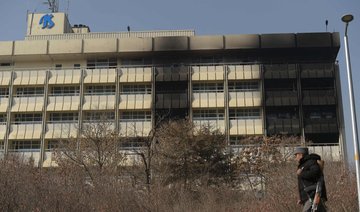
That was before a suicide bomber penetrated the highly guarded center of Kabul on Saturday and detonated an explosives-laden ambulance, killing more than 100 people and wounding at least 235. That attack followed a brazen Taliban assault on the city’s Intercontinental Hotel and other acts of violence.
Four US citizens were killed and two wounded in the Jan. 20 attack on the Intercontinental Hotel, the US State Department said last week. At least 20 people were killed in the hotel assault.
NO EVIDENCE OF MILITARY VICTORY
“When you see what they’re doing and the atrocities that they’re committing, and killing their own people, and those people are women and children ... it is horrible,” Trump said.
“We don’t want to talk to the Taliban. We’re going to finish what we have to finish, what nobody else has been able to finish, we’re going to be able to do it,” Trump said.
Current and former US officials said that despite the carnage, the United States had no choice but to promote peace talks.
A US official, speaking on condition of anonymity, expressed surprise at Trump’s comments and said there was an understanding that defeating the Taliban was not purely a military problem. “You can never really take talks off the table,” the official said.
Laurel Miller, who served as acting US special representative to Afghanistan and Pakistan until June, said the stated goal of Trump’s Afghanistan strategy was “to increase military pressure on the Taliban in order to motivate them to engage in a political settlement.”
There is no evidence, she said, “that suggests that the US and Afghan forces can defeat the Taliban on the battlefield.”
Afghanistan’s UN ambassador, Mahmoud Saikal, told Reuters on Monday that fighting needed to continue against certain elements of the Taliban.
“There are two categories of Taliban: One is the reconcilable elements who are in touch with us, who are talking to us, and one is the irreconcilable,” Saikal said.
“The irreconcilables and those who have chosen to fight, we need to fight. We need to fight against them, we need to have the capability to withstand against them and to defend our people,” he said.


![]()

Trump condemns Taliban role in Afghan attacks, says no talks
Trump condemns Taliban role in Afghan attacks, says no talks


Latest updates


© 2026 SAUDI RESEARCH & PUBLISHING COMPANY, All Rights Reserved And subject to Terms of Use Agreement.