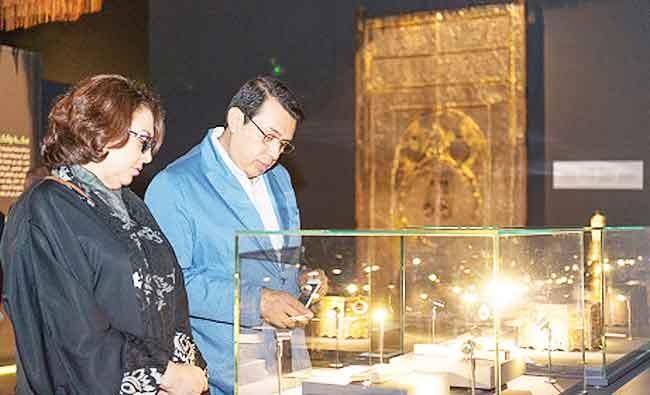
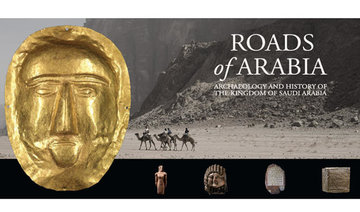
RIYADH: The exhibition “Roads of Arabia: Archaeological treasures of Saudi Arabia through the ages” takes center stage in Tokyo on Monday.
Organized by the Saudi Commission for Tourism and National Heritage (SCTH), the exhibition will show Saudi Arabia in its various stages of cultural development through the ages.
“The Kingdom has been known for being the land of Islam, its economy, its major role in the political field and for being an oil supplier. However, it also has a rich cultural heritage,” Majed Al-Sheddi, mass media department manager at SCTH, told Arab News from Tokyo on Sunday.
He said that preparations have been completed for the exhibition in collaboration with the Japanese National Museum and the Saudi Embassy in Tokyo.
He noted that SCTH President Prince Sultan bin Salman started the exhibition and continued developing it through the years, adding that the show has drawn some 3 million visitors in the US, Europe and Asia.
He added that the SCTH chief will deliver a video message during the opening of the exhibition, which is expected to be well-attended by people who have heard and read much about it.
“The exhibition is an official cultural event in Japan, where it’s considered an important event and the largest exhibition of its kind in showcasing Saudi Arabia’s vast cultural diversity that includes rare archaeological items,” he said.
He added that the exhibition would display 466 rare archaeological items.
The exhibition includes the Paleolithic age to the period of antiquity, the civilizations of Arab kingdoms, through the Islamic period until the emergence of the Saudi state with its three phases, to the era of King Abdul Aziz, founder of the modern Saudi state.

Saudi cultural exhibition gets underway in Tokyo
Kingdom goes green to celebrate Founding Day
- Parks, streets, public spaces shine with national pride, while cultural programs, family activities bring communities together
RIYADH: Residents of Riyadh took part in an initiative to install First Saudi State flags to mark Founding Day on Feb. 22, organized by the Riyadh municipality.
The initiative, reflecting national pride and drawing community participation, enhanced the festive presence across neighborhoods, parks, streets, and public spaces.
The municipality also organized events across the city and governorates, illuminating main roads and public squares with more than 5,000 decorative lights, the Saudi Press Agency reported.
The Jeddah municipality launched a multi-day program to mark Founding Day, decorating main roads, squares, and the corniche.
A key event took place at Prince Majid Park on Sunday, featuring falconry, equestrian shows, and traditional handicrafts. Family activities included henna painting and creative workshops for children.
The King Abdulaziz Center for World Culture in Dhahran marked Founding Day with a multi-night Ramadan program from Feb. 20–22, offering 30 heritage-focused activities in a festive, family-friendly setting.
Visitors enjoyed cultural events, films, exhibitions, and hands-on workshops. Riyadh resident Tiger Lee, visiting Dhahran for the first time, said he came to experience the celebrations and learn more about the Kingdom’s history.
Entry was free, with food outlets, a traditional souq, henna and Sadu weaving sessions, museum and library storytelling, and plaza exhibitions adding to the experience.
Meanwhile, traditional markets in the Baha region turned into lively cultural hubs, showcasing local heritage and national pride, the SPA stated.
Shops were decorated with flags and traditional handicrafts such as palm frond products and pottery, while visitors and locals wore traditional attire. The markets supported local artisans, boosted economic activity, and enhanced the region’s touristic appeal.
Government buildings and private facilities were also illuminated in green, marking 299 years of Saudi history since 1727.
The King Fahd Complex for the Printing of the Holy Qur’an in Madinah was illuminated in green to mark the national occasion, reflecting pride, unity, and the Kingdom’s stability and progress.
The Tabuk municipality organized 23 cultural and heritage events across the region’s cities and governorates, in partnership with government and private entities, to highlight the day’s historical significance and strengthen national identity. Parks and public facilities were prepared to host residents and visitors.
Meanwhile, the Jazan municipality decorated the region with more than 1,500 banners and themed displays, transforming streets, parks, and public squares.
In coordination with government departments, the celebrations featured national performances, folk arts, and heritage showcases unique to Jazan.