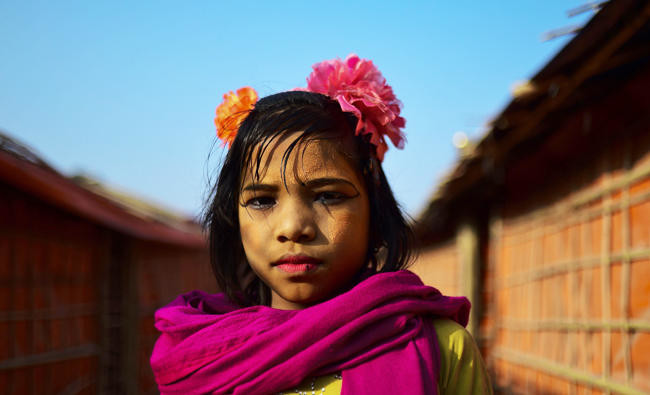
COX'S BAZAR: The disturbing drawings of homes engulfed in flames, and stickmen hanging from trees that are produced by Rohingya children in Bangladesh’s overcrowded refugee camps are slowly giving way to the flowers and sunny days that psychologists expect from healthy youngsters.
But the prospect of returning to Rakhine, where the Myanmar Army and Buddhist mobs orchestrated a campaign of ethnic cleansing, could reverse the healing and damage children forever, say experts.
“My friends were slaughtered by the military and Buddhists when we were trying to escape. There were dead bodies everywhere,” 12-year-old Sadiya told AFP in a trembling voice, wiping away tears with her headscarf.
“If we go back now, they will kill all of us. I don’t think we will ever go back. I don’t want to.”
Sadiya is one of the 690,000 Rohingya who have pressed into Bangladesh since last August. Two thirds are children.
Thousands arrived alone, many carrying with them a handful of pitiful possessions and graphic stories of seeing their families murdered and their villages burned in an orgy of communal violence.
The UN estimates 170,000 children are suffering from some form of mental trauma, having witnessed rape and torture.
For months they have lived in the camps that have spread from the riverine border, where desperate conditions have steadily improved.
After months of global pressure on civilian leader Aung San Suu Kyi, Myanmar reached an agreement on Nov. 23 with Bangladesh to take back refugees.
The returns were supposed to start this week, but were suddenly shelved, with both sides blaming the other for a lack of preparation.
Aid agencies and experts say that is actually a good thing.
“We know the children that are already traumatized and need expert care, will be even more traumatized if they are forced to go back,” UNICEF Deputy Executive Director Justin Forsyth told AFP in the Balukhali refugee camp.
“Nightmares, wetting their beds, self harming. These are things children begin to do in extreme situations. I mean children shaking with fear because they don’t know whether they’ll see the same type of violence happening again.”
The small army of psychologists working in the camps say repatriation could cause the Rohingya children long-term damage just as they are coming to terms with the relative stability of their new lives.
A handful of child-safe zones have sprung up across the camps, offering a respite from the drudgery of survival, where youngsters can play, draw, sing, act and read in safety.
Little is known about what preparations the Myanmar authorities are making, but pictures that emerged this week of processing centers wrapped in razor wire offered a stark contrast.
Sirajum Monira, a Bangladeshi government clinical psychologist at Kutupalong camp, said returning youngsters was not simply a case of shovelling them back across the border.
“The incidents can’t be forgotten easily. It is a major incident for their life which will be carried out throughout their life,” she said.
“After repatriation, going back to their own home, they will need psychological support.”
Even before the killing began last August, life was hard for the Rohingya, a minority despised by most Burmese as illegal immigrants — despite many having lived there for generations.
Myanmar imposes strict controls on education, freedom of movement and religion in Rakhine, though actual conditions are difficult to verify because the government not allow foreign media or aid groups into the region.
Ten-year-old Mohamamad Zubayer, whose father was killed by Buddhist mobs, would prefer to stay where he is.
“I don’t mind living here forever,” he told AFP, saying he particularly enjoyed going to school — something he had not been able to do in Myanmar.


![]()
Traumatized Rohingya children fear return to Myanmar
Traumatized Rohingya children fear return to Myanmar
Latest updates


© 2026 SAUDI RESEARCH & PUBLISHING COMPANY, All Rights Reserved And subject to Terms of Use Agreement.