JEDDAH: Saudi and Arab hip-hop artists have been making great strides in the past couple of years and proving themselves through their lyrics and fan base.
From Morocco to Sudan, from Palestine to Syria and to the Arabian Gulf, listeners’ acceptance of the genre is evident. Through visuals, YouTube and other mediums, it has gained momentum in the past few years, especially in the Kingdom.
Separating themselves from Western performers, Arab hip-hop artists have their own agendas to sing about — whether it be war, love, acceptance, equality and inequality, or great-fun rap.
However, some artists are using profanity in their lyrics. Even more curious is their use of the “n-word.” Is this the new hype?
The question was raised late last year on Twitter by the Saudi hip-hop guru Big Hass. The MC, founder of the online Re-Volt Magazine and radio host of the popular Laish Hip-hop, is one of the loudest voices in the region supporting local Arab and Saudi artists.
“Our culture will not allow profanity in the music we listen to. We will shut it down. It doesn’t sum up Arab hip-hop, it’s the power of the word that makes it important. The n-word is not for us to use and, frankly speaking, we haven’t struggled to use it,” Big Hass said.
Many Saudi artists such as Klash, Slow Moe, Moe Flow, Majeed and Qusai have worked very hard to bring forth their music, making a household name for themselves by rapping in Arabic or English, talking about issues that matter, keeping the true essence of hip-hop alive.
They are influencers for those who seek to follow that path, but controversy still arises as some choose explicit lyrics.
“If you’re smart enough, you’ll listen carefully to the lyrics,” says Yousef Ammar A, a freshman at the University of Miami. “I listen to both American and Saudi artists and I’m a fan of hip-hop. I am a fan of the direction many artists are headed to.
“But I do see that my friends are using the n-word more often every time I go to Saudi. I don’t really understand why they do it. Maybe it sounds cool, but it really isn’t. If we as young men and women don’t realize the difference between lyrics and language we use on a daily basis early on, then we’re going to become a pariah in a society that doesn’t accept profanity in any way.” Wise words, Yousef.
Having been in the game for some time, Big Hass believes there has been a lot of “copy-pasting” without understanding the true essence of the word. The n-word is a hideous pejorative that should be removed from common use.
“It’s our duty as writers, bloggers, radio hosts, journalists to point that out,” he says. “The use of profanity and the n-word, for example, is not allowed in our society. We’re better than that.”


![]()
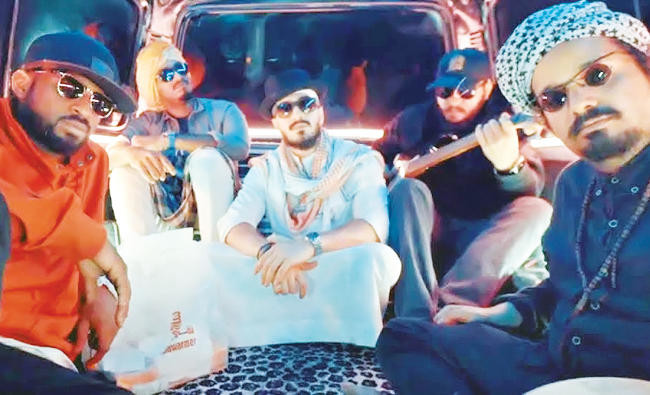
Saudis discover hip-hop scene
Saudis discover hip-hop scene


Latest updates


Recommended


© 2026 SAUDI RESEARCH & PUBLISHING COMPANY, All Rights Reserved And subject to Terms of Use Agreement.