Comoros says abuse of passports-for-cash scheme worries Gulf allies

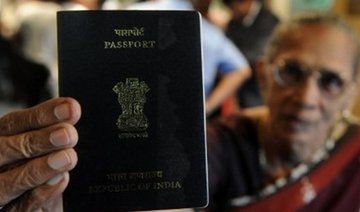
Comorian passports can be seen in this file photo.(Reuters)
Updated 20 January 2018
Follow

Comoros says abuse of passports-for-cash scheme worries Gulf allies

MORONI: Comoros has sold citizenship to nearly 52,000 foreigners since 2009, the government said in the first official statement on the scale of a passports-for-cash deal with Gulf states.
Most of the documents had been sold under an approved scheme but there had been abuses that led to some Iranians buying passports, which had sparked tensions with Gulf allies, the country's foreign minister said.
Comoros struck a deal with the United Arab Emirates in 2008 to sell economic citizenship to stateless Bidoon people living in the Gulf in exchange for cash for the poor Indian Ocean nation. However, the Comoros parliament is investigating complaints of corruption and procedures not being followed.
The previously undisclosed tally for the number of passports sold means Comoros – a nation of some 800,000 people – should have received more than $260 million in revenues, a sum equivalent to over 40 percent of its gross domestic product.
However, Comoros investigators say large amounts of cash cannot be accounted for.
Sales on hold
A Reuters report last month detailed how some passports had been sold to foreigners outside the original accord, including people alleged to have broken sanctions on Iran.
Comoros Interior Minister Mohamed Daoudou said the sale of further passports and renewal of existing documents held by foreigners were on hold pending the parliamentary inquiry and investigations into sales to people outside official agreements.
The government says it has sought help from Interpol and U.S government investigators.
U.S. and Interpol officials contacted by Reuters could not confirm whether an official request had been made.
Some Comoros and Western officials fear that the scheme was hijacked by people looking to bypass sanctions on Iran.
"The vast majority of people who secured passports (outside the official programme) are of Iranian origin or are working for Iran," Foreign Minister Souef Mohamed El Amine said on Friday.


UN’s top court opens Myanmar Rohingya genocide case

Updated 14 min 8 sec ago
Follow

UN’s top court opens Myanmar Rohingya genocide case

  • The Gambia filed a case against Myanmar at the UN’s top court in 2019
  • Verdict expected to impact Israel’s genocide case over war on Gaza

DHAKA: The International Court of Justice on Monday opened a landmark case accusing Myanmar of genocide against its mostly Muslim Rohingya minority.

The Gambia filed a case against Myanmar at the UN’s top court in 2019, two years after a military offensive forced hundreds of thousands of Rohingya from their homes into neighboring Bangladesh.

The hearings will last three weeks and conclude on Jan. 29.

“The ICJ must secure justice for the persecuted Rohingya. This process should not take much longer, as we all know that justice delayed is justice denied,” said Asma Begum, who has been living in the Kutupalong refugee camp in Bangladesh’s Cox’s Bazar district since 2017.

A mostly Muslim ethnic minority, the Rohingya have lived for centuries in Myanmar’s western Rakhine state but were stripped of their citizenship in the 1980s and have faced systemic persecution ever since.

In 2017 alone, some 750,000 of them fled military atrocities and crossed to Bangladesh, in what the UN has called a textbook case of ethnic cleansing by Myanmar.

Today, about 1.3 million Rohingya shelter in 33 camps in Cox’s Bazar, turning the coastal district into the world’s largest refugee settlement.

“We experienced horrific acts such as arson, killings and rape in 2017, and fled to Bangladesh,” Begum told Arab News.

“I believe the ICJ verdict will pave the way for our repatriation to our homeland. The world should not forget us.”

A UN fact-finding mission has concluded that the Myanmar 2017 offensive included “genocidal acts” — an accusation rejected by Myanmar, which said it was a “clearance operation” against militants.

Now, there is hope for justice and a new future for those who have been displaced for years.

“We also have the right to live with dignity. I want to return to my homeland and live the rest of my life in my ancestral land. My children will reconnect with their roots and be able to build their own future,” said Syed Ahmed, who fled Myanmar in 2017 and has since been raising his four children in the Kutupalong camp.

“Despite the delay, I am optimistic that the perpetrators will be held accountable through the ICJ verdict. It will set a strong precedent for the world.”

The Myanmar trial is the first genocide case in more than a decade to be taken up by the ICJ. The outcome will also impact the genocide case that Israel is facing over its war on Gaza.

“The momentum of this case at the ICJ will send a strong message to all those (places) around the world where crimes against humanity have been committed,” Nur Khan, a Bangladeshi lawyer and human rights activist, told Arab News.

“The ICJ will play a significant role in ensuring justice regarding accusations of genocide in other parts of the world, such as the genocide and crimes against humanity committed by Israel against the people of Gaza.”