BEIRUT: Campaigners calling for strict enforcement of a boycott against Israel have set their sights on the April release of “Beirut” starring John Hamm and Rosamund Pyke.
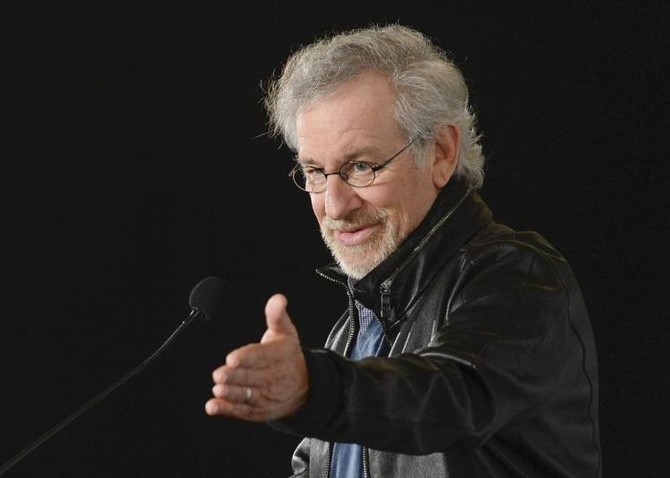
The activists, who largely operate on social media, claimed victory after Lebanon this week banned the latest Steven Spielberg film “The Post” and an Australian film “Jungle.”
“The Post” was banned because Spielberg remains on a blacklist after filming scenes from Schindler’s List in Jerusalem. “Jungle,” which stars Harry Potter actor Daniel Radcliffe, was banned after complaints that it glamorizes an Israeli adventurer.
“Another victory for the advocates of boycotting the Zionist enemy in Lebanon,” activist Samah Idriss wrote on his Facebook page.
But others are less happy and feel the current spate of film bans, including last year’s hit superhero movie “Wonder Woman,” are overzealous censorship.
“What do they mean by banning a movie in this century when movies are only a click away?”, Vicky Habib, a film critic, said.
“Beirut,” which tells the story of a CIA operative in Lebanon negotiating a hostage release, has already been condemned by Culture Minister Ghattas Khoury for distorting the facts and presenting the city in a bad light.

Lebanon’s anti-Israel film activists set sights on ‘Beirut’
NASA and families of fallen astronauts mark 40th anniversary of space shuttle Challenger accident
CAPE CANAVERAL, Florida: Families of the astronauts lost in the space shuttle Challenger accident gathered back at the launch site Thursday to mark that tragic day 40 years ago.
All seven on board were killed when Challenger broke apart following liftoff on Jan. 28, 1986.
At the Kennedy Space Center memorial ceremony, Challenger pilot Michael Smith’s daughter, Alison Smith Balch, said through tears that her life forever changed that frigid morning, as did many other lives. “In that sense,” she told the hundreds of mourners, “we are all part of this story.”
“Every day I miss Mike,” added his widow, Jane Smith-Holcott, “every day’s the same.”
The bitter cold weakened the O-ring seals in Challenger’s right solid rocket booster, causing the shuttle to rupture 73 seconds after liftoff. A dysfunctional culture at NASA contributed to that disaster and, 17 years later, shuttle Columbia’s.
Kennedy Space Center’s deputy director Kelvin Manning said those humble and painful lessons require constant vigilance “now more than ever” with rockets soaring almost every day and the next astronaut moonshot just weeks away.
Challenger’s crew included schoolteacher Christa McAuliffe, who was selected from thousands of applicants representing every state. Two of her fellow teacher-in-space contenders — both retired now — attended the memorial.
“We were so close together,” said Bob Veilleux, a retired astronomy high school teacher from New Hampshire, McAuliffe’s home state.
Bob Foerster, a sixth grade math and science teacher from Indiana who was among the top 10 finalists, said he’s grateful that space education blossomed after the accident and that it didn’t just leave Challenger’s final crew as “martyrs.”
“It was a hard reality,” Foerster noted at the Space Mirror Memorial at Kennedy’s visitor complex.
Twenty-five names are carved into the black mirror-finished granite: the Challenger seven, the seven who perished in the Columbia disaster on Feb. 1, 2003, the three killed in the Apollo 1 fire on Jan. 27, 1967, and all those lost in plane and other on-the-job accidents.
Relatives of the fallen Columbia and Apollo crews also attended NASA’s Day of Remembrance, held each year on the fourth Thursday of January. The space agency also held ceremonies at Virginia’s Arlington National Cemetery and Houston’s Johnson Space Center.
“You always wonder what they could have accomplished” had they lived longer, Lowell Grissom, brother of Apollo 1 commander Gus Grissom, said at Kennedy. “There was a lot of talent there.”
.