DUBAI: Russia on Saturday said Washington would be making a grave mistake by pulling out of the Iran nuclear deal.
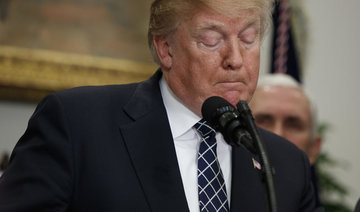
Deputy Foreign Minister Sergei Ryabkov criticized remarks by US President Donald Trump, who on Friday said the US will not reimpose nuclear sanctions on Iran, but would withdraw later this year unless the terms of the deal are changed.
“We are gradually coming to the conclusion that an internal decision by the US to leave the (Joint Comprehensive Plan of Action) has already been made or is close to being made,” Ryabkov told Interfax news agency.
“This could be one of Washington’s big foreign policy mistakes, a big miscalculation in American policy,” he said.
Meanwhile, Iran said it will not accept any changes to its 2015 nuclear deal in a statement carried by the state-run IRNA news agency Saturday. The Foreign Ministry said Iran “will not accept any change in the deal, neither now nor in future,” adding that it will “not take any action beyond its commitments.”
Under the hard-won 2015 deal with Russia, the US, China, France, Britain, Germany and the EU, Iran agreed to curb its nuclear program in exchange for lifting of a raft of international sanctions.
Trump on Friday gave an ultimatum to “either fix the deal’s disastrous flaws, or the United States will withdraw.”
America’s allies see the accord as the best way to thwart Iran’s nuclear ambitions and a victory for multilateral diplomacy. Tehran categorically denies it is seeking to develop atomic weapons.
But Trump argues that his predecessor Barack Obama gave away too much to Iran in sanctions relief, without forcing the Islamic Republic to end its ballistic missile program and support for militant groups.
Ryabkov said Moscow must unite with Europe and China and undertake “intense work” to keep the existing plan intact and decried what he said was a US attempt to strongarm the situation.
“In what we heard yesterday, I don’t see any invitation for Iran to enter dialogue,” he said. “This defies the logic of the agreement.”
“Russia will do everything in its power to save the agreement,” he said.
(With the Associated Press)


![]()

Iran rejects change, Russia says Trump would make ‘big mistake’ by leaving nuclear deal
Iran rejects change, Russia says Trump would make ‘big mistake’ by leaving nuclear deal
Latest updates


© 2026 SAUDI RESEARCH & PUBLISHING COMPANY, All Rights Reserved And subject to Terms of Use Agreement.