DAMMAM: The finer things in life — art and epicurean dining — come together in Fantastic, an art gallery-café combo in Saudi Arabia’s Alkhobar.
Fantastic is a new concept from young, enterprising Saudis, Ahmed Al-Ghunaim, Mohammed Al-Rasheed and artist Rawan Al-Dulaijan.
As you walk into the gallery, you are welcomed by asymmetrical light fixtures playing off artwork displayed on wall-to-ceiling shelves.
Immediately, a silhouette of the Saudi king in his majestic thawb, bisht and ghutra, fashioned out of Arabic letters, catches the eye.
“Our national dress is a source of pride and what better way to showcase our pride than through our art,” Al-Ghunaim explained.
He pointed out the hexagon and pentagon chairs — Fantastic’s signature design. Using elements including stainless steel, calligraphy, graphics, wood, natural leather and high-end fabric, Fantastic’s furniture is designed to make us rethink the way we look at ordinary things.
Upstairs, you can find some of the gallery’s bigger pieces, including a console table constructed from copper, glass and wood.
Al-Ghunaim pointed out a chair inspired by the Dubai Metro — a digital image of the UAE city’s transport system makes up the back of the chair, which has black arches for armrests.
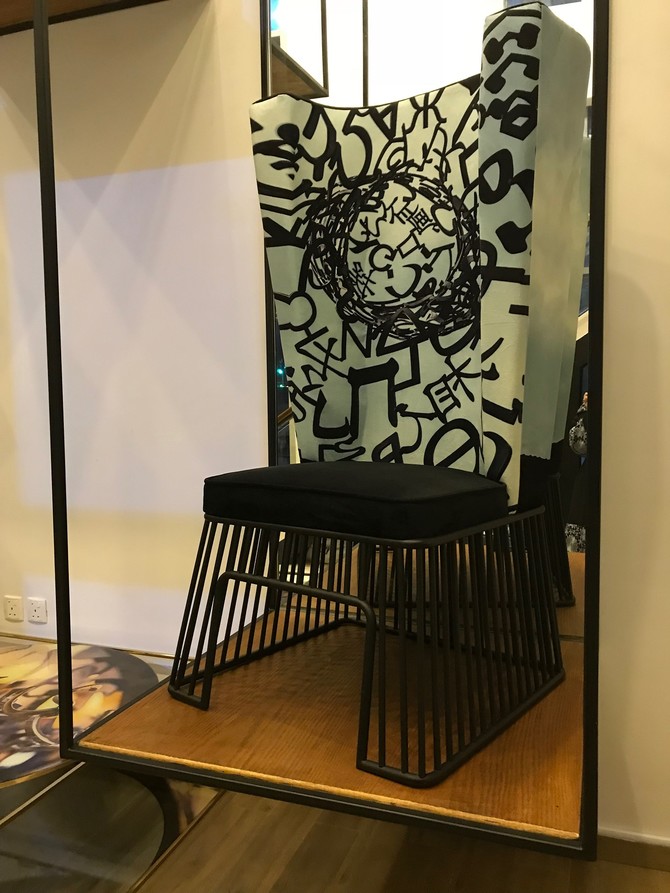
The “Tolerance Chair,” meanwhile — inspired by the work of renowned Spanish artist Jaume Plensa — incorporates words from various languages to emphasize that diversity inspires us to live together in harmony. “Languages can be a common medium that bridge cultures and differences,” Al-Ghunaim said.
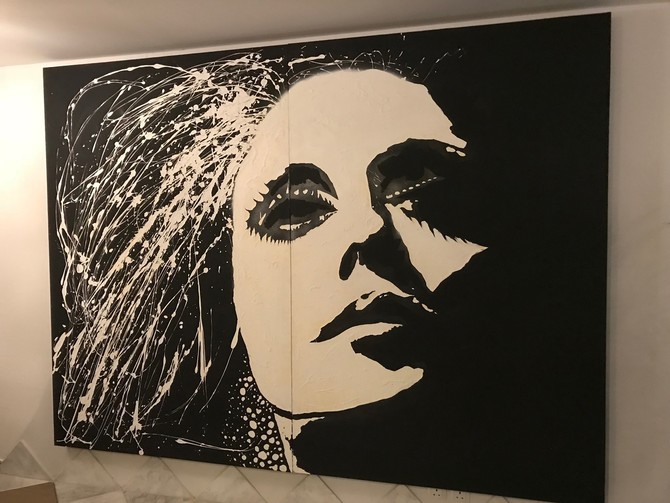
The gallery is currently displaying paintings by young artist Wijdan Al-Jahwary, who uses saffron and coffee powders to paint portraits. His large, distinctive portrait of the legendary Lebanese singer Fayrouz takes center stage at the café and has visitors posing for a coveted selfie.
The café retains Fantastic’s aesthetic — geometric planters and light fixtures with golden accents, calligraphy-imprinted chairs and lightweight marble and wood cutlery. Each piece of furniture or décor is available for purchase and can be customized to individual preferences — for example, a planter can be converted to a table if a customer desires, Al-Ghunaim explained.
Epicurean dining
Fantastic’s menu is innovative and indulgent. For starters, we tried the Fushi salad — a platter of toasted bread and feta cheese on a bed of lolla rossa lettuce, cherry tomatoes, beetroot, pine nuts and pistachios.
All of the ingredients for the salads are sourced locally, Al-Ghunaim said.
A favorite with regulars is the baked chicken kunaffa — marinated chicken wrapped in kunaffa dough and served with a sticky plum sauce.
For our main courses, the fresh shrimp and penne pasta tossed in a creamy saffron sauce hit the right spot.
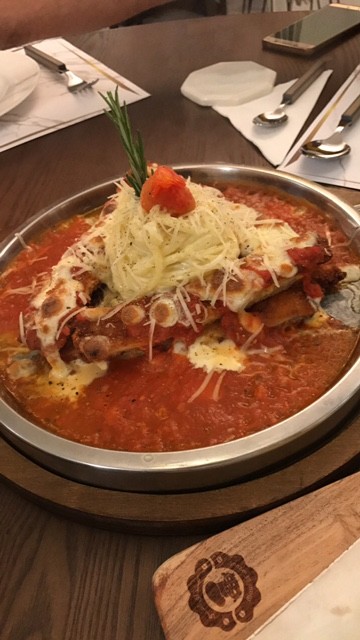
Mom’s Chicken Parmigiana — breaded chicken breast with marinara sauce — and the Taouk pizza — pizza with a special mix of BBQ and tahini sauce rolled up and served taouk style — are innovative takes on home-made dishes.
“We aspire to provide food that cannot be found elsewhere.” Al-Ghunaim said.
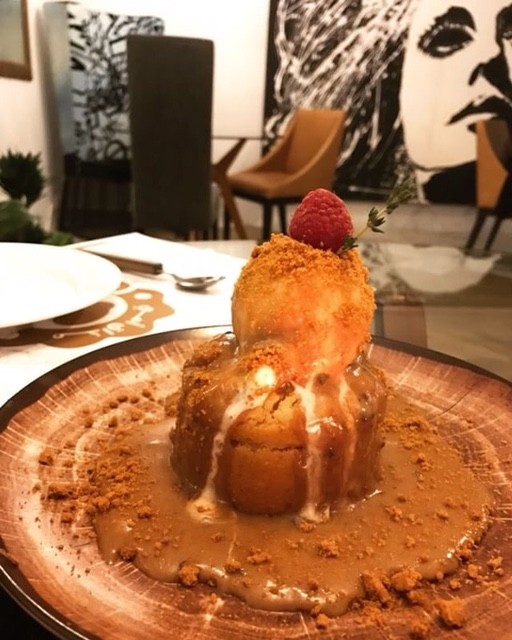
For dessert, we tried the Lotus Volcano. An explosion of textures and flavors, it is a cross between a muffin, a pancake and a soufflé, soaked in Lotus biscoff spread and salted caramel sauce.
Another best-seller is classic waffles served with Swiss chocolate. What makes these special is the distinctive crunch that you can hear right from the first bite.
We ended the meal with a rose latte, its milky smoothness perfectly complemented the fragrant and nutty flavor of Turkish rose buds.
Nurturing a community of artists
The inspiration for Fantastic came from Saudi Design Week in 2015. Al-Ghunaim attended, but saw that Saudi talent was seriously under-represented.
“I established Fantastic with the concept of promoting young artists; to give them more visibility, without them having to incur the high expenses associated with displaying work in art galleries or art shows,” he explained.
“On display is artwork that people don’t often get to see. These are not mainstream, popular or established artists. On the contrary, they are young, talented, visionary artists who need exposure in their early days.”
Al-Ghunaim said he is inspired by the talent and collaborative art community in Kuwait and Dubai and hopes his gallery-café can provide the impetus to build something similar in Al-Khobar.
“Fantastic wants to provide a platform for artists in and around Saudi Arabia, and serve as a collaborative and encouraging space for young talent,” he said.


![]()
![]()
![]()
![]()
![]()

Good food, great art come together at this gallery-café in Saudi Arabia’s Alkhobar
Good food, great art come together at this gallery-café in Saudi Arabia’s Alkhobar

Latest updates





© 2026 SAUDI RESEARCH & PUBLISHING COMPANY, All Rights Reserved And subject to Terms of Use Agreement.