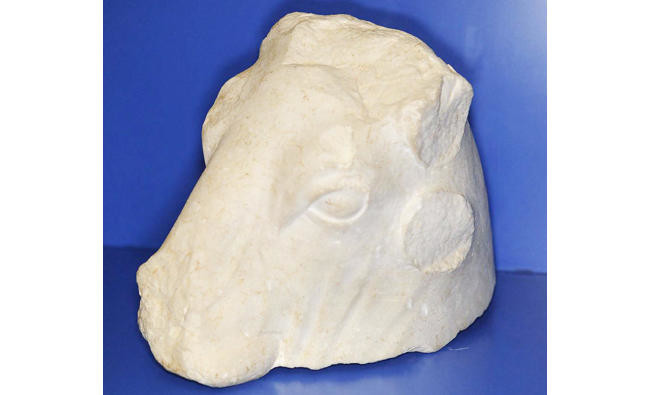
BEIRUT: A marble bull’s head made 2,400 years ago for a Phoenician temple and looted during Lebanon’s civil war arrived in Beirut on Friday after American officials found it in the US and sent it home.
The object — along with two partial statues that the US is also returning — will be displayed in the National Museum in Beirut early next month, Lebanon’s Culture Ministry said in a statement.
They were stolen from a storehouse in Byblos in 1981 at the height of Lebanon’s 1975-90 civil war, as Christian and Muslim militias battled each other across much of the country.
In recent years, wars in Iraq and Lebanon’s neighbor Syria have laid waste their cultural heritage and created a huge market in looted antiquities, helping to fund Daesh militants.
The Manhattan District Attorney’s office in New York said last month it was returning the three statues to Lebanon and was forming an antiquities trafficking unit to stop the trade in looted artifacts.
The three pieces, all excavated during the 1960s and 1970s from the temple of Eshmoun in the port of Sidon and dating from between the fourth and sixth centuries BC, had been sold to private collectors in the US.
The bull’s head was identified by a curator while on loan to the Metropolitan Museum of Art as being among the antiquities stolen in Lebanon.
Located on the east coast of the Mediterranean, Lebanon was an important part of the classical world, home to the Phoenician civilization and part of the Persian and Roman empires. It has several major ancient sites.
During the civil war, curators at its National Museum, which was located on a deadly front line, protected treasures that were not looted by sealing them up in the basement or encasing them in cement.
Others were located in other sites around Lebanon, including to Byblos, an ancient port town north of Beirut, where the three items returned on Friday were stolen.


![]()
Ancient statues looted in Lebanese war returned decades later
Ancient statues looted in Lebanese war returned decades later

Latest updates



Recommended


© 2026 SAUDI RESEARCH & PUBLISHING COMPANY, All Rights Reserved And subject to Terms of Use Agreement.