MONTGOMERY, Alabama: Toyota and Mazda said on Wednesday they will build a $1.6 billion (SR6 billion) joint assembly plant in Alabama that will employ up to 4,000 workers, a boost for President Donald Trump, who wants automakers to expand US production.
Toyota President Akio Toyoda and Mazda Chief Executive Officer Masamichi Kogai joined Alabama Governor Kay Ivey in Montgomery at an event to announce the decision.
“Welcome to sweet home Alabama,” Ivey said to the two executives, after saying the anticipated 4,000 workers at the plant to be built in Huntsville would earn an average of $50,000 a year.
The plant will produce 300,000 vehicles a year and should open on a 2,500-acre former cotton field in 2021, about 14 miles from Toyota’s engine plant in Huntsville.
Trump tweeted Wednesday night that the announcement was “Good news” for the US economy.
“Companies are coming back to the US in a very big way. Congratulations Alabama!” he wrote.
Toyota plans to build Corolla cars at the plant, while Mazda will build crossover SUVs.
Alabama will provide tax incentives. Officials said the state tax incentives were worth $370 million, but they did not disclose how much the local incentives were worth.
But with US auto industry sales declining, the new plant could exacerbate overcapacity and add pressure to cut prices. US new vehicle sales fell 2 percent in 2017, after hitting a record high in 2016, and are expected to fall further in 2018.
Huntsville Mayor Tommy Battle said the plant will “provide jobs for decades to come for Huntsville and Alabama. It vaults Alabama to the top as an industry leader in producing the next generation of cars that will power our nation.”
Among US states, Alabama is already the fifth largest producer of cars and light trucks. The state has more than 150 major auto suppliers and 57,000 automotive manufacturing jobs.
Two decades ago, Alabama spent an estimated $250 million to woo Daimler’s Mercedes-Benz to put an auto plant in Tuscaloosa, sparking the birth of auto production in the state.
In September, Daimler said it would invest $1 billion to expand its Alabama Mercedes-Benz plant to start building electric sport-utility vehicles there from about 2020.
Alabama is also home to assembly plants operated by Honda Motor and Hyundai Motor. A Kia Motors assembly plant operates near the Alabama border in Georgia.
Mazda and Toyota said they still need approvals and authorization by antitrust agencies for the new joint venture. They announced a capital alliance in August and plan to jointly develop technology for electric vehicles.
Trump tweeted in March that he wanted “new plants to be built here for cars sold here.” Many automakers have announced expansions of facilities or new jobs but no other new US auto plants have been announced.
A year ago, shortly before his inauguration, Trump criticized Toyota and threatened hefty tariffs against the Japanese automaker if it built its Corolla sedan for the US market in Mexico.
In announcing plans for a new plant in August, Toyota said it would shift production of Corollas from Canada to the new venture rather than in Guanajuato and would build Tacoma pickups in Mexico instead.
Toyota North America chief executive Jim Lentz said in an interview on Wednesday that pressure from Trump was not a factor in the decision to build the plant. “These plants are going to live 30, 50 years plus and we have to make good business decisions,” he said.
Lentz said it makes sense to build Corollas because Toyota needs the volume even in a declining car market. He called the $800 million investment a “bargain” to get the additional volume.
Toyota hopes to break ground this spring after initially getting more than 100 proposed sites from 22 states.
In October, Toyota said it would scale back investment in a planned plant in Mexico by 30 percent to $700 million and cut planned annual capacity in half to 100,000 vehicles as it shuffles its production plans to meet market demands.
Over the last 30 years Toyota and other automakers from Germany and other parts of Asia have built a second auto industry in the US. Its size and employment rivals operations of the Detroit Three automakers, but with newer plants and fewer unionized workers.
US states covet auto assembly plants because they typically pay above-average wages and spin off jobs at suppliers and service companies. Southern states have been home to the majority of new auto production by German and Asian automakers. These states generally have good transportation infrastructure, business-friendly regulators and anti-union politicians.


![]()
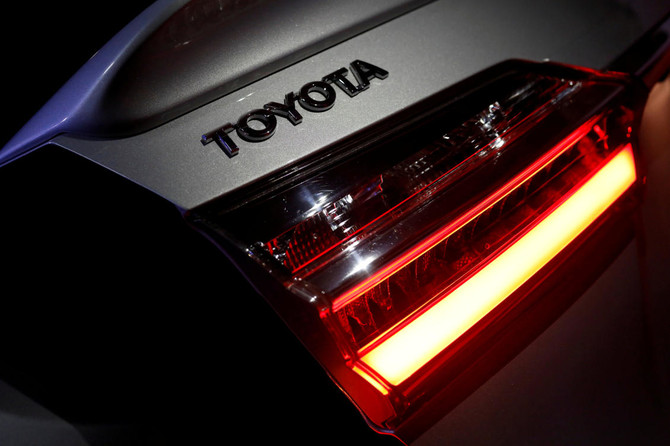
Toyota, Mazda to build $1.6 billion assembly plant in Alabama
Toyota, Mazda to build $1.6 billion assembly plant in Alabama
Latest updates


© 2026 SAUDI RESEARCH & PUBLISHING COMPANY, All Rights Reserved And subject to Terms of Use Agreement.