JEDDAH: “Najd”, a Saudi film featuring Kuwaiti actress Hayat Al-Fahad, will be premiered in Saudi Arabia, in line with the approval of the General Entertainment Authority for cinemas to reopen in Saudi Arabia.
Khaled Al-Rajeh, a Saudi producer and writer, began preparation two years ago to produce his film “Najd” which revolves around Saudi Arabia, Kuwait and Egypt in the 1950s and the present.
In an Interview with MBC TV channel, star Al-Fahad talked about the new film. “It is about young couple’s story — the wife who keeps a secret throughout her life.”
Al-Fahad posted a photo of her in one of the newspapers that published the news of the film on her official Instagram account (@hayatalfahad) and commented: “Najd is the first Saudi film starring yours truly.”
The author and director of “Najd” is Sameer A’aref, who directed several well-known series and movies in the Gulf region, including the Saudi series “37 degrees,” “Tash 17 and 18” and “Shabab albomb 5,” which was classified as one of the most Googled series of 2017.
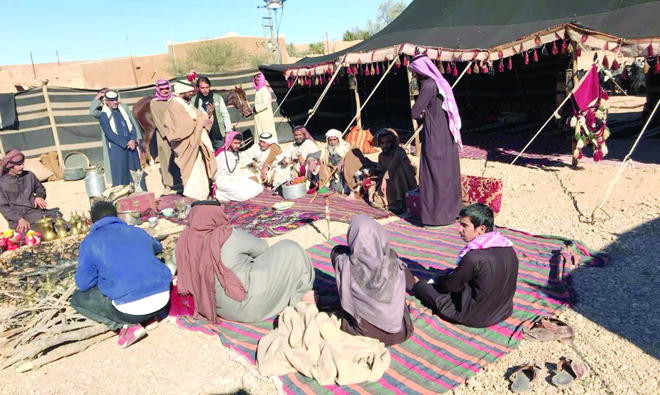
Najd was filmed in a number of heritage areas, including the Saudi areas of Siddus and Al-Oyainah, as well as several locations in Kuwait. Ninety percent was filmed in Saudi Arabia.
Mamdoh Al-Salem, who organized and supervised the first Saudi film festival with a total of 27 television shows under his name, told Arab News: “We cannot affirm which movie will be the first Saudi movie to be screened in Saudi Arabia as there is a huge number of producers and filmmakers working on a number of movies under international standards.”
“Let’s talk about a real cinema industry and what the Saudi audience wants to see, as until now filmmakers and producers cannot certify Saudi audience preferences as they just have YouTube and television programs as available sources. Are they looking to see comedy, action, drama, history or fantasy? It is a hard task to make predictions, except through experiments in making movies. Thus, our goal as filmmakers is to provide a real cinematic industry for Saudi movies with an international measure.”
The Saudi Arabian Society for Culture and Arts (SASCA) in Riyadh and the Union of Producers help attract young faces to participate in the film, and has already chosen names.
The president of SASCA in Jeddah, Omar Al-Jasser, told Arab News: “The association helps many filmmakers and drama producers in the country to attract new faces and talents. We offer performance tests and then help to promote actors and actresses to cooperate with them.”
Najd is getting great reactions from people and stars on social media because of the start of Saudi cinema after the decision to reopen cinemas and theaters in the Kingdom.
The movie’s name refers to a geographical central region of Saudi Arabia in which 28 percent of Saudis live. Najd consists of the regions of Riyadh, Qassim and Hail.


![]()
Saudi film ‘Najd’ to premiere soon in Kingdom
Saudi film ‘Najd’ to premiere soon in Kingdom

Latest updates


© 2026 SAUDI RESEARCH & PUBLISHING COMPANY, All Rights Reserved And subject to Terms of Use Agreement.