CAIRO: President Abdel Fattah El-Sisi said he would not allow a water crisis to happen in Egypt, stressing that the authorities are fully prepared to confront any such problem the country may face.
El-Sisi added that he did not want to talk more about the Egyptian preparations. The Egyptian president was most likely referring to a possible shortage of Egypt’s share of water from the Nile if Ethiopia starts storing water behind its Grand Ethiopian Renaissance Dam without reaching an agreement with Egypt on the rules of the operation of both the dam and water.
Egypt’s Foreign Minister Sameh Shoukri said during a news conference with his Irish counterpart in Cairo that his country has not received a reply from Ethiopia or Sudan so far to Egypt’s request to involve the World Bank as a neutral party in the stalled negotiations between the three countries on the dam crisis.
Shoukri presented this proposal to the Ethiopian authorities during his visit to Addis Ababa in December last year. “Egypt’s goal is not just to maintain its share of water in the context of the stalled negotiations with Ethiopia and Sudan, but to develop ways to exploit this share and to maximize efficiency in exploiting Egypt’s water shares as well,” El-Sisi said as he inaugurated some construction projects on Monday.
El-Sisi announced that three months ago Egypt started the implementation of the largest cost-effective water treatment and desalination project in its history.
He said the cost of this program exceeds 70 billion Egyptian pounds ($3.96 billion). “Water for agriculture and drinking must be secured for all Egyptians.”
He added that the implementation of these mega projects for water treatment “is not for luxury,” rejecting claims that these projects have no direct benefit for citizens. He stressed that “preventing the occurrence of a water crisis comes first in the interest of the citizen.”
The Egyptian president pointed out that desalination plants being established depend on the triple water treatment technology, and that water treated under such technology has no risk on the citizens’ lives.
On the other hand, Foreign Minister Sameh Shoukri said Sudan’s decision to withdraw its ambassador for consultation is fully evaluated by Cairo as taking action against this development.
Shukri stressed that Egypt values its relations with Sudan, but that the direction of relations needs to be corrected so that there will be no negative effects on the peoples of the two nations.


![]()
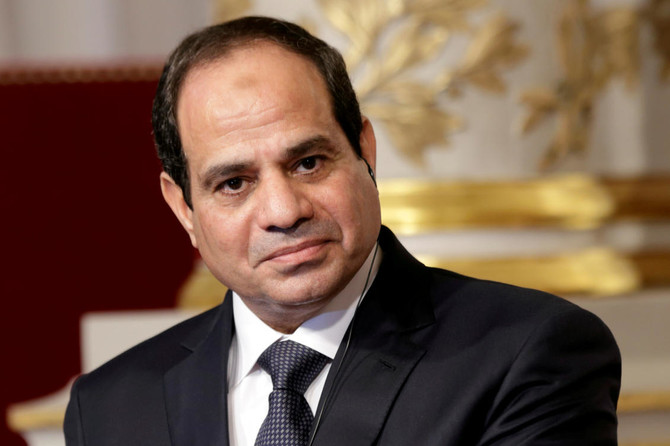
We are ready to confront any water crisis: El-Sisi
We are ready to confront any water crisis: El-Sisi

Latest updates


© 2026 SAUDI RESEARCH & PUBLISHING COMPANY, All Rights Reserved And subject to Terms of Use Agreement.