Meet the robot duck that could help children with cancer

1 / 2
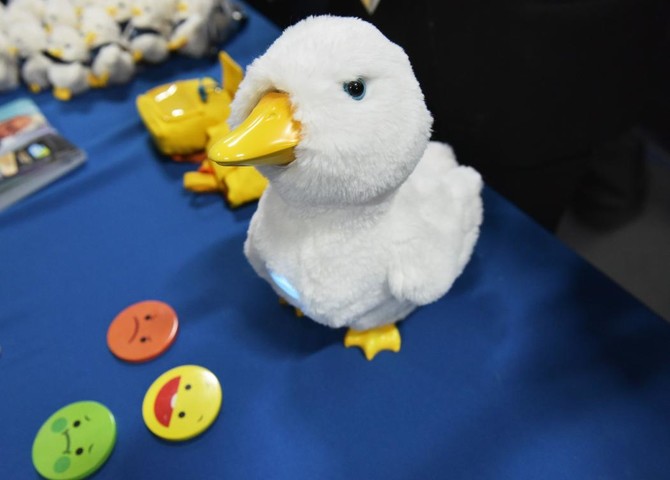
A robotic My Special Aflac Duck, for children facing cancers, is demonstrated at CES in Las Vegas, Nevada, US Jan. 7, 2018. (Reuters/Rick Wilking)
2 / 2
The My Special Aflac Duck for children facing cancer is seen on display during the CES Unveiled preview event at the Mandalay Bay Convention Center during CES 2018 in Las Vegas on Jan. 7, 2018. (AFP/Mandel Ngan)
Updated 08 January 2018
Follow

Meet the robot duck that could help children with cancer

LAS VEGAS: A plush, robotic duck may soon become a fixture in the world of children with cancer. The social robot can be silly, happy, angry, scared or sick just like them, and help them cope with their illness through the power of play.
Aaron Horowitz was diagnosed with a debilitating condition as a child. He and his Rhode Island-based company Sproutel developed the emotional support robot to help children manage stress and change the way they deal with their health.
The American Cancer Society says almost 11,000 US children are diagnosed with cancer yearly.
The duck is modeled after the mascot for insurance company Aflac, which paid for its development. Beginning later this year, the ducks will be distributed free to kid patients.
The duck’s expected to be featured Monday at the CES gadget show in Las Vegas.


Apple to update EU browser options, make more apps deletable

Updated 22 August 2024
Follow

Apple to update EU browser options, make more apps deletable

  • iPhone maker came under pressure from regulators to make changes after the EU’s sweeping Digital Markets Act took effect on March 7
  • Apple users will be able to select a default browser directly from the choice screen after going through a mandatory list of options

STOCKHOLM: Apple will change how users choose browser options in the European Union, add a dedicated section for changing default apps, and make more apps deletable, the company said on Thursday.
The iPhone maker came under pressure from regulators to make changes after the EU’s sweeping Digital Markets Act took effect on March 7, forcing big tech companies to offer mobile users the ability to select from a list of available web browsers on a “choice screen.”
The new rules require mobile software makers to show the choice screen where users can select a browser, search engine and virtual assistant as they set up their phones, which earlier came with preferred options from Apple and Google.
In an update later this year, Apple users will be able to select a default browser directly from the choice screen after going through a mandatory list of options.
A randomly ordered list of 12 browsers per EU country will be shown to the user with short descriptions, and the chosen one will be automatically downloaded, Apple said. The choice screen will also be available on iPads through an update later this year.
Apple released a previous update in response to the new rules in March, but browser companies criticized the design of its choice screen, and the Commission opened an investigation on March 25 saying it suspected that the measures fell short of effective compliance.
The company said it has been in dialogue with the European Commission and believes the new changes will address regulators’ concerns.
It also plans to introduce a dedicated area for default apps where a user will be able to set defaults for messaging, phone calls, spam filters, password managers and keyboards.
Users will also be able to delete certain Apple-made apps such as App Store, Messages, Camera, Photos and Safari. Only Settings and Phone apps would not be deletable.