DAMASCUS: “I’m married to a man I never met. He’s almost twice my age, has two teenage daughters and lives in Romania,” Zainab, 28, told Arab News.
“I’ve been waiting for my visa for more than seven months so I can be united with my husband,” she said.
“There are no young men left in Syria, so this is my only chance at starting a family and leaving to become a citizen of a European country. I see no future for me here — at least this marriage gives me hope.”
Zainab and her husband Imran, 54, were introduced on Facebook. They spoke via WhatsApp and Skype for a month before they decided to elope and complete all the paperwork for her immigration to Romania.
Marriage by proxy or via Skype has become very popular in Syria since the war erupted in 2011.
Many men have joined the conflict while others have fled to Europe, the Americas or neighboring countries. This has forced young people to resort to marriage by proxy.
Such marriages account for an estimated 54 percent of daily marriages in Syria, said Judge Mahmoud Al-Maarawi, who heads the religious court that oversees personal status issues for Syrian Muslims.
Some youth prefer to carry out marriage ceremonies through Skype, where a licensed notary, the bride, the groom, their parents and witnesses are present.
After the ceremony, the wife or an attorney takes the contract and gets it registered in court for the marriage to be legal and to start working on immigration documents.
The law of personal status has authorized sending an official power of attorney in a proxy marriage, Al-Maarawi said.
Anyone inside or outside Syria may either send a power of attorney to a trusted acquaintance, or appoint an attorney to conclude a marriage contract with the wife or her guardian.
Earlier this year, Al-Maarawi said 70 percent of women in Syria were unmarried — or “spinsters,” as he put it.
To solve what he believed was a problem, he released a statement encouraging polygamy, which angered many Syrians on social media.
“It would be better of the judge to worry about providing people with food, warmth and shelter before making these suggestions,” said a Facebook user.
Ghalia, an executive manager at a major insurance company in Damascus, said: “Instead of encouraging a solution that is far worse than the problem itself, I suggest Judge Al-Maarawi seek ways to empower women in Syria and prepare them to be more independent instead.”
Syrian attorney and writer Faten Derkiy said women are agreeing to marry men they have never met “because of the pressure that faces them in a society that deems every unmarried woman a spinster.”
She added: “Those women may also be seeking ways to leave Syria in dreams of becoming citizens of more stable and prosperous countries.”
Derkiy said: “Young men are very reluctant to consider marriage under the current economic circumstances. High inflation rates, lack of good employment opportunities, and high accommodation rents are all reasons that put young men off marriage.”
She added: “Deeming a woman a spinster and shaming her for it can result in psychological trauma. Reaching a serious state of despair can make a woman accept unfitting marriage proposals or even seek a marriage of inferior rights. In some cases, social pressure may lead an unmarried woman to commit suicide.”
To solve these problems, Derkiy suggested establishing associations that facilitate marriage and provide a fund for young people who wish to marry, similar to what other Arab countries have done.
“Women must be encouraged to volunteer, get busy doing something useful and improve themselves instead of waiting for marriage,” she said.
“All wars take a toll on society, but usually women and children endure the greatest share of pain.”


![]()
![]()

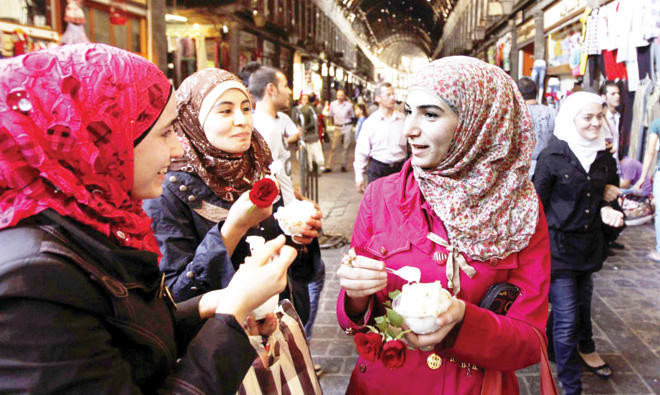
Syrian women seek virtual marriages amid uncertain futures
Syrian women seek virtual marriages amid uncertain futures


Latest updates





© 2026 SAUDI RESEARCH & PUBLISHING COMPANY, All Rights Reserved And subject to Terms of Use Agreement.