Syrian rebel groups reject Russian-sponsored Sochi conference

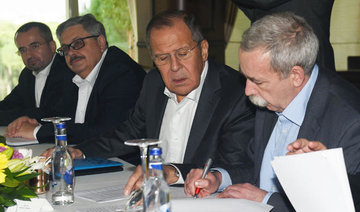
Ahmad Tohmeh (C), head of the rebel delegation, attends the session of Syria peace talks in Astana, in this December 22, 2017 photo. (AFP)
Updated 26 December 2017
Follow

Syrian rebel groups reject Russian-sponsored Sochi conference

AMMAN: Syrian rebel groups on Monday rejected Russia’s planned Sochi conference on Syria, saying Moscow was seeking to bypass a UN-based Geneva peace process and blaming Russia for committing war crimes in the war-torn country.
In a statement by around 40 rebel groups who include some of the military factions who participated in earlier rounds of Geneva peace talks, they said Moscow had not put pressure on the Syrian government to reach a political settlement.
“Russia has not contributed one step to easing the suffering of Syrians and has not pressured the regime that it claims it is a guarantor by move in any real path toward a solution,” the rebel statement said.
Russia, which has emerged as the dominant player in Syria after a major military intervention over two years ago, received backing from Turkey and Iran for holding a Syrian national dialogue congress in the Russian city of Sochi on Jan. 29-30.
“Russia is an aggressor country that has committed war crimes against Syrians... It stood with the regime militarily and defended its politically and over seven years preventing UN condemnation of (Syrian President Bashar) Assad’s regime,” the statement said.
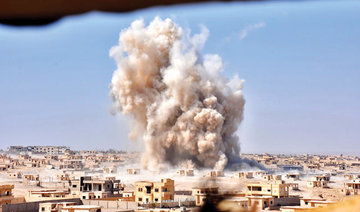
Moscow says it targets militants but rebels and residents say the Russian air strikes conducted since a major aerial campaign over two years ago has caused hundreds of civilian casualties in indiscriminate bombing of civilian areas away from the frontline.
Some rebels said they had not yet made up their mind.
UN Syria envoy Staffan de Mistura said that Russia’s plan to convene the congress should be assessed by its ability to contribute to and support the UN-led Geneva talks on ending the war in Syria.


Elderly Palestinian shot dead in Rafah

Updated 5 sec ago
Follow

Elderly Palestinian shot dead in Rafah

  • Death toll from Israel’s aggression on Gaza rises to 71,795 since start of assault in October 2023

GAZA: An elderly Palestinian man was killed by Israeli fire in Rafah on Sunday afternoon, bringing the number of fatalities since morning to two, according to local and medical sources.

The sources reported that Khaled Hammad Dahleez, 63, was shot dead by an Israeli drone northwest of Rafah.

Earlier in the day, another man was killed and several others injured in a drone strike north of Wadi Gaza, in the central Gaza Strip, the Palestinian News Agency reported.

BACKGROUND

On Saturday, at least 31 Palestinians, including children and women, were slaughtered in a series of Israeli airstrikes on several locations across the enclave — one of the deadliest days since the start of the ceasefire agreement on Oct. 11, 2025.

On Saturday, at least 31 Palestinians, including children and women, were slaughtered in a series of Israeli airstrikes on several locations across the war-ravaged enclave — one of the deadliest days since the start of the ceasefire agreement on Oct. 11, 2025.

Since the ceasefire took effect on Oct. 11, the number of people killed has risen to 523, with 1,433 injuries recorded, while 715 bodies have been recovered during the same period.

Medical sources said on Sunday the death toll from Israel’s aggression on the Gaza Strip had risen to 71,795 Palestinians killed and 171,551 injured since the start of the assault in October 2023.

The sources reported that 26 fatalities and 68 injuries were brought to Gaza hospitals over the past 48 hours, noting that numerous victims were trapped under rubble or in the streets, with ambulance and rescue crews unable to reach them.

The ceasefire’s first phase called for the exchange of all hostages held in Gaza for hundreds of Palestinians held by Israel, a surge in humanitarian aid and a partial pullback of Israeli troops.

The second phase is more complicated. It calls for installing a new Palestinian committee to govern Gaza, deploying an international security force, disarming Hamas, and taking steps to begin rebuilding.

Hamas has so far ‌rejected disarmament and Israel has repeatedly indicated that if the Islamist militant group is not disarmed peacefully, it will use force to make it do so.