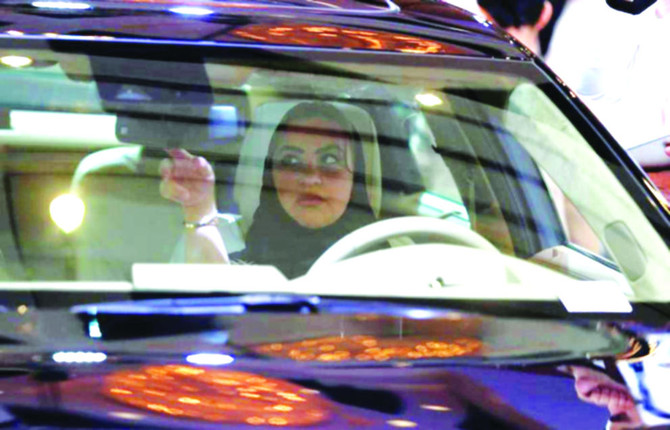
JEDDAH: Sept. 26, 2017, was a historic day in the Kingdom, as on this day the ban on women driving was lifted through a royal decree.
“The royal decree will implement the provisions of traffic regulations including the issuance of driving licenses for men and women alike,” the Saudi Press Agency (SPA) reported.
The move was also announced on TV and through the Saudi Ministry of Foreign Affairs. “Saudi Arabia allows women to drive,” the ministry affirmed via Twitter.
The decree stated: “The scholars see no reason not to allow women to drive as long as there are legal and regulatory guarantees to avoid the pretexts (that those against women driving had) even if they are unlikely to happen.”
The decree also indicated that the majority of the Council of Senior Scholars agreed that religion did not prohibit women’s driving; therefore, they did not oppose allowing it.
Women around the world rejoiced at the news, from US State Department’s Heather Nauert to global stars like Rihanna and Dua Lipa congratulated Saudi women on the lifting of the ban.
Women will be allowed to drive starting June 24, 2018, said the director general of Traffic Department, Brig. Gen. Mohammed Al-Bassami. He said women can familiarize themselves with traffic regulations by reading the Traffic Law.
After the completion of a 30-hour training course, women can obtain a driving license. Women who cannot drive need to clear a 90-hour or 120-hour training course.
The General Department of Traffic (GTD) signed agreements with several universities such as King Abdul Aziz University and Princess Nourah bint Abdulrahman University to launch women-only driving schools on their campuses. The Technical and Vocational Training Corp. revealed their preparations of educational and night courses to teach females the know-how to maintain cars.
The traffic department has completed preparations to deploy female officials to tend to road accidents involving women drivers. Women will also be employed at several traffic checkpoints and women-only detention centers to hold arrested females violating traffic laws.
Al-Bassami revealed that Saudi women with international driving licenses could drive without attending local driving schools. He also added that women with Gulf Cooperation Council (GCC) licenses could obtain Saudi licenses without taking driving tests.
The decision will help boost the number women in the workforce, boost car sales, as well as provide jobs in driving schools and detention centers. Companies like Uber and Careem were among the first to promise to create opportunities for female drivers.


![]()
The year the ban on women driving was lifted in KSA
The year the ban on women driving was lifted in KSA



Latest updates


© 2026 SAUDI RESEARCH & PUBLISHING COMPANY, All Rights Reserved And subject to Terms of Use Agreement.