ISLAMABAD: Pakistan is bracing for the impact of the sharp decline of its currency against the dollar – sparking fears of punishing inflation.
The weakening rupee, which now trades at about 110 against the greenback, will increase prices in Pakistan as the cost of imports rises.
“Firstly, the devaluation can increase the debt burden of foreign loans and make the servicing more difficult. Secondly, the rise in cost of imports can increase the inflation rate in the economy,” researcher Hafiz Abdul Qadoos of the Institute of Public Policy, told Arab News.
Last week, the International Monetary Fund (IMF) mission to Pakistan appreciated the State Bank’s (SBP) adjustment to the currency exchange but advised that the Rupee must remain flexible moving forward.
The IMF rejected suggestions that it played a role in SBP’s decision in devaluating the currency.
IMF Mission Chief to Pakistan Harald Finger, said: “The government’s biggest challenge is political uncertainty. The second biggest challenge for Pakistan has been maintaining foreign exchange reserves. To contain the fiscal deficit has been the third biggest challenge for Pakistan.”
He said that under current reserve positions, Pakistan does not require borrowing from IMF.
However, some experts believe that Pakistan might go back to the IMF by August or September 2018 – despite floating Eurobonds and Sukuk (Islamic bonds) worth $2.5 billion recently and increasing the regulatory duty on imports.
Former Finance Minister and ex-Vice President of World Bank, Shahid Javed Burki explained that
the currency had been under pressure for several years
“The rupee was under pressure as the country was losing its export markets to other low-income exporters, most notably Bangladesh and Vietnam.”
He added that the rate of inflation in Pakistan was much higher than that in its main export markets such as the US.


![]()
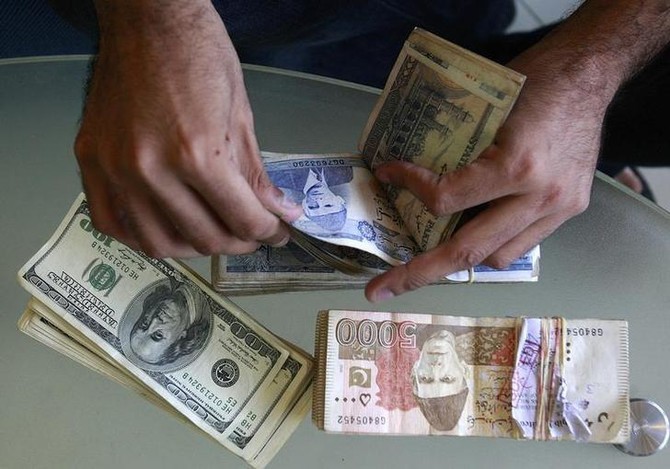
Pakistan currency plunge stokes inflation fears
Pakistan currency plunge stokes inflation fears


Latest updates


Recommended


© 2026 SAUDI RESEARCH & PUBLISHING COMPANY, All Rights Reserved And subject to Terms of Use Agreement.