BAGHDAD/IRBIL: Opposition groups quit the government of Iraq’s Kurdish region on Wednesday in protest at violent unrest in which at least three people were killed, with one group saying authorities had shown a flagrant disregard for life.
In another test for the Kurdistan Regional Government (KRG) in northern Iraq, the United States meanwhile called on authorities in the semi-autonomous region to respect press freedoms after it shut down a local broadcaster.
The United Nations called for restraint on all sides.
Tension has been high in the region since the central government in Baghdad imposed tough measures in response to an independence referendum on Sept. 25 called by the KRG in which Kurds voted overwhelmingly to secede.
The move, in defiance of Baghdad, also alarmed neighboring Turkey and Iran who have their own Kurdish minorities.
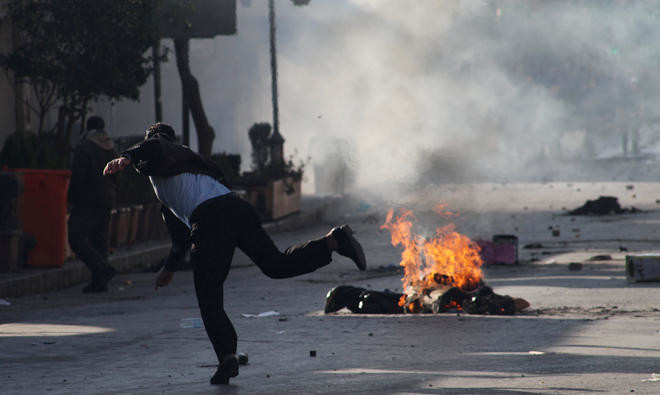
Strains spilled onto the streets on Monday and Tuesday when Kurds joined protests against years of austerity and unpaid public sector salaries, with some burning down offices belonging to political parties.
At least three people were killed and more than 80 wounded on Tuesday in clashes with Kurdish security forces in Sulaimaniya, local officials said. Some were injured when the crowd was shot at with rubber bullets and sprayed with tear gas.
On Wednesday leading opposition movement Gorran withdrew its ministers from the KRG and Kurdistan Parliament Speaker Yousif Mohamed, a party member, resigned in response to the violence.
Some have demanded the regional government’s ousting.
“We urge the international community to confront the flagrant disregard for life, liberty and democracy shown by the authorities in #Kurdistan Region,” Gorran said in a tweet.
The Kurdistan Islamic Group (Komal), another opposition party with a smaller presence in parliament, also withdrew from the government.
The US embassy in Baghdad said on Wednesday it was worried about the closure of a local Kurdish broadcaster at the hands of Iraqi Kurdish security forces a day earlier.
“We are concerned by recent actions to curb the operations of some media outlets through force or intimidation, specifically yesterday’s raid by Kurdistan Regional Government security forces of the NRT offices in Sulaimaniya,” an embassy statement said.
TEAR GAS, BURNINGS, CURFEWS
The United Nations Assistance Mission for Iraq (UNAMI) also said Kurdish authorities should respect media freedoms and that it was “deeply concerned” about violence and clashes during the protests. It called for restraint on all sides.
“The people have the right to partake in peaceful demonstrations, and the authorities have the responsibility of protecting their citizens, including peaceful protesters,” UNAMI said in a statement.
Kurdish Asayish security forces on Tuesday raided the offices of Kurdish private broadcaster NRT in Sulaimaniya province, and took the channel off the air.
NRT’s founder and opposition figure Shaswar Abdulwahid was also arrested at the Sulaimaniya airport on Tuesday. His family have asked for his release, amid local media reports that another NRT journalist was arrested in Sulaimaniya on Wednesday.
In a statement on Tuesday, Kurdish Prime Minister Nechirvan Barzani, who is on an official visit to Germany, told protesters that although he understood their frustrations, the burning of political party offices is “not helpful.”
There were no major protests in the city on Wednesday.
Security forces from the region’s capital Irbil have been deployed to help quell the unrest in Sulaimaniya, security sources told Reuters.
After Tuesday’s unrest, curfews were imposed in several towns across the wider Sulaimaniya province, some have lasted through Wednesday. Local media reported smaller protests in towns across the province, including Ranya and Kifri.


![]()
Opposition groups quit Iraqi Kurdish government over protests
Opposition groups quit Iraqi Kurdish government over protests

Latest updates


© 2026 SAUDI RESEARCH & PUBLISHING COMPANY, All Rights Reserved And subject to Terms of Use Agreement.