WASHINGTON: President Donald Trump will announce on Wednesday that the US recognizes Jerusalem as the capital of Israel and will move its embassy there, breaking with longtime US policy and potentially stirring unrest.
Despite warnings from Western and Arab allies, Trump in a 1pm White House speech will direct the State Department to begin looking for a site for an embassy in Jerusalem as part of what is expected to be a years-long process of relocating diplomatic operations from Tel Aviv.
Trump is to sign a national security waiver delaying a move of the embassy, since the US does not have an embassy structure in Jerusalem to move into. A senior administration official said it could take three to four years to build an embassy.
Still, Trump’s decision, a core promise of his campaign last year, will upend decades of American policy that has seen the status of Jerusalem as part of a two-state solution for Israelis and Palestinians, who want East Jerusalem as their capital.
Washington’s Middle East allies all warned against the dangerous repercussions of his decision when Trump spoke to them on Tuesday.
“The president believes this is a recognition of reality,” said one official, who briefed reporters on Tuesday about the announcement. “We’re going forward on the basis of a truth that is undeniable. It’s just a fact.”
Senior Trump administration officials said Trump’s decision was not intended to tip the scale in Israel’s favor and that agreeing on the final status of Jerusalem would remain a central part of any peace deal between Israel and the Palestinians.
In defending the decision, the officials said Trump was basically reflecting a fundamental truth: That Jerusalem is the seat of the Israeli government and should be recognized as such.
The Palestinians have said the move would mean the “kiss of death” to the two-state solution.
The political benefits for Trump are unclear. The decision will thrill Republican conservatives and evangelical Christians who make up a large share of his political base.
But it will complicate Trump’s desire for a more stable Middle East and Israel-Palestinian peace and arouse tensions. Past presidents have put off such a move.
The mere hint of his decision to move the embassy in the future set off alarm bells around the Middle East, raising the prospect of violence.
“Our Palestinian people everywhere will not allow this conspiracy to pass, and their options are open in defending their land and their sacred places,” said Hamas chief Ismail Haniyeh.
Islamist militant groups such as Al-Qaeda, Hamas and Hezbollah have in the past tried to exploit Muslim sensitivities over Jerusalem to stoke anti-Israel and anti-US sentiment.
The decision comes as Trump’s senior adviser and son-in-law, Jared Kushner, leads a relatively quiet effort to restart long-stalled peace efforts in the region, with little in the way of tangible progress thus far.
“The president will reiterate how committed he is to peace. While we understand how some parties might react, we are still working on our plan which is not yet ready. We have time to get it right and see how people feel after this news is processed over the next period of time,” one senior official said.
Trump spoke to Palestinian President Mahmoud Abbas, Israeli Prime Minister Benjamin Netanyahu, Jordan’s King Abdullah and Saudi King Salman to inform them of his decision.
The Jordanian king “affirmed that the decision will have serious implications that will undermine efforts to resume the peace process and will provoke Muslims and Christians alike,” said a statement from his office.
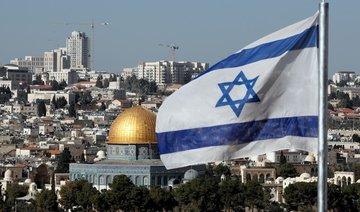
Israel captured Arab East Jerusalem in the 1967 Middle East war and later annexed it. The international community does not recognize Israeli sovereignty over the entire city, home to sites holy to the Muslim, Jewish and Christian religions.
“We have always regarded Jerusalem as a final-status issue that must be resolved through direct negotiations between the two parties based on relevant Security Council resolutions,” UN spokesman Stephane Dujarric told reporters.
No other country has its embassy in Jerusalem.
Trump has weighted US policy toward Israel since taking office in January, considering the Jewish state a strong ally in a volatile part of the world.
Still, deliberations over the status of Jerusalem were tense. Vice President Mike Pence and David Friedman, US ambassador to Israel, pushed hard for both recognition and embassy relocation, while Secretary of State Rex Tillerson and Defense Secretary Jim Mattis opposed the move from Tel Aviv, according to other US officials who spoke on condition of anonymity.
An impatient Trump finally weighed in, telling aides last week he wanted to keep his campaign promise.
Abbas warned Trump of the “dangerous consequences” that moving the embassy would have for peace efforts and regional stability, Abbas spokesman Nabil Abu Rdainah said.
But Trump assured Abbas that he remained committed to facilitating an Israeli-Palestinian peace deal, one US official said.


![]()
![]()

In break with decades of US policy, Trump to recognize Jerusalem as Israel’s capital

In break with decades of US policy, Trump to recognize Jerusalem as Israel’s capital

Latest updates



Recommended


© 2026 SAUDI RESEARCH & PUBLISHING COMPANY, All Rights Reserved And subject to Terms of Use Agreement.