In break with decades of US policy, Trump to recognize Jerusalem as Israel’s capital

1 / 2
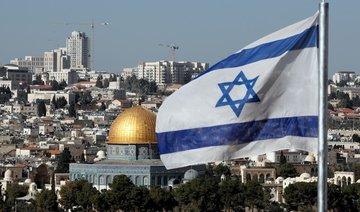
Above, Muslims pray near the Dome of the Rock Mosque in the Al-Aqsa Mosque compound in Jerusalem’s old city. Washington’s Middle East allies all warned against the dangerous repercussions of his decision when US President Donald Trump spoke to them on Tuesday. (AP)
2 / 2
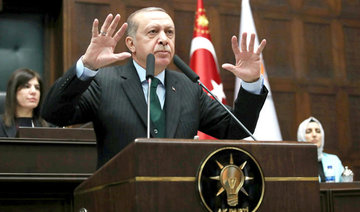
US President Donald Trump has weighted US policy toward Israel since taking office in January, considering the Jewish state a strong ally in a volatile part of the world. (Reuters)
Updated 06 December 2017
Follow

In break with decades of US policy, Trump to recognize Jerusalem as Israel’s capital

WASHINGTON: President Donald Trump will announce on Wednesday that the US recognizes Jerusalem as the capital of Israel and will move its embassy there, breaking with longtime US policy and potentially stirring unrest.
Despite warnings from Western and Arab allies, Trump in a 1pm White House speech will direct the State Department to begin looking for a site for an embassy in Jerusalem as part of what is expected to be a years-long process of relocating diplomatic operations from Tel Aviv.
Trump is to sign a national security waiver delaying a move of the embassy, since the US does not have an embassy structure in Jerusalem to move into. A senior administration official said it could take three to four years to build an embassy.
Still, Trump’s decision, a core promise of his campaign last year, will upend decades of American policy that has seen the status of Jerusalem as part of a two-state solution for Israelis and Palestinians, who want East Jerusalem as their capital.
Washington’s Middle East allies all warned against the dangerous repercussions of his decision when Trump spoke to them on Tuesday.
“The president believes this is a recognition of reality,” said one official, who briefed reporters on Tuesday about the announcement. “We’re going forward on the basis of a truth that is undeniable. It’s just a fact.”
Senior Trump administration officials said Trump’s decision was not intended to tip the scale in Israel’s favor and that agreeing on the final status of Jerusalem would remain a central part of any peace deal between Israel and the Palestinians.
In defending the decision, the officials said Trump was basically reflecting a fundamental truth: That Jerusalem is the seat of the Israeli government and should be recognized as such.
The Palestinians have said the move would mean the “kiss of death” to the two-state solution.
The political benefits for Trump are unclear. The decision will thrill Republican conservatives and evangelical Christians who make up a large share of his political base.
But it will complicate Trump’s desire for a more stable Middle East and Israel-Palestinian peace and arouse tensions. Past presidents have put off such a move.
The mere hint of his decision to move the embassy in the future set off alarm bells around the Middle East, raising the prospect of violence.
“Our Palestinian people everywhere will not allow this conspiracy to pass, and their options are open in defending their land and their sacred places,” said Hamas chief Ismail Haniyeh.
Islamist militant groups such as Al-Qaeda, Hamas and Hezbollah have in the past tried to exploit Muslim sensitivities over Jerusalem to stoke anti-Israel and anti-US sentiment.
The decision comes as Trump’s senior adviser and son-in-law, Jared Kushner, leads a relatively quiet effort to restart long-stalled peace efforts in the region, with little in the way of tangible progress thus far.
“The president will reiterate how committed he is to peace. While we understand how some parties might react, we are still working on our plan which is not yet ready. We have time to get it right and see how people feel after this news is processed over the next period of time,” one senior official said.
Trump spoke to Palestinian President Mahmoud Abbas, Israeli Prime Minister Benjamin Netanyahu, Jordan’s King Abdullah and Saudi King Salman to inform them of his decision.
The Jordanian king “affirmed that the decision will have serious implications that will undermine efforts to resume the peace process and will provoke Muslims and Christians alike,” said a statement from his office.
Israel captured Arab East Jerusalem in the 1967 Middle East war and later annexed it. The international community does not recognize Israeli sovereignty over the entire city, home to sites holy to the Muslim, Jewish and Christian religions.
“We have always regarded Jerusalem as a final-status issue that must be resolved through direct negotiations between the two parties based on relevant Security Council resolutions,” UN spokesman Stephane Dujarric told reporters.
No other country has its embassy in Jerusalem.
Trump has weighted US policy toward Israel since taking office in January, considering the Jewish state a strong ally in a volatile part of the world.
Still, deliberations over the status of Jerusalem were tense. Vice President Mike Pence and David Friedman, US ambassador to Israel, pushed hard for both recognition and embassy relocation, while Secretary of State Rex Tillerson and Defense Secretary Jim Mattis opposed the move from Tel Aviv, according to other US officials who spoke on condition of anonymity.
An impatient Trump finally weighed in, telling aides last week he wanted to keep his campaign promise.
Abbas warned Trump of the “dangerous consequences” that moving the embassy would have for peace efforts and regional stability, Abbas spokesman Nabil Abu Rdainah said.
But Trump assured Abbas that he remained committed to facilitating an Israeli-Palestinian peace deal, one US official said.


Beirut’s Commodore Hotel, a haven for journalists during Lebanon’s civil war, shuts down

Updated 6 sec ago
Follow

Beirut’s Commodore Hotel, a haven for journalists during Lebanon’s civil war, shuts down

  • The hotel, located in Beirut’s Hamra district, shut down over the weekend
  • Officials have not commented on the decision
BEIRUT: During Lebanon’s civil war, the Commodore Hotel in western Beirut’s Hamra district became iconic among the foreign press corps.
For many, it served as an unofficial newsroom where they could file dispatches even when communications systems were down elsewhere. Armed guards at the door provided some sense of protection as sniper fights and shelling were turning the cosmopolitan city to rubble.
The hotel even had its own much-loved mascot: a cheeky parrot at the bar.
The Commodore endured for decades after the 15-year civil war ended in 1990 — until this week, when it closed for good.
The main gate of the nine-story hotel with more than 200 rooms was shuttered Monday. Officials at the Commodore refused to speak to the media about the decision to close.
Although the country’s economy is beginning to recover from a protracted financial crisis that began in 2019, tensions in the region and the aftermath of the Israel-Hezbollah war that was halted by a tenuous ceasefire in November 2024 are keeping many tourists away. Lengthy daily electricity cuts force businesses to rely on expensive private generators.
The Commodore is not the first of the crisis-battered country’s once-bustling hotels to shut down in recent years.
But for journalists who lived, worked and filed their dispatches there, its demise hits particularly hard.
“The Commodore was a hub of information — various guerrilla leaders, diplomats, spies and of course scores of journalists circled the bars, cafes and lounges,” said Tim Llewellyn, a former BBC Middle East correspondent who covered the civil war. “On one occasion (late Palestinian leader) Yasser Arafat himself dropped in to sip coffee with” with the hotel manager’s father, he recalled.
A line to the outside world
At the height of the civil war, when telecommunications were dysfunctional and much of Beirut was cut off from the outside world, it was at the Commodore where journalists found land lines and Telex machines that always worked to send reports to their media organizations around the globe.
Across the front office desk in the wide lobby of the Commodore, there were two teleprinters that carried reports of The Associated Press and Reuters news agencies.
“The Commodore had a certain seedy charm. The rooms were basic, the mattresses lumpy and the meal fare wasn’t spectacular,” said Robert H. Reid, the AP’s former Middle East regional editor, who was among the AP journalists who covered the war. The hotel was across the street from the international agency’s Middle East head office at the time.
“The friendly staff and the camaraderie among the journalist-guests made the Commodore seem more like a social club where you could unwind after a day in one of the world’s most dangerous cities,” Reid said.
Llewellyn remembers that the hotel manager at the time, Yusuf Nazzal, told him in the late 1970s “that it was I who had given him the idea” to open such a hotel in a war zone.
Llewellyn said that during a long chat with Nazzal on a near-empty Middle East Airlines Jumbo flight from London to Beirut in the fall of 1975, he told him that there should be a hotel that would make sure journalists had good communications, “a street-wise and well-connected staff running the desks, the phones, the teletypes.”
During Israel’s 1982 invasion of Lebanon and a nearly three-month siege of West Beirut by Israeli troops, journalists used the roof of the hotel to film fighter jets striking the city.
The parrot at the bar
One of the best-known characters at the Commodore was Coco the parrot, who was always in a cage near the bar. Patrons were often startled by what they thought was the whiz of an incoming shell, only to discover that it was Coco who made the sound.
AP’s chief Middle East correspondent Terry Anderson was a regular at the hotel before he was kidnapped in Beirut in 1985 and held for seven years, becoming one of the longest-held American hostages in history.
Videos of Anderson released by his kidnappers later showed him wearing a white T-shirt with the words “Hotel Commodore Lebanon.”
With the kidnapping of Anderson and other Western journalists, many foreign media workers left the predominantly-Muslim western part of Beirut, and after that the hotel lost its status as a safe haven for foreign journalists.
Ahmad Shbaro, who worked at different departments of the hotel until 1988, said the main reason behind the Commodore’s success was the presence of armed guards that made journalists feel secure in the middle of Beirut’s chaos as well as functioning telecommunications.
He added that the hotel also offered financial facilities for journalists who ran out of money. They would borrow money from Nazzal and their companies could pay him back by depositing money in his bank account in London.
Shbaro remembers a terrifying day in the late 1970s when the area of the hotel was heavily shelled and two rooms at the Commodore were hit.
“The hotel was full and all of us, staffers and journalists, spent the night at Le Casbah,” a famous nightclub in the basement of the building, he said.
In quieter times, journalists used to spend the night partying by the pool.
“It was a lifeline for the international media in West Beirut, where journalists filed, ate, drank, slept, and hid from air raids, shelling, and other violence,” said former AP correspondent Scheherezade Faramarzi. “It gained both fame and notoriety,” she said, speaking from the Mediterranean island of Cyprus.
The hotel was built in 1943 and kept functioning until 1987 when it was heavily damaged in fighting between Shiite and Druze militiamen at the time. The old Commodore building was later demolished and a new structure was build with an annex and officially opened again for the public in 1996.
But Coco the parrot was no longer at the bar. The bird went missing during the 1987 fighting. Shbaro said it is believed he was taken by one of the gunmen who stormed the hotel.