ISLAMABAD: Senior Pakistani and Afghan military officials have wrapped up two-day talks in the Pakistani garrison city of Rawalpindi after a terrorist attack in the northwestern city of Peshawar that killed nine people.
Both sides discussed possible ways to enhance cooperation on countering terrorism, sources privy to the talks said on Saturday. No official statement was issued after the talks, concluded on Friday, and both sides refused to offer on-the-record comments.
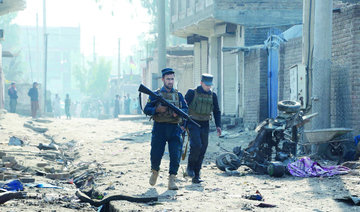
Pakistan military spokesman Maj. Gen. Asif Ghafoor said Pakistani security officials raised Friday’s terrorist attack on an agriculture center in Peshawar which killed nine people, including six students, and injured 35 others.
Ghafoor told local TV channels that the “attack was planned by the Tehrik-e-Taliban Pakistan (TTP) on the Afghan side of the border,” and that the TTP “handlers in Afghanistan had been in contact with the attackers.”
TTP spokesman Mohammed Khurasani had claimed responsibility for the attack.
The militant group released photographs of the attackers, sitting with the TTP chief Maulvi Fazlullah, and also posted a video of the attack online.
Afghan Chief of General Staff Gen. Mohammed Habib Hesary led a seven-member delegation in the talks with Pakistani counterparts.
The Pakistani delegation was led by Director General of Military Operations Maj. Gen. Sahir Shamshad Mirza, according to sources.
Pakistani and Afghan officials shared similar concerns about the presence of their armed opponents in both countries, which is one of the major obstacles in bilateral relations.
Kabul had long claimed that Afghan Taliban leaders operate from Pakistani soil, and Pakistani security officials insist the TTP and the Taliban splinter group Jamaat-ul-Ahrar have sanctuaries in Afghan border regions.
Pakistani officials renewed their calls on the Afghan side to take up measures to secure the border and stop the cross-border movement of militants.
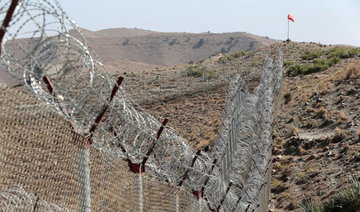
Pakistan and Afghanistan have a border of nearly 2,600 km, mostly porous, and the Pakistani Army is presently fencing the border.
Sources told Arab News that the Afghan officials raised the issue of “shelling into Afghanistan by the Pakistani forces.”
Pakistan rejects the Afghan claims and maintains that its troops never initiate fire and respond only when fired upon.
Afghanistan Chief of General Staff Mohammed Sharif Yaftali had stated in reported comments in Kabul before the visit that hundreds of Pakistani rockets had landed in border areas in eastern Kunar province in recent weeks and displaced hundreds of families.
Pakistani defense experts view the military talks with Afghanistan as significant.
Said Nazeer Mohmand, a retired Pakistani army brigadier, told Arab News on Saturday that the talks were important as both military officials met days ahead of the visit to Pakistan by US Defense Secretary James Mattis.
The Pentagon said on Saturday that Mattis would travel to Pakistan on Dec. 4, where he is planning to meet Prime Minister Shahid Khaqan Abbasi and Chief of Army Staff Gen. Qamar Bajwa.
“As fighting continues in Afghanistan, the US has been pressing Pakistan and Afghanistan to agree on common ground to counter the threat of terrorism in both countries,” Mohmand said.
He said the US can mediate between Pakistan and Afghanistan and mount pressure on both countries to bring clarity to their relations.
Najam Shinwari, an Afghan political observer, said although Pakistan and Afghanistan have not issued any statement about the talks, the face-to-face interaction itself is a positive development.
“Bilateral dialogue is important as both exchange views and find solutions to the problems,” Shinwari told Arab News on Saturday.


![]()

Pakistan, Afghan military officials wrap up security talks
Pakistan, Afghan military officials wrap up security talks
Latest updates


© 2026 SAUDI RESEARCH & PUBLISHING COMPANY, All Rights Reserved And subject to Terms of Use Agreement.