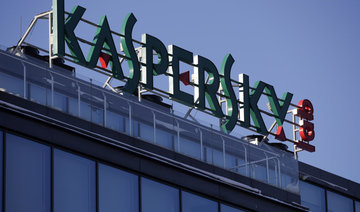
UK cyber agency targets Kaspersky in warning on Russian software

Eugene Kaspersky makes a presentation at a press conference in London early this week, in defending against accusations the company he founded works on the behalf of Russian intelligence. (Reuters)
Updated 02 December 2017
Follow

UK cyber agency targets Kaspersky in warning on Russian software

WASHINGTON/BENGALURU: Britain’s main cybersecurity agency on Friday warned British government agencies to avoid using anti-virus software from Russian companies, the latest in a series of moves targeting Moscow-based security software maker Kaspersky Lab.
In a letter to departmental permanent secretaries, the director of the UK National Cyber Security Center, Ciaran Martin, said Russian-made anti-virus software should not be used in systems containing information that would harm national security if it was accessed by the Russian government.
He said his agency is in talks with Kaspersky Lab to develop a system for reviewing its products for use in Britain.
Kaspersky’s anti-virus software was banned from US government networks earlier this year on concerns the company has close ties to intelligence agencies in Moscow and that its software could be used to enable Russian spying.
“We are in discussions with Kaspersky Lab ... about whether we can develop a framework that we and others can independently verify,” Martin said in the letter, which was publicly released.
Kaspersky Lab said in a statement that it looked forward to working with the NCSC on the issue.
Kaspersky has strongly denied allegations about the safety of its products or ties to the Russian government, saying it has become a scapegoat in the midst of rising tensions between Washington and Moscow.


Apple to update EU browser options, make more apps deletable

Updated 22 August 2024
Follow

Apple to update EU browser options, make more apps deletable

  • iPhone maker came under pressure from regulators to make changes after the EU’s sweeping Digital Markets Act took effect on March 7
  • Apple users will be able to select a default browser directly from the choice screen after going through a mandatory list of options

STOCKHOLM: Apple will change how users choose browser options in the European Union, add a dedicated section for changing default apps, and make more apps deletable, the company said on Thursday.
The iPhone maker came under pressure from regulators to make changes after the EU’s sweeping Digital Markets Act took effect on March 7, forcing big tech companies to offer mobile users the ability to select from a list of available web browsers on a “choice screen.”
The new rules require mobile software makers to show the choice screen where users can select a browser, search engine and virtual assistant as they set up their phones, which earlier came with preferred options from Apple and Google.
In an update later this year, Apple users will be able to select a default browser directly from the choice screen after going through a mandatory list of options.
A randomly ordered list of 12 browsers per EU country will be shown to the user with short descriptions, and the chosen one will be automatically downloaded, Apple said. The choice screen will also be available on iPads through an update later this year.
Apple released a previous update in response to the new rules in March, but browser companies criticized the design of its choice screen, and the Commission opened an investigation on March 25 saying it suspected that the measures fell short of effective compliance.
The company said it has been in dialogue with the European Commission and believes the new changes will address regulators’ concerns.
It also plans to introduce a dedicated area for default apps where a user will be able to set defaults for messaging, phone calls, spam filters, password managers and keyboards.
Users will also be able to delete certain Apple-made apps such as App Store, Messages, Camera, Photos and Safari. Only Settings and Phone apps would not be deletable.