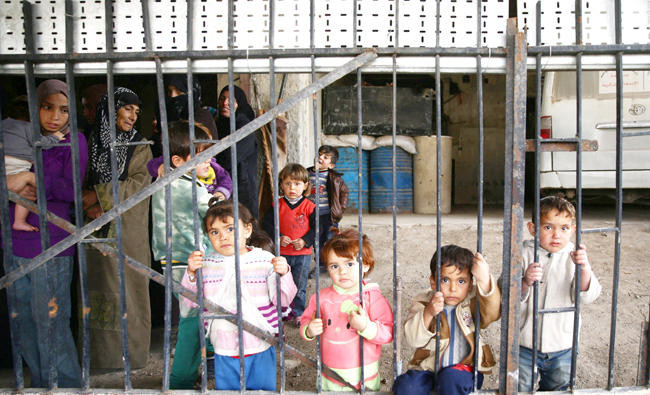
BEIRUT: Childhood malnutrition levels in Syria’s Eastern Ghouta region, under regime siege since 2013, are the highest recorded in the country since its six-year war began, the UN said Wednesday.
The UN children’s agency UNICEF said a November survey in the opposition-held area outside Damascus showed 11.9 percent of children under five were suffering from acute malnutrition, “the highest rate ever recorded in Syria” since the conflict started.
Humanitarian agencies have warned several times in recent months about the situation in Eastern Ghouta, after reports of deaths among children suffering malnutrition.
UNICEF said more than one-third of children covered in the study it conducted in the region in early November were stunted, “elevating their risk of delayed development, illness and death.”
“Acute malnutrition rates are highest among very young children,” it added.
“Mothers of children under two years old have reportedly reduced or stopped breastfeeding altogether because of their own poor nutrition and the constant violence.”
UNICEF said a similar survey in the area in January showed 2.1 percent of children were suffering from acute malnutrition, suggesting sharply worsening conditions.
Eastern Ghouta is one of the last remaining rebel strongholds in Syria, and has been under a tight government siege since 2013 that has caused food and medical shortages.
Some food is still grown locally, or smuggled in, but humanitarian access to the region has been limited despite regular calls from aid agencies.
“The rapidly rising costs of basic foods and cooking supplies have made preparing a meal out of reach for most,” UNICEF said, noting that a portion of bread cost 85 times more in Eastern Ghouta than in Damascus, just a few kilometers away.
Eastern Ghouta falls into one of four “de-escalation zones” set up under a deal between regime allies Russia and Iran, and rebel backer Turkey, agreed earlier this year.
But while the zone initially brought some calm, violence has increased steadily in recent weeks, with government airstrikes and artillery fire killing dozens in recent days, according to the Syrian Observatory for Human Rights monitor.
Aid access has also improved little since the zone was implemented, though the UN has been able to deliver assistance sporadically.
On Tuesday, the UN and Syria’s Arab Red Crescent sent an aid convoy carrying assistance including “medications to treat malnutrition” into Eastern Ghouta.
Earlier this month, another convoy reached the town of Douma in the region.
Meanwhile, dozens of mortar bombs landed on the last major opposition stronghold near the Syrian capital Damascus on Wednesday, a war monitor and a witness said on Wednesday, despite a 48 hour truce proposed by Russia to coincide with the start of peace talks in Geneva.
After a relatively calm morning, shelling picked up later in the day, accompanied by ground attempts to storm the besieged enclave, a witness in the Eastern Ghouta area told Reuters.
The Syrian Army stepped up bombardment two weeks ago in an effort to recapture Eastern Ghouta.
Scores of people have been killed in airstrikes during the offensive, and residents say they are on the verge of starvation after the siege was tightened.
Russia had proposed a cease-fire on Monday for Nov. 28-29. UN Syria envoy Staffan De Mistura later said Russia had told him that the Syrian regime had accepted the idea, but “we have to see if it happens.”
The observatory said at least one person was killed when dozens of mortars crashed into Eastern Ghouta on Wednesday.
“A two-day truce is not nearly enough for civilians facing grave violations of international law - including bombardment and besiegement — but it is a window of opportunity to save the lives of the most desperately in need of treatment,” said Thomas Garofalo, International Rescue Committee’s Middle East Public Affairs Director, in a statement on Wednesday.


![]()
Eastern Ghouta child malnutrition worst in Syria’s war: UN
Eastern Ghouta child malnutrition worst in Syria’s war: UN


Latest updates


Recommended


© 2026 SAUDI RESEARCH & PUBLISHING COMPANY, All Rights Reserved And subject to Terms of Use Agreement.