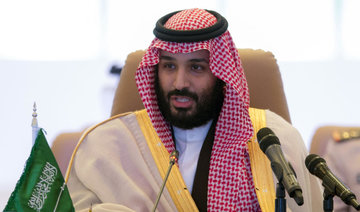
RIYADH: The Saudi Cabinet has expressed support for an address by Crown Prince Mohammed bin Salman at the first meeting of the Islamic Military Counter Terrorism Coalition (IMCTC) and the need for strong coordination between Islamic countries in fighting terrorism.
The Cabinet, chaired by King Salman at Al-Yamamah Palace in Riyadh on Tuesday, also supported the crown prince’s statement about terrorism distorting the image of Islam, killing and terrorizing innocent people in Muslim countries, the need not to track down and eradicate it in all its forms and manifestations.
The final declaration of the IMCTC meeting was also praised. It stressed that terrorism represents a continued and growing threat to local and global peace and stability. It also voiced support for the determination of the IMCTC member countries to coordinate efforts to wipe out terrorism in all areas, ideologically and militarily, and dry up its funding resources.
At the regional level, the Cabinet welcomed the outcome of the expanded meeting of the Syrian opposition forces held in Riyadh, which unified their ranks and the creation of a negotiating team representing all the opposition parties that will enhance their position in the Syrian peace talks.
The Cabinet was also briefed on the outcome of the meetings of the Standing Committee for Economic and Commercial Cooperation of the Organization of the Islamic Cooperation (COMCEC), held in Istanbul, Turkey, and their stressing the need to address economic challenges facing the Islamic countries.
The success of the first meeting of the Muslims of the ASEAN countries which was organized by the Kingdom in Kuala Lumpur was mentioned, and the Kingdom’s role in serving Islam and Muslims, spreading moderation and tolerance of Islam, and renunciation of terrorism and extremism.
Efforts exerted by all concerned bodies in Saudi Arabia, Egypt, the UAE, and Bahrain on fighting terrorism were commended, and their work with partners in all parts of the world to curb the activities of terror and extremist groups.
The Cabinet expressed the Kingdom’s strong condemnation of terror acts in Egypt, Iraq, and Nigeria and its support of these countries against terrorism and extremism.


![]()

Saudi cabinet voices support for Islamic Military Counter Terrorism Coalition efforts to wipe out terrorism
Saudi cabinet voices support for Islamic Military Counter Terrorism Coalition efforts to wipe out terrorism
Latest updates


© 2026 SAUDI RESEARCH & PUBLISHING COMPANY, All Rights Reserved And subject to Terms of Use Agreement.