GAZA CITY: Azzam Al-Ahmed, a senior official from Palestine’s Fatah faction, said on Monday that a key meeting Tuesday in the Egypt’s capital Cairo “aims to incorporate all the Palestinian factions as partners and not just spectators as the page of division is folded for the last time.”
Leaders of various Palestinian groups headed for Cairo on Monday ahead of talks. Senior figures from 13 different political factions — including Gaza’s rulers Hamas — are due to meet for the three-day talks, with potential topics of discussion including the formation of a new unity government.
The Hamas delegation will be headed by deputy leader Salah Al-Aruri and its Gaza head Yahya Sinwar. Neither Fatah leader Mahmud Abbas nor Hamas chief Ismail Haniya will attend the meeting.
The talks come as Palestinians face rising tensions with the US over the threatened closure of their office in Washington.
Tensions between Fatah and Hamas have reemerged since they signed a reconciliation deal last month. Fatah has been at loggerheads with Hamas since the militant group seized control of Gaza in 2007. But on Oct. 12, the two parties signed an Egyptian-brokered deal which is meant to see Hamas hand back civilian power to Abbas’s internationally recognized Palestinian Authority (PA) government, which is based in the Israeli-occupied West Bank, by Dec. 1.
In a crucial first step, Hamas stuck to a Nov. 1 deadline to hand over the border crossings between Gaza and its neighbors Egypt and Israel.
However, since that date, progress has appeared to stall, with Palestinian Prime Minister Rami Hamdallah suggesting the PA needed full security control of Gaza before further steps could be taken.
Hamas rejected that, accusing Hamdallah of seeking to change the terms of the agreement.
The Fatah-dominated Palestinian government has also refused to remove crippling measures targeting Gaza — including reducing electricity.
Palestinians and international powers hope an implemented reconciliation deal could help ease the suffering of Gaza’s two million residents, who suffer from high rates of poverty and unemployment. Multiple previous reconciliation attempts have failed.
The threatened closure of their office in Washington was apparently over a Palestinian suggestion of taking the issue of Israeli settlements on occupied land to the International Criminal Court (ICC).
But an analyst said these tensions were not likely to influence discussions in Cairo.
“I don’t think the tensions between the PA and Washington will affect the reconciliation process,” Palestinian political analyst George Giacaman said.
“The problems that the PA is facing regarding Gaza are of a different nature: How will they cope with the financial and humanitarian situation in Gaza, how will they control the groups that Hamas struggled to control until now?”
Wasel Abu Yousef, a senior PLO official, said the talks could last until Thursday.
“I think this meeting will be a huge step toward the removal of all the obstacles to reconciliation, which is supported by everyone,” he told AFP.
The most controversial issue remains security — meaning the future of Hamas’s vast military wing.
Bassem Naim, a top Hamas official, said it was impossible for them to consider giving up their weapons.
He argued that in the West Bank where Abbas’s government is meant to have partial self rule, the Israeli army in reality operates with impunity — including in areas nominally under full Palestinian control.


![]()
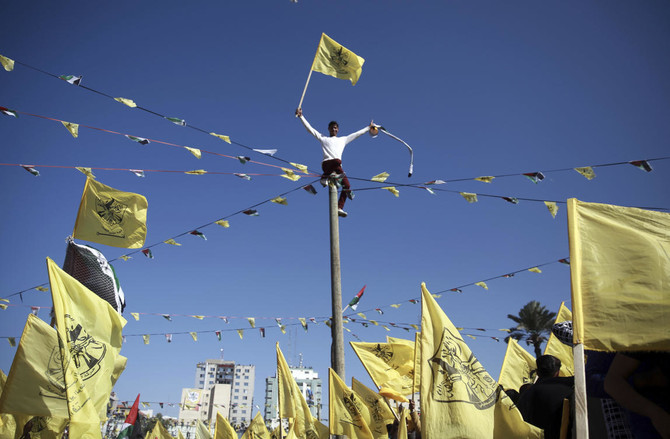
Key meeting ‘to incorporate all Palestinian factions as partners’
Key meeting ‘to incorporate all Palestinian factions as partners’

Latest updates


© 2026 SAUDI RESEARCH & PUBLISHING COMPANY, All Rights Reserved And subject to Terms of Use Agreement.