GAZA CITY: Delegations from Hamas and the Fatah-led Palestinian Authority (PA) met in Cairo on Tuesday. The two major authorities in Palestine met to begin talks aimed at bringing an end to their long-running feud and to arrange the transition of Gaza’s administration from the Islamic group to the PA.
Aside from discussing major points of contention, including military supervision of Gaza, border control, and the fate of Hamas’ civil employees, the two parties are also expected to discuss a date for presidential and legislative elections and potential reforms of the Palestine Liberation Organization (PLO), which is in charge of long-stalled peace talks with Israel.
The last Palestinian legislative election took place in 2006 when Hamas won the surprise victory that sparked the political rupture between Hamas and Fatah and eventually led to civil war in Gaza in 2007.
Egypt has helped mediate several attempts to reconcile the two movements and form a power-sharing unity government in Gaza and the West Bank since then to no avail.
In 2014, the two parties agreed to form a national reconciliation government, but, despite that deal, Hamas continued to control the Gaza Strip.
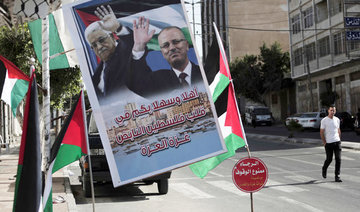
Last month, however, the most recent Egypt-led push for Palestinian unity received a major boost when Hamas agreed to cede civilian power in Gaza. Last week, Palestinian Prime Minister Rami Hamdallah arrived in the coastal strip for the first time since 2004 as a first step toward reconciliation.
Senior Fatah figures attending the Cairo talks include intelligence chief Majed Faraj and Fayez Abu Eita, a party leader in the Gaza Strip, according to the official Palestinian news agency Wafa.
The newly appointed deputy leader of Hamas, Salah Al-Aruri, and Prime Minister of Gaza, Yahya Sinwar, will lead the Hamas delegation, a spokesman said in a statement. Neither President Mahmoud Abbas nor Hamas chief Ismail Haniya will attend the talks.
“We will not go back to division in any way,” Sinwar said on Sunday night ahead of the trip.
Security will be the main focus of the talks, including the possible deployment of 3,000 Fatah security officers to join Gaza’s police force over the next year, restoring much of Abbas’ influence in Gaza and further loosening Hamas’ grip.
Fatah’s Azzam Ahmad told AFP that Rafah — Gaza’s only border crossing with Egypt — should be run by Abbas’ presidential guards with supervision from the European Union border agency instead of the currently deployed Hamas-linked employees.
According to AFP, he said the government would work to complete arrangements in a week or two for the Erez and Kerem Shalom crossings.
Both sides hope that the proposed deployment of PA security personnel to Gaza’s borders will encourage Egypt and Israel to ease restrictions at border crossings, and help Gaza revive its economy.
Israeli Prime Minister Benjamin Netanyahu has warned the Palestinians against “bogus reconciliations,” and has repeated Israel’s long-held position that it will reject any peace deal that does not include the dissolution of the military arm of Hamas. Hamas has said the matter is not up for discussion.
The Cabinet of the West Bank-based Palestinian Authority said on Tuesday, in a statement quoted by AFP, that it hoped the Cairo talks would succeed.
“The Cabinet hopes the national dialogue session in Cairo will succeed in achieving reconciliation and reunite the homeland. It expresses readiness to assume full duties in Gaza Strip as soon as the factions clinch an agreement,” the statement said.
“We meet in Cairo full of hope to draw and lay down a road map for national reconciliation,” senior Hamas delegate Izzat Reshiq wrote on Twitter. “Unity and national reconciliation among all our Palestinian people is our strategic option to move forward.”


![]()

Fatah, Hamas take first steps toward reconciliation in Cairo talks
Fatah, Hamas take first steps toward reconciliation in Cairo talks
Latest updates


Recommended


© 2026 SAUDI RESEARCH & PUBLISHING COMPANY, All Rights Reserved And subject to Terms of Use Agreement.