Zimbabwe’s ruling party to expel Mugabe, war vets head says

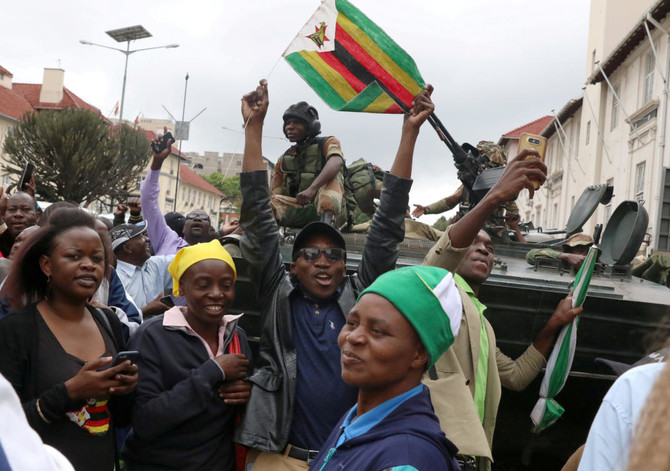
Protesters calling for Zimbabwean President Robert Mugabe to step down cheer in front of a military vehicle in Harare, Zimbabwe, November 18, 2017. (Reuters)
Updated 19 November 2017
Follow

Zimbabwe’s ruling party to expel Mugabe, war vets head says

HARARE: Zimbabwe’s ruling party will dismiss 93-year-old President Robert Mugabe as its leader on Sunday and kick him out, stripping its ruler for the last 37 years of one of his final vestiges of authority, the head of the liberation war veterans said.
Speaking to Reuters as he walked into an extraordinary meeting of ZANU-PF’s central committee, Chris Mutsvangwa said Mugabe was running out of time to negotiate his departure and should leave the country while he could.
“We are going all the way,” Mutsvangwa said. “He’s trying to bargain for a dignified exit.”
Mutsvangwa, who has spearheaded a campaign over the last 18 months to remove the only leader Zimbabwe has known, said ZANU-PF would also dismiss Mugabe’s wife Grace as head of its Women’s League and reinstate ousted vice president Emmerson Mnangagwa.
The former state security chief, known as “The Crocodile” is thought to be in line to head an interim post-Mugabe unity government that will focus on rebuilding ties with the outside world and stabilising an economy in freefall.
State television said late on Friday that Mugabe, who has so far resisted pressure to quit, would meet military commanders who seized power in a de facto coup four days ago, along with a Catholic priest who has been mediating between the two sides.
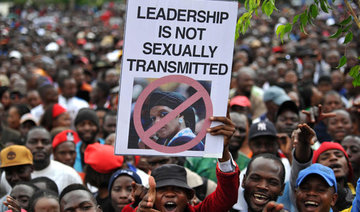
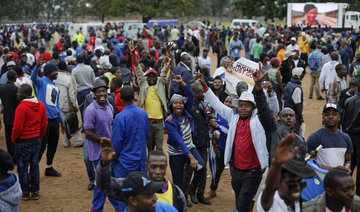
On Saturday, hundreds of thousands of people flooded the streets of Harare, singing, dancing and hugging soldiers in an outpouring of elation at Mugabe’s expected overthrow.
His stunning downfall in just four days is likely to send shockwaves across Africa, where a number of entrenched strongmen, from Uganda’s Yoweri Museveni to Democratic Republic of Congo’s Joseph Kabila, are facing mounting pressure to quit.
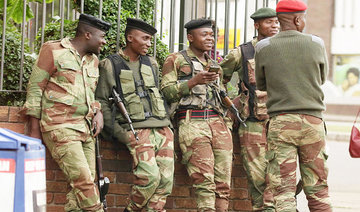
Men, women and children ran alongside the armored cars and troops who stepped in this week to oust the man who has ruled since independence from Britain in 1980.
Under house arrest in his lavish ‘Blue Roof’ compound, Mugabe has refused to stand down even as he has watched his support from party, security services and people evaporate in less than three days.
His nephew, Patrick Zhuwao, told Reuters the elderly leader and his wife were “ready to die for what is correct” rather than step down in order to legitimize what he described as a coup.
But on Harare’s streets, few seemed to care about the legal niceties as they heralded a “second liberation” for the former British colony and spoke of their dreams for political and economic change after two decades of deepening repression and hardship.
“These are tears of joy,” said Frank Mutsindikwa, 34, holding aloft the Zimbabwean flag. “I’ve been waiting all my life for this day. Free at last. We are free at last.”
The huge crowds in Harare have given a quasi-democratic veneer to the army’s intervention, backing its assertion that it is merely effecting a constitutional transfer of power, rather than a plain coup, which would entail a diplomatic backlash.
Despite the euphoria, some Mugabe opponents are uneasy about the prominent role played by the military, and fear Zimbabwe might be swapping one army-backed autocrat with another, rather than allowing the people to choose their next leader.
“The real danger of the current situation is that having got their new preferred candidate into State House, the military will want to keep him or her there, no matter what the electorate wills,” former education minister David Coltart said.
The United States, a long-time Mugabe critic, said it was looking forward to a new era in Zimbabwe, while President Ian Khama of neighboring Botswana said Mugabe had no diplomatic support in the region and should resign at once.


Two high-speed trains derail in Spain, police sources say 21 people killed

Updated 19 January 2026
Follow

Two high-speed trains derail in Spain, police sources say 21 people killed

  • The accident happened near Adamuz, in Cordoba province. So far, 21 people ​have been confirmed dead by police

MADRID: A high-speed train derailed and smashed into another oncoming train in southern Spain on Sunday, pushing the second train off the tracks in a collision that police sources confirmed to Reuters had killed at least 21 people.
The accident happened near Adamuz, in Cordoba province. So far, 21 people ​have been confirmed dead by police, with state broadcaster Television Espanola adding that 100 people had been injured, 25 seriously. The driver of one of the trains, which was traveling from Madrid to Huelva, was among those who died, the TV station added.
“The Iryo 6189 Malaga — (to Madrid) train has derailed from the track at Adamuz, crashing onto the adjacent track. The (Madrid) to Huelva train which was traveling on the adjacent track has also derailed,” said Adif, which runs the rail network, in a social media post.
Adif said the accident happened at 6:40 p.m. (1740 GMT), about 10 minutes after the Iryo train left Cordoba heading toward Madrid.
Iryo is a private rail operator, majority-owned by Italian state-controlled railway group Ferrovie dello Stato. The train involved was a Freccia 1000 train which was traveling between ‌Malaga and Madrid, ‌a spokesperson for Ferrovie dello Stato said.
The company said in a statement that it ‌deeply ⁠regretted what ​had happened ‌and had activated all emergency protocols to work closely with the relevant authorities to manage the situation.
The second train was operated by Renfe, which also did not respond to a request for comment.
Adif has suspended all rail services between Madrid and Andalusia.

HORRIFIC SCENE
The Iryo train had more than 300 passengers on board, while the Renfe train had around 100.
Paco Carmona, Cordoba fire chief, told TVE the first train heading to Madrid from Malaga had been evacuated.
The other train’s carriages were badly damaged, he said, with twisted metal and seats. “There are still people trapped. We don’t know how many people have died and the operation is concentrating on getting people out of areas which are very narrow,” he ⁠said. “We have to remove the bodies to reach anyone who is still alive. It is proving to be a complicated task.”
Transport Minister Oscar Puente said he was following events ‌from rail operator Adif’s headquarters in Madrid.
“The latest information is very serious,” ‍he posted on X. “The impact was terrible, causing the first two ‍carriages of the Renfe train to be thrown off the track. The number of victims cannot be confirmed at this time. ‍The most important thing now is to help the victims.”
The mayor of Adamuz, Rafael Moreno, told El Pais newspaper that he had been among the first to arrive at the scene of the accident alongside the local police and saw what he believed to be a badly lacerated body several meters from the accident site.
“The scene is horrific,” he said. “I don’t think they were on the same track, but it’s not clear. Now ​the mayors and residents of the area are focused on helping the passengers.”

CALLS FOR MEDICS
Images on local television showed a reception center set up for passengers in the town of Adamuz, population 5,000, with locals coming ⁠and going with food and blankets amid nighttime temperatures of around 42 degrees Fahrenheit (6 degrees Celsius).
A woman named Carmen posted on X that she had been on board the Iryo train to Madrid. “Ten minutes after departing (from Cordoba) the train started to shake a lot, and it derailed from coach 6 behind us. The lights went out.”
Footage posted by another Iryo train passenger, also on X, showed an Iryo staffer in a fluorescent jacket instructing passengers to remain in their seats in the darkened carriages, and those with first aid training to keep watch over fellow passengers. He also urged people to maintain mobile phone batteries to be able to use their torches when they disembarked.
Salvador Jimenez, a journalist for RTVE who was on board the Iryo train, shared images showing the nose of the rear carriage of the train lying on its side, with evacuated passengers sitting on the side of the carriage facing upwards.
Jimenez told TVE by phone from beside the stricken trains that passengers had used emergency hammers to smash the windows and climb out, and they had seen two people taken ‌out of the overturned carriages on stretchers.
“There’s a certain uncertainty about when we’ll get to Madrid, where we’ll spend the night, we’ve had no message from the train company yet,” he said. “It’s very cold but here we are.”