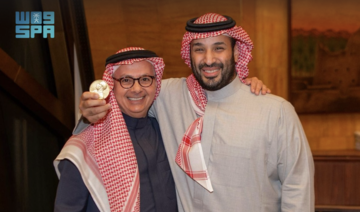
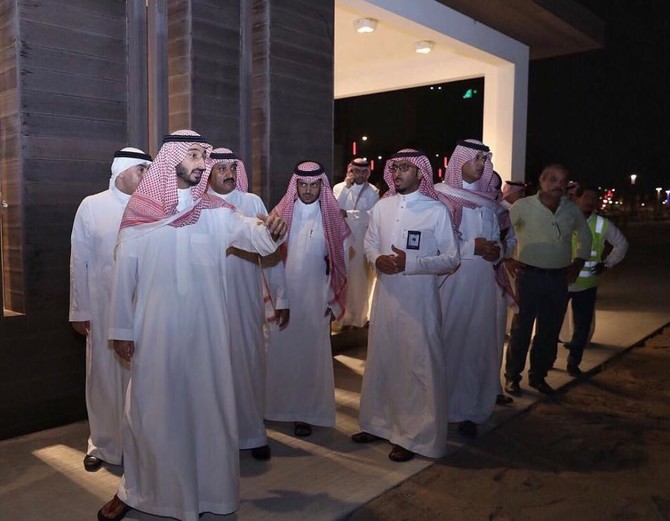
JEDDAH: Makkah Deputy Gov. Prince Abdullah bin Bandar on Tuesday inspected the site of Jeddah waterfront corniche’s phases 4 and 5.
Jeddah Mayor Hani Abu Ras briefed the deputy governor about the overall progress made on the project.
Prince Abdullah bin Bandar also visited various facilities of the project including a control and surveillance center equipped with 120 high-resolution cameras with facial recognition technology.
The 720,000 sq. meter-project also includes smart seats that have energy sources and outlets that the Jeddah Secretariat sought to provide in accordance with its initiative to develop smart cities.
The Jeddah seafront project also includes the longest pedestrian bridge in the Kingdom, connecting the Corniche and Prince Faisal bin Fahd Road.
The project will also feature three beaches for swimming, five beach control towers and a 125-meter fishing pier with 15 umbrellas and six family restaurants, a marina for small boats and a floating dock.
The new project will also feature a 480-meter sea wall, 120 toilets, 24 kiosks, and 14 fountains, four of which are interactive and dancing fountains.
This development phase is the largest in the project of developing the Jeddah waterfront.


Construction of Jeddah’s waterfront in final phase
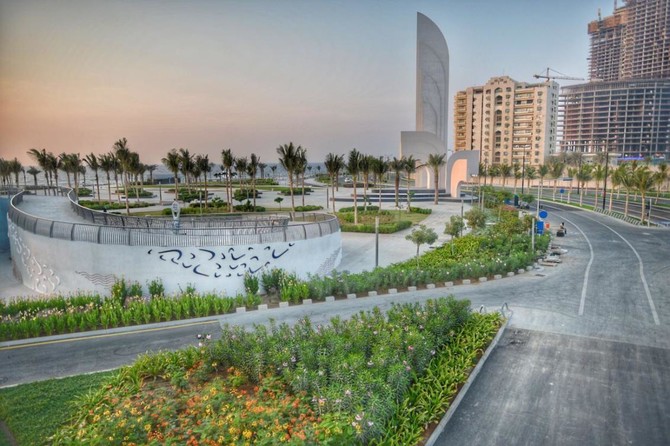


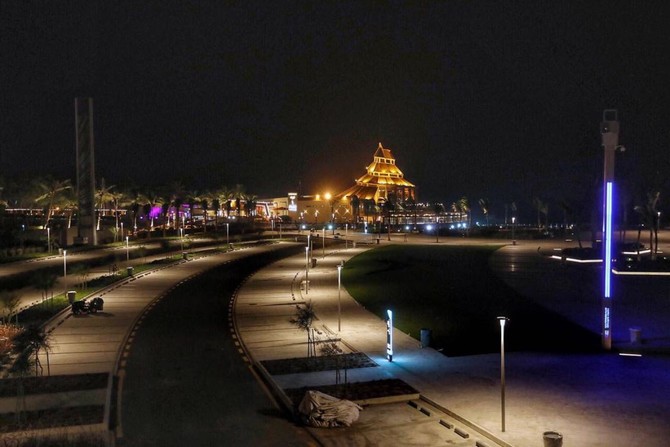
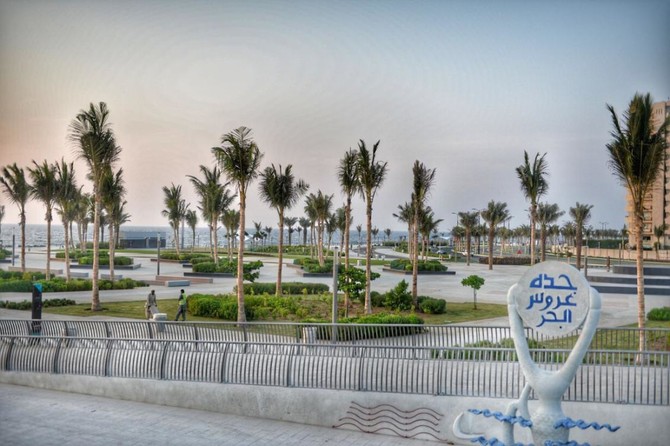
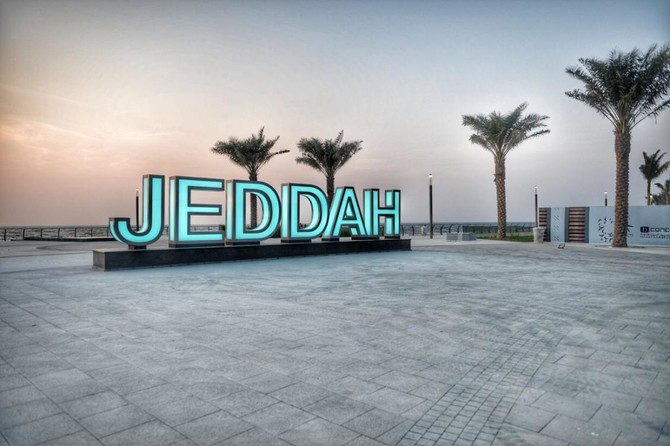
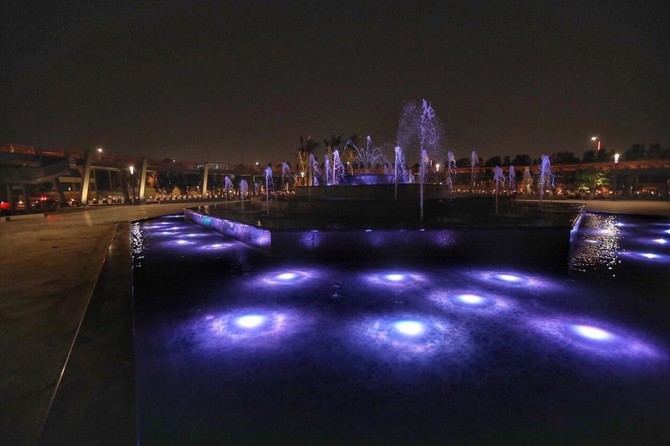
Construction of Jeddah’s waterfront in final phase



Saudi scientific organization celebrates 2025 Nobel Prize in Chemistry laureate Omar Yaghi
- King Abdulaziz City for Science and Technology honors him with a reception at its headquarters in Riyadh
- Yaghi, the first Saudi recipient of a Nobel Prize, shared the Nobel Prize with 2 other scientists for their pioneering work in molecular chemistry
LONDON: King Abdulaziz City for Science and Technology in Riyadh honored Omar Yaghi, the Saudi scientist and recipient of the 2025 Nobel Prize in Chemistry, with a reception at its headquarters in Riyadh on Thursday.
Yaghi is the first Saudi scientist awarded a Nobel Prize. He received it in December, alongside two other scientists, for their pioneering work in the field of molecular chemistry, and for contributions to energy, the environment and advanced materials.
He is also supervisor of the Center of Excellence for Nanomaterials for Clean Energy Applications, a collaboration between KACST and the University of California, Berkeley.
Munir Eldesouki, the president of KACST, said that the Kingdom is keen to recognize its scientific talents, in keeping with Saudi Vision 2030 and its goals relating to the fostering of scientific research.

Yaghi said he appreciated the support he had received from Saudi leaders during his career, and praised them for creating an enabling environment in which scientists are able to pursue world-class research, development and innovation.
Investment in national talent has created a research ecosystem that positions Saudi Arabia among the leading scientific nations, he added.
Thursday’s event, attended by the organization’s staff and students, also honored the winning teams from the recent “GenAI for Materials Discovery Hackathon,” which KACST organized in partnership with the University of California, Berkeley, and Academy 32, a nonprofit Saudi organization dedicated to research, development and innovation.
The celebration concluded with an interactive discussion session during which Yaghi talked with students and researchers, reflected on key milestones in his scientific journey, and shared insights into the factors that helped shape his career, the Saudi Press Agency reported.